Why I’m No Longer Talking to White People About Race by Reni Eddo-Lodge

I’d seen a few friends (and strangers) on Twitter and Facebook talk about Why I’m No Longer Talking to White People About Race (2017) by Reni Eddo-Lodge, and was very keen to read it myself. When it came out in paperback, I snapped up a copy and read it quickly – and it’s extremely good. I heartily recommend it – particularly to any white people who don’t think that white privilege is a thing. The main problem with this book, of course, is that the people who most need to read it almost certainly won’t. (Not that I didn’t need to read it – but I didn’t need convincing on most of what she wrote.)

The title comes from a blog post Eddo-Lodge wrote a few years ago – about why she was so sick of defensive white people refusing to listen to conversations about race, and how she was giving up on trying to help them understand. It’s an ironic title, of course, because this book is exactly her talking to white people about race – thank goodness. I had thought it might be more memoir-based, and there are certainly elements of her story, but what kicks us off is a chapter (‘Histories’) which is entirely objective. It’s about the history of racial oppression and the civil rights movement – in the UK. Even here, we hear a lot, lot more about the civil rights movement in the US, or South Africa, than we do about our own country. There is a common belief that class is the British inequality issue, and that race is broadly fine. Well, as Eddo-Lodge demonstrates thoroughly and yet concisely, this is not, and has never been, the case. She condenses enormous amounts of research very well, making this history section very accessible.

The rest of the book looks more at the lived experience of being a black person in the UK – and specifically a black woman – and explains how racism works in action. It is not, she writes, simply abuse shouted in the street or people consciously refusing to hire a black person (though it does include this); it is embedded in the systems that make up many facets of our society. White privilege (as she explains so patiently and well) is not saying that all white people are rich or have all opportunities dropped at their feet – it is an absence of the barriers and assumptions that people of other ethnicities face. As  a white man, for instance, I have never had to worry if my race or gender will be held against me when I apply for a job, drive my car, go into a shop, or simply walk down the street. I have never had to feel that I am the de facto spokesperson for my race, or that I will be judged by what some other white man has said or done. I even have the privilege that I can decide when I want to engage in conversations and thoughts about racial equality. All of this is to say – it’s extremely easy to ignore or be ignorant of my white privilege, and it is only by engaging properly with books like Eddo-Lodge’s that I can fully recognise what it means. As a white person, my role here is to listen to other experiences and to listen to an explanation of the invisible frameworks of my life and my society – only visible if you are excluded from them.

Eddo-Lodge is an excellent writer and (praise be for popular non-fiction!) includes proper referencing – why is this so often absent? It leads one off in all sorts of other directions to explore. She also allows people with opposing views to have their say, even the bizarre and offensive Nick Griffin. I do wonder whether people like him need more air time, but she notes that the UK’s defamation laws could land her in hot water if she doesn’t give him a chance to air his thoughts.

Later chapters look specifically at feminism and class. The former I found particularly interesting – around the ways in which feminist movements have often been predominantly about white women, and how some white women have been reluctant to acknowledge that, though marginalised in one part of their identity (gender), they have privilege in another (race). She did lose points in my eyes by using the term “anti-choice” – nobody is ever anti-choice, or anti-life for that matter – and I would have liked a bit more interrogation around some more rational objections, like the abundance of theory-based rhetoric in what should be an accessible movement. But these are relatively small objections.

The afterword – a bonus of the paperback edition – looks at how people have responded to the book. Spoilers: people at book events tended to have a lot of opinions without having read the book.

I do realise the irony of saying how important it is that white people listen and try to understand while not quoting directly from the book at all. Sorry, Reni, I’m writing the review without a copy in front of me. But I heartily recommend this – it’s very readable, very informative, and has the potential to effect real change. If you’re scoffing at this review, I particularly encourage you to get hold of a copy. And if you’ve been nodding your head throughout, then you probably won’t have your life and perspective changed – but it’s definitely worth a read nonetheless.

25 Books in 25 Days: #23 Virginia Woolf

I’ve read a fair few biographies of (and books about) Virginia Woolf, but somehow I always keep going back for more. I’ve also met Alexandra Harris once or twice over the years, so it was sort of inevitable that one day I’d read Virginia Woolf (2011) by Alexandra Harris, published in a rather lovely hardback, and which I found in Brighton a year or two ago.

Considering how many long books have been written about Woolf, I wasn’t sure how Harris would get her complex and significant life into 170 pages. But what a staggering achievement Virginia Woolf is – this isn’t just the essentials (though it includes that); somehow, miraculously, Harris has still accompanied those with insights into the literature and a wonderful freshness to the whole thing. It steers between the Hermione Lee school of biography (every footstep requires three footnotes) and the ‘She must have felt…’ school of biography – into something approachable, concise, and extremely thoughtful.

Having read it today, I’m still not sure how Harris managed to get so much into so few pages. There are certainly books that get more treatment than others – Orlando gets a lot; A Room of One’s Own is rushed past – but nothing felt completely overlooked. There’s even a chapter on the afterlifes of Woolf, and how the publishing of her letters and diaries, and various biographies about her, have helped shape her reputation. Virginia Woolf is a brilliant starting point for anybody interested in her life and work – but, what is more, it’s also a vital and beautiful book for even the dyed-in-the-Woolf reader, however much they’ve already read about her.

25 Books in 25 Days: #20 Dear Farenheit 451

I mentioned Dear Farenheit 451 (2017) by Annie Spence in one of my Weekend Miscellanies a while ago, and a bit later a review copy came through the post – whether or not the two things are related, I’m unsure, but thank you to the publishers! Books about books are always, always welcome, and this made a nice book to read on a little solo day out to Stow on the Wold and Charleston House (a National Trust property). Sadly, two secondhand bookshops have closed in Stow since I was last there – but another has opened.

Dear Farenheit 451 takes the form of Spence writing little letters to many books. Some of them are books she’s loved at different times of her life – from Judy Blume to The Time Traveler’s Wife – while others are books that she’s shelved or discarded in her job as a librarian. The last section of the book is all about book recommendations – either ‘if you like this then try this’, or books that pair well together, or other things of that ilk.

I really enjoyed reading it. Her bookish enthusiasm is evident, and I loved that she wrote about an unusual and personal selection of books. True, I had heard of relatively few of them and read a tiny amount, but I’d much rather this than another list of Best Books Ever with all the expected candidates.

It seems churlish to wish it were a slightly different book than it is – but I have to admit that I would have preferred it if it were less sweary and (I can think of no other word for it) vulgar. ‘As sh*t’ – without the asterisk – is used as an amplifier all the time, for instance, and I suppose the whole tone shook me out of my 1920s mindset.

But that’s a small price to pay for this level of bookish fun. It’s not a set of thorough literary analyses, or even unthorough ones, but it is a fun, lively look at the different books that surround Spence for one reason or another.

25 Books in 25 Days: #11 The Other Mitford

I’m so glad people are enjoying these posts – I was a bit worried the flurry would get a little much. And I think today’s is among the longest I’ve read this week – I hadn’t realised quite how many words were on each of the 180 pages. The book in question is The Other Mitford: Pamela’s Story (2012) by Diana Alexander, given to me for my birthday last year by my friend Malie.

My Mitford mania started back in 2008, when I read the collection of letters between the sisters – still one of my favourite books. Since then, I’ve read bits and pieces by many of them, though never actually any of those long books devoted to all the family. Still, the details are ingrained in my mind – Nancy the novelist, Diana the Fascist, Jessica the Communist, Unity the Nazi, and Debo the Duchess. In the background, quieter the rest, is ‘the other Mitford’ – Pamela, who was a countrywoman at heart.

The Other Mitford is very engagingly written, and it certainly helps that the author knew Pamela personally (initially as her cleaner, and then as her friend). I really enjoyed it – but the structure is odd. Huge amounts are about the other sisters, often having a chapter about them followed by a chapter looking at Pamela during the same period. It’s useful for those who haven’t read anything about the Mitford sisters before, but a little redundant for those who have. And then there are a handful of chapters at the end which look at different aspects of Pamela’s personality – which means there are some aspects of her life that end up being repeated three times.

Throughout it all, or almost all, Pamela remains elusive. I still don’t feel like I know very much about her, and crisis moments like the break up of her marriage to Derek Jackson pass by in a line or two. Only when she is an old woman, and Diana Alexander knew her personally, does she really become truly vivid – as a thrify, kindly, stubborn grande dame of the village. The book is worth reading for those sections alone – but, as I say, enjoyable throughout. I just wish it had been a bit more about Pamela who, even here in her own book, remains rather overshadowed by her more dramatic sisters.

25 Books in 25 Days: #5 Blow Up the Castle

When I was in Canada last year, Darlene kindly gave me a couple of books – one of which was Blow Up the Castle (2011) by Margaret Moffatt. You can read Darlene’s thoughts about it on her blog; in brief, it’s about three vicars with very similar names (Peabody, Peacock, and Peasly) and tells of their lives. It’s more or less a collection of short anecdotes or witty events, rather than a novel as such, set in 1930s England.

In amongst all the little jokes and curious events, I have to put a word in for somebody mistakenly entering ‘The Lost Slipper’ into an art competition to depict The Last Supper…

Ilustrado by Miguel Syjuco

I spent a month in the Philippines in 2006, and it’s still one of the best experiences of my life. Hopefully not too much in a gap yah way, but it is my only experience of a country outside Europe and North America. Ever since then, I’ve been intending to read at least one book by a Filipino author – and, indeed, got a copy of Miguel Syjuco’s Ilustrado when it was published (in the original English), in 2010. It’s taken me eight years to read this review copy – and I had to persuade my book group to read it, to get it to the top of tbr pile – but I ended up thinking it was really rather good.

I should start with the caveat that the other three people who read it for book group really disliked it. And it is certainly a quirky novel – but I have a lot more patience with structural experimentation than stylistic experimentation. Nobody needs another Ulysses (or, frankly, the original Ulysses) but there is plenty to be gained from seeing how the structure of a novel can be played with to bring something new. In Ilustrado, the lead character – also called Miguel Syjuco – is on the track of Edmund Salvador. This (fictitious) man was one of the most famous Filipino writers, and has recently been found dead in a river. ‘Syjuco’ (I’ll use inverted commas to distinguish between character and author; apologies if it gets annoying) heads from New York to Manila to find out more about what could have led to it – and to find the elusive manuscripts of Salvador’s rumoured final, enormously long manuscript.

The main thread of the novel is in the third person, following ‘Syjuco’ on this journey. He is a determined, slightly obnoxious character – he sexualises most of the women he meets, obsesses with his quest, and hasn’t got over his failed relationship. But he is also intensely human and (thus?) sympathetic – experiencing the mixed feelings of the Filipino-American returning to his homeland. He is both stranger and familiar, living a life that is disjointed from those of the people he meets with, stays with, eats with.

The airplane comes down low. From above, the city is still beautiful. We pass over brown water off the coast, fish pens laid out in geometrical patterns, like a Mondrian viewed by someone colour-blind. Over the bay, the sunset is startling, the famous sunset, like none anywhere else. Skeptics attribute its colours to pollution. Over there’s the land, the great grey sprawl of eleven million people living on top of each other on barely over 240 square miles – fourteen cities and three municipalities, skyscrapers and shanties, tumbling beyond Kilometre Zero and the heart of every Filipino, the city that gave the metro its name: Manila.

This thread was certainly the most enjoyable part of the novel. It was often quite funny, occasionally slightly broad, but an observant, somewhat beguiling narrative. I felt pulled along by his quest, even when not finding him the most pleasant character – perhaps it is the shared belief in the power of literature, and the need to pursue it.

Alongside this thread, though are others – not parallel storylines, exactly. One is ‘Syjuco’s’ journey told in the third person, as though by an omniscient author. And then there are excerpts from many of Salvador’s writings – whether his gang novel, his autobiography, or ‘Syjuco’s’ unfinished biography of Salvador. There are snippets of very well-judged imitations of Paris Review interviews with Salvador. And there are various paragraphs that tell jokey anecdotes about village idiot types. Thrown into all of them is a lot about Filipino politics (particularly those around when it’s set – which is 2000/2001). Syjuco doesn’t give much context, and expects you to know who the various people are – but a bit of judicious googling would help anybody out there.

Some of these worked really well. The biographical excerpts and the interviews really help to build a picture of Salvador, and give us the context for ‘Syjuco’s’ obsession. The bits from his books, though, seemed a little pointless – they didn’t add anything cumulatively, and felt a bit like Syjuco had included them simply for the fun of writing them. And the stereotyped anecdotes were just a distraction.

And yet, even the parts that felt unnecessary helped add up to the whole. I thought of Ilustrado a bit like an Impressionist painting – up close, the brushstrokes don’t seem to make much sense – but take a step back, and creates a whole picture. To pick another visual metaphor, it was like a collage. I thought the whole book, taken as a whole, worked really well, and quite unlike any other novel I’ve ever read. And yet I didn’t find it indulgent or pretentious – it was still pacey and intriguing. The prose style was well-honed without being showy. And, particularly towards the end, the plot takes centre stage and it all gets pretty page-turnery. There’s even a rather impressive twist that helps put the whole novel into context.

My enjoyment of Ilustrado was certainly also helped by my (albeit small) familiarity with Manila. I certainly don’t know it in the way a resident would, but I could picture the streets he described, the small places to eat, the homes. And it was all laced a little with my happy memories of being there.  But don’t just take my word for it – it won the Man Asian Literary Prize.

Book group made clear that this is rather a divisive novel – and it’s certainly not the sort of thing I usually read. But I thought it was compelling, original, and well-handled. And I’d love to know any other recommendations of Filipino novels – particularly any that were originally written in Tagalog?

The Psychopath Test by Jon Ronson

I’ve now read three books by Jon Ronson – the first two being So You’ve Been Publicly Shamed and The Men Who Stare at Goats – but the first one I heard of was The Psychopath Test (2011). I seem to remember my brother reading it, or perhaps my friend Mel – either way, it appealed enough to start me hunting for other Ronson books, even if it took me a few more years to finally read this particular one.

Ronson has made a name for himself as someone who explores the quirky and unusual, often meeting and interviewing strange people in his unflappable, mild-mannered (and yet, simultaneously, rather anxious) way. Whether conspiracy theorists, Internet hate figures, or CIA operatives, he treats them with a Louis Theroux-esque genial bafflement. Even while he’s immersing himself in dangerous territory, he comes across rather like a calm observer – even, somehow, when he’s telling us how uncalm an observer he is.

But there can’t be many more dangerous people to meet than those who have been declared psychopaths and imprisoned in maximum security prisons. That’s where Ronson is – initially to interview somebody who alleges he faked his psychopathy to get a lighter prison sentence for GBH, and now can’t convince anybody that he isn’t mentally ill.

(Actually, this comes after a meandering and ultimately rather pointless anecdote about people being mysteriously sent strange little books – I suppose it’s intended to hook our attention, but I found those elements rather over-long and a bit of a distraction from the main theme.)

The Psychopath Test uses the prison encounter as our introduction to the titular test – developed by Robert Hare, it is essentially a checklist to determine whether or not somebody is a psychopath. There is naturally some discomfort in the world that something so drastic could be decided by this sort of test – ending, like a BuzzFeed quiz, with a ‘yes – psychopath’ or ‘no – normal’. Ronson explores the impact of the test, as well as analysing many of the people who have been criminally psychopathic.

And this is where I began to skip pages… I hadn’t really joined the dots, to realise what sort of descriptions would be included. I went in because I’m interested by the psychological aspects – though, unsurprisingly, Ronson also tells us what noted psychopaths have done. And reading about gruesome murders and sexual assaults isn’t really my jam… so, yes, I did end up darting through some of the pages.

More interesting to me were the sections this led to – about psychopaths in everyday life. Because many are not criminals – but simply can’t understand the concept of empathy. And Ronson speaks to those who have deduced that the percentage of psychopaths in the world (around 1%) becomes much larger when considering people in power – especially business leaders. It makes one think… not least because there’s one particular businessman who is rather prominent at the moment, and has never been known to show any noticeable sort of empathy.

More broadly, Ronson looks at the ways in which mental health diagnoses were determined – a frighteningly arbitrary council, seemingly – and how overdiagnosed things like childhood bipolar disorder have become. Not least because, accordingly to the experts Ronson speaks to, there’s no such thing as childhood bipolar disorder. These parts are where the subtitle – ‘a journey through the madness industry’ – becomes much more relevant, and I’d have valued more of a focus on this strand.

So, yes, there are many interesting sections in The Psychopath Test. The reason that it ended up being my least favourite of Ronson’s books isn’t simply because I’m so squeamish – it also felt like it cohered less than the other two I’ve read. His approach felt a little more scattergun, or less carefully edited together. The framing device for the book was (as I’ve said) not a winner for me, and the pacing of his journalistic elaborations doesn’t seem quite right.

The best of the three I’ve read is definitely So You’ve Been Publicly Shamed, which is also Ronson’s most recent book – suggesting that he’s getting better as he keeps writing.,


Bookworm by Lucy Mangan

I heard about Bookworm (2018) by Lucy Mangan on Twitter, I think, or perhaps another blog – but as soon as I’d heard the subtitle (‘a memoir of childhood reading’) I knew that I had to read it. I think it was in a Weekend Miscellany. Thankfully Square Peg sent me a copy, and I wolfed it down – it’s very hard to imagine any bibliophile not loving this book. Though I also said that about Howards End is on the Landing, and look what happened there. No matter; I’m going to maintain full confidence with this one.

Mangan was a very bookish child – in the way that only those of us who were also very bookish children will understand. Books were her sanctuary, her new worlds, her adventure, her heartbreak. This total immersion, and self-definition as a bibliophile, is the keynote of Bookworm, and it will make every avid childhood reader thrill with recognition. We feel her pain when reading is socially unacceptable in the playground, and when her parents restrict her reading to certain rooms, to encourage her to be more sociable. (Yes, reading at the dinner table was – is? – banned in my home. And yes, like Lucy I turned to cereal packets or anything else I could read, when desperation hit.)

Through the chapters, Mangan takes us from her earliest reading memories until the end of childhood. To be honest, the tales of picture books interested but did not beguile me. I don’t remember which picture books I read – except the Mr Men, and I don’t think they got a single mention in Bookworm. Was Mangan born slightly too early for them? But once we got onto other books – well, firstly it was a nice surprise to discover that I have read more classic children’s literature than I’d supposed – but mostly, it’s wonderful to read how well Mangan describes the all-encompassing experiences these books were.

Enid Blyton gets a section (hurrah!) – without a doubt the defining author of my childhood. Narnia gets a section, as do Little Women, Roald Dahl, Richmal Crompton’s William books, and both books that Rachel and I are discussing in the next episode of the podcast – The Secret Garden and Tom’s Midnight Garden. Even Sweet Valley High, with which I was obsessed for a couple of years. Even if you haven’t read these books, the enthusiasm with which she remembers them is a delight, and mixes frothy enthusiasm with plenty of reflection and contemplation. Occasionally the tone becomes a little too self-consciously Caitlin Moranesque, and the odd sentence reads a little awkwardly – the bookish kid trying to fit in with the cool gang – but most of the time she isn’t trying stylistic tics; she’s just revelling in the absolute joy that books can be. (There are also one or two tedious moments against Christian faith, and one truly shocking anti-Catholic moment that should certainly have been cut, but I’ll tidy those under the rug for now.)

Along the way (because it is a memoir of sorts, after all) we learn about her character, her friends, her family. I loved the way her father would occasionally suggest a book, with a subtle gleam that acknowledges that this is a book he loved in his childhood. I loved the depiction of a slightly anxiously moralistic child, who definitely didn’t want to read anything anarchistic or rule-breaking in books (no thank you Fantastic Mr Fox). It reminded me of my own fastidiousness as a child, that made me unable to enjoy The Twits (the idea of the food in the beard still makes me gag).

And mostly I just loved with a wonderful nostalgic journey this. I love any book about reading, but one about the world-opening potential of reading to a child is rather lovely. And it’ll certainly lead you heading straight for the children’s section of the library, to relive all the classics that filled your world and expanded your imagination however many years ago.

The Book of Forgotten Authors by Christopher Fowler

Mum and Dad got me The Book of Forgotten Authors (2017) by Christopher Fowler, and I went to hear him speak about it earlier in the year – the only reason I didn’t buy a copy there was because it felt inevitable that somebody would get it for me. What could be more up my street than a collection about forgotten authors? (Based on a long-running column in The Independent, no less, which I did read occasionally.)

What makes an author forgotten? The title of Christopher Fowler’s book is inevitably a challenge to the reader – have you forgotten these authors? have you? – but it is slightly awkward to start off with Margery Allingham. Ask somebody to name five Golden Age detective novelist and, if they could get to five, I’d be very surprised if Allingham didn’t appear. Apparently Fowler’s method included checking with a circle of literary friends, and considering an author for inclusion if less than half had heard of them. It’s as good a method as any, but somehow authors like Barbara Pym, Edmund Crispin, and Georgette Heyer got through the net – I’d argue that if your books are all or mostly in print, you don’t make the grade for ‘forgotten’.

But I’ve started with the exceptions – I should say that I hadn’t heard of about half of these 99 authors, and that’s a much more impressive average than most of the ‘authors you don’t know’ lists. And I’ve read books by 15 of them – so plenty more to explore.

Somewhat coincidentally (unless Fowler requested it from the Bodleian… which I doubt) several of the authors mentioned were focuses of my DPhil thesis. E.M. Delafield, John Collier, and… Frank Baker! Yes, Baker gets a chapter, and I will love anybody who writes

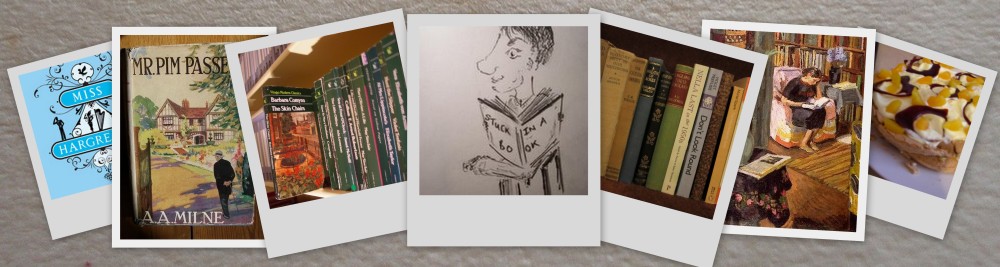
Of his fifteen novels, Baker’s masterpiece is the enchanting and timeless Miss Hargreaves, which really deserves classic status.

Fingers crossed this mention brings Miss Hargreaves new fans, along with Barbara Comyns who also gets a chapter (oddly as Barbara Comyns Carr – her real name, though E.M. Delafield appears under her penname rather than Elizabeth De La Pasture).

Fowler manages to pack a lot of enticing detail into very short chapters; the punch and tautness that made them columns serves them equally well in this compendium form. And having them in alphabetical order is a nice touch – had they been thematic, it might have all got a bit samey, but this makes for a nice assortment of tantalising suggestions – Pamela Branch, Dino Buzzati, Margaret Millar, and Cynthia Seton being the ones I wrote down to explore. (Anybody read them?) And, unlike Martin Edwards’ equally tantalising The Golden Age of Detective Fiction, it’s easy to find at least some works by most of these authors.

In between the chapters about specific authors are enjoyable, slightly longer essays on particular themes – rivals to Poirot, deservedly forgotten authors, authors who were rediscovered (ironically, I’d heard of none of these). His love of literature and of unearthing bygone gems is genuine and delightful.

The problem with knowing quite a lot about some of these authors is that I could see quite a few errors. Some are typographical (Julian Maclaren-Ross becomes Juliane Maclaren-Ross) but others show a dubiously casual research. He writes about E.M. Delafield’s five Provincial Lady novels (presumably being fooled by the American republishing of Straw Without Bricks as The Provincial Lady in Russia, which it emphatically isn’t); he says the film adaptation of Miss Hargreaves was cancelled because WW2 started, which would be tricky given that the novel wasn’t published until 1940. These small things did make me wonder how much Fowler had got wrong about the authors I didn’t know anything about…

But, let’s face it, I’m not going to remember all the details, so it doesn’t necessarily matter if they aren’t all completely accurate – what it has done is given me a list of authors to look out for, and a smile on my face that some of my much-loved authors have had another moment in the sun. If you love new recommendations, and reminders of more obscure favourites, then use your Christmas book vouchers to settle down with this one in the post-Christmas indulgent phase.

My Life With Bob by Pamela Paul

The first book I grabbed from my Christmas haul was, as I predicted in a previous post, My Life With Bob by Pamela Paul (2017), which my parents got me and which was one of the really difficult-to-resist books under Project 24. It was every bit as good as I’d hoped, though not quite in the same way, and I wanted to make sure I reviewed it before New Year in case it ends up on my Best Books of 2017 list. I haven’t decided the list yet…

The ‘Bob’ of Paul’s title is a book of books – that is, the list of books Paul reads, which she starts as an earnest teenager in high school. It has been filled in over 28 years, taking her up to her current life – as the editor of the New York Times Book Review, living with her husband and children in New York. And it is the thread which is drawn through this book – which is somewhere between an autobiography and a book about reading. (It’s also a lovely book – not just this fun cover, but it has deckled edges. Mmmmmm.)

I have kept a list of the books I’ve read since 2002, when I was 16. I write it in the back of each diary, and then (once the year is over) I also write them alphabetically by author in a set of notebooks designed for the purpose. Suffice to say, I’m not baffled by Paul’s desire to keep a list of her books, but apparently some people have been:

Though I’d never shown him to anyone, I’d told a few people about Bob in the past. This turned out to be a dicey proposition. Not everyone loved my Book of Books. “Tallying up books like the ticking off of accomplishments,” one boyfriend said accusingly, as if I’d admitted to quantifying parental love or indexing my inner beauty. “Hurry up, go note it in Bob,” he’d gibe every time I close a book, as if the act of recording invalidated the entire experience. Were the books truly being read for their own sake or in pursuit of some goal that sullied the entire enterprise?

“What does this tell you if you don’t remember anything about the books themselves?” another beau asked, suggesting an expanded Bob with a page for my impressions of each book in its stead. This Bigger Bob lasted for two books, the relationship not much longer. “You’re not seriously going to allow books on tape, are you?” wondered a third, scornfully. Competition, jealousy, misunderstandings, risk. Perhaps it wasn’t worth the bother.

How many of you keep lists of the books you read? I rather suspect it’s nearly all of you – because the sort of person who writes or reads a book blog isn’t likely to let that sort of information just disappear. Honestly, I’m more shocked that people recklessly finish a book and don’t make a note of it anywhere. Crazy.

I’ve read quite a lot of books about reading – it’s probably my favourite genre – but I’ve read one or two recently that only tread the surface; that either are a bit facile about how books can affect a person, or that act as though reading were their discovery entirely. Paul writes perfectly about reading. She understands that books are not an adjunct to a life, or solely an entertainment activity. The identity of ‘reader’ is all-consuming; books surround and define us, accompany and sate us, reward and disappoint us. The reading life lives parallel with our ‘real’ life, but the two overlap and inform one another – indeed, they become inseparable. And from an early age, picking books from her local library, Paul sees this.

We see Paul as a young reader, trying the classics for the first time; we see her as the child of divorce, taking advantage of her father’s willingness to buy her books (as her mother was one of those just-borrow-from-the-library types). We see her learning to understand her own literary taste – I will say that I never quite understood what Paul’s taste is, other than encompassing dark, difficult books. Perhaps she is too eclectic to have a single taste. Along the way, Bob is there to record what she reads – which, in turn, reflects her moods and activities.

Where Paul writes about reading she is, as you may have gathered, extremely relatable. In a world before Harry Potter, there was no widespread fad for pre-teen reading, and she was in the all-American world where outdoor sports and camping were considered normal fare, not reading. I loved discovering everything about her love affairs with books, even if we don’t learn all that many of the books she has delighted in over the years – each chapter is named after one, which features, and there is certainly a liberal sprinkling of titles, but it’s a small percentage of the total. What I’m saying is that I wanted a list of all of them, OK? At least as a sort of internet appendix, please-and-thank-you.

All of this was fun and fascinating, as I’d expected. What I expected less was Paul’s active life. Unlike some readers (ahem, me) who haven’t lived particularly adventurous lives, Paul read a book which persuaded her to walk an exciting path – in her case, buying a one-way ticket to Thailand. She lived in Thailand, she travelled around China. She went to France a dozen or so times. Bob went with her, and the chapters about these experiences merge the life of the reader with the life of the adventurer – and intriguing and well-told mix. It is unlike any travel account I’ve ever read, because the locus remains always literature.

And that’s before we get to the chapters about her less-than-a-year-long marriage.

Paul writes extremely well about any experience she turns to, whether that be her relationship with her father, working in a bookshop, travelling across Asia, or realising she wanted a divorce. The idea of tying it together with Bob works brilliantly, and reminded me a lot of another book I loved: Sheila Kaye-Smith’s All the Books of My Life. What a wonderful book that was (note to self: re-read). The only parts I found hard to swallow concerned Paul’s disdain for roles in marketing – where she worked on her way to being an editor – but, sadly, I have found quite a few editors who love down on marketers.

Any author who loves reading as much as I do is going to beguile and enchant me, particularly if they can write about it as brilliantly as Paul does. Throwing in her intense and interesting life just enhances this all further. It’s a great read, and I recommend it to anybody who loves books about books. And, let’s face it, that’s all of us, isn’t it?