Stuck-in-a-Book’s Weekend Miscellany

By the time this comes up on Blogger… well, hopefully I’ll be tucked up in bed, but chances are I’ll be on the way back from a birthday dinner in London. That’s right, the Big City three times within a week – I’m quite literally hip and happening. But not too hip for a book, a blog post, and a link…

Before I do that – please note that you can now search my reviews by decade of first publication! It took ages, so I hope *someone* uses it…(!) Have a look in the left hand column, and there’s a drop-down menu for it… also for publisher, but there I’ve only included a select few of favourites whose names are synonymous with certain types of book – i.e. not the big publishers, who are also wonderful but publish many different sorts of thing…

1.) The book – arrived through the letter box this morning, to my happy surprise. It’s a new OUP edition of Cousin Phillis and other stories by Elizabeth Gaskell, which is rather lovely – thanks OUP! I reviewed Cousin Phyllis (sans other stories) back here, during I Love Hesperus Week – and I assume the ‘y’ instead of an ‘i’ doesn’t denote a different book? Gaskell is a really good short story writer, as well as novelist, so I encourage you to go and explore…

2.) The link – came courtesy of my very good friend Lorna, who saw it and thought of me… Here it is. It’s not book-related, but it does concern the other burning passion in my life… (and, no, I don’t mean Neighbours. Or even, unfortunately, Jesus. It’s cake I’m talking about.)


3.) The blog post – is from the rather lovely Rachel at Book Snob, and her rather lovely thoughts brought about by her first blog birthday. If you’re not feeling warm and fuzzy after reading that, then you must be lying in a bath of ice, drinking iced tea, and wearing a penguin for a bonnet.

Stone in a Landslide

The weekend miscellany will be a bit delayed this week, as I wanted to write about Stone in a Landslide by Maria Barbal (translated by Laura McGloughlin and Paul Mitchell), and the launch event in London yesterday evening… which I would have done last night, but we provincial folk have to travel back to our provincial homes, all provincially. (By the by, sorry for only one pic… Blogger is doing something where it won’t accept any pics if they go below the first few paragraphs. Thanks, Blogger…)

Which to talk about first? Erm… let’s start with the book, and move onto the event, because after all that’s the order in which I did things. Chronology, folks – it’s your friend.

Stone in a Landslide by Maria Barbal is a Catalan classic, originally published in 1985 (which was described last night as ‘modern’, but since it’s the year I was born I couldn’t feel it was that modern) and – like all Peirene’s titles – very short. At just 126 pages this novel (novella? Let’s stick to ‘novel’ for now) manages to encapsulate an entire life, from childhood to death – and never does it feel rushed.

Anyone could see that there were a lot of us at home. Someone had to go.
The opening line of the novel – and I think it’s rather a great one – sets the tone for the narrative throughout. Conxa’s voice could be called dispassionate, but perhaps a fairer description is ‘stoical’ or ‘resilient’. She moves to her aunt’s house; later gets married and has children; sees her family disrupted in the Spanish Civil War, and ends the novel in a state that, in other hands, would be tragic. But Conxa never bewails her fate, there is no gnashing of teeth – rather, her story is told simply and honestly. I love what Polly wrote in her review – “Barbal’s writing is simple but not simplistic”. Conxa is given a voice that is undemonstrative, flowing along in a way that is unobtrusive but never dull. I don’t know how Barbal does it, because each individual sentence is very plain, but somehow they combine to make a voice that is startlingly present and human.

Polly has done much better than me with her review, as have the others out there, because all I can think to say is that it’s a good, good book, with ingredients that shouldn’t quite have worked, but in Barbal’s capable hands it does so. It seems to me impossible to analyse Stone in a Landslide’s component parts and discover why it works, but suffice to say: it does.

I’m so grateful to Meike and Peirene Press for making these European modern classics available in English, and in such beautiful editions too. For more details see their website and their witty blog. If you have any suggestions for European books published after 1945 and under 200pp. long (and which haven’t yet been translated into English) do let Meike know your ideas: meike.ziervogel@peirenepress.com

And… onto last night! Meike very kindly invited some bloggers along to the launch of Stone in a Landslide, and so it was a mini-reunion for me, Simon S, Polly, and Sakura. Which was lovely, nice to see you guys, sorry I was teasing you all… The four of us – and seemingly the rest of London – piled into the tiny bookHAUS shop to hear a bit of introduction to the novel, and Claire Skinner (yes, the mum from Outnumbered, though doubtless she has Shakespeare under her belt too) read sections from the novel. It was very hot, but very good – Skinner’s readings were an especial treat; she really ‘got’ Stone in a Landslide and brought its simplicity and truthfulness alive.

And Meike wins gold stars and suchlike for being one very lovely lady! Although there were lots of very important-looking folk there, she made us feel really welcome – we had a nice chat, and I realised afresh just how brilliant the people behind independent publishers are. The relationship between bloggers and smaller publishers is still in its early days, but can be so mutually joyous – last night being a great example. Long live bloggers, and long love Peirene!

Books to get Stuck into…

I’ve chosen a couple of books which you might like if this review’s whetted your appetite. I think they both work as links, but for very different reasons…

Life and Death of Harriett Frean – May Sinclair: for another short book encapsulating an entire life, you can do little better than Sinclair’s excellent 1922 novel.

Homage to Catalonia – George Orwell: completely different tone, and non-fiction to boot, but this incredibly well written account of Orwell’s experience fighting in the Spanish Civil War gives an alternative angle and would make a fascinating companion read.

Long Wittenham

I mentioned that I spent Monday in a lovely little village called Long Wittenham, and I thought I’d share some of my photos from the day. I chose the village more or less at random – I wanted it to be within an hour’s drive, and somewhere along the river. I mosied (moseyed?) off on my own, because every now and then I need to get back to the countryside. I’d hoped to read a book there, but it was spotting with rain the whole time – not enough to be unpleasant, but enough to make reading rather hazardous. So I took pictures instead… at least until my camera battery died. Oh, and as I mentioned the other day, the zoomy bit of my camera has just started working again, so indulge me in close-ups of flowers that could have been anywhere…


The Green Child

I was flicking through the titles printed by Capuchin Classics the other day – and by ‘flicking through’ I mean ‘scrolling down their website’; and by ‘the other day’ I mean ‘a couple of months ago’ – and spotted The Green Child (1935) by Herbert Read. My only encounter with him had been a book called Prose Style, or something like that, which I’d flicked through – unaware that he’d written novels. Or, in fact, one novel – for this is it. This part of the blurb had me hooked: Widely debated when it came out more than a generation ago, The Green Child is truly a masterpiece, a rare blend of fantasy and reality.And so I emailed off to see if the had a review copy to spare – which they did…

I said that Read had only written one novel, and in a way that’s true – but he certainly made up for it with The Green Child. Although under 200 pages in length, the three parts of the book are essentially three different novels. The same story runs through them, and the same central character of Olivero, but the feel and style differs so dramatically that it’s unlikely you’ll react the same way to each section.

We learn on the first page that Olivero, the President of a South American country, has faked his own death by assassination. As you do. His yearning to return to his roots, a little English village, has overcome his political ambitions (wise man) and he makes his way back to the countryside of his youth. As he wanders around, seeing what has changed and what has remained, he is struck by a change which seems unlikely: It was then that he noticed, or thought he noticed, an extraordinary fact. The stream as he remembered it – and he could remember the pressure of its current against his bare legs as he waded among its smooth, flat pebbles – ran in the direction of the station from which he had just come. But now, indubitably, it was flowing in the opposite direction, towards the church. Curiouser and curiouser, as Alice might say. And he follows the stream until he arrives at a mill… wherein he sees a ‘frail and pallid’ woman being kept captive by a man he had once been schoolmaster to; Kneeshaw. Yes, the perspicacious amongst you will have guessed correctly: this is the Green Child of the title. No sooner has Kneeshaw been vanquished, and the silent Green Child headed off with Olivero, but: With a cry of happiness, as if a secret joy had suddenly been revealed to him, he raced forward, and hand in hand they sank below the surface of the pool.
And that’s the last we hear of them for a bit, because Part Two is all the back story of Olivero’s life. I’d wondered why they bothered making him an ex-President, and now I see why – we follow him through his political ascension and… well, to be honest, I skim-read quite a lot of this section. To be frank, I found it really dull. I don’t think novels should include huge chunks of ‘and this is what had happened beforehand’ (analepsis, is that?) because it’s difficult to be interested. And combine that with political stuff… well, if you’re interested in political novels, then this section might work for you – but I’d just got really interested in the first section, so was frustrated when we were diverted off track. It’s the diary section of The Tenant of Wildfell Hall all over again.

Fast forward ninety pages or so, and we’re onto Part Three: they’re in the underground world from whence the Green Child came, and they’re exploring. This section has most in common with utopia literature like Francis Bacon’s The New Atlantis and, indeed, Thomas More’s Utopia. It would make really interesting reading alongside, especially the former. We’ve moved from fantasy-in-the-real-world to fantasy-in-a-fantasy-world where, for instance, there is no concept of time. I wonder what J.W. Dunne would have to say about that?

So there you go. One short novel; three genres. The first of them was my favourite, and I did rather wish that The Green Child had continued entirely in that vein. While the third section was interesting, it felt more like the set-up to a different novel. And, as mentioned before, the second section was very much not my cup of tea. And perhaps that’s the problem with the novel – I can’t imagine anybody loving each ‘genre’ equally? Surely you’ll want more politics and less fantasy, or vice versa, and so forth?

But someone who did approve is Mr. Graham Greene, who wrote the 1946 introduction included in this edition. The Green Child is definitely intriguing, and a very unusual novel, but I can’t agree with Greene in his unqualified enthusiasm – whilst I am not wholly unenthusiastic, there are a lot of qualifications.

Many & Various

Usually my round-up posts come at the weekend, but there are a few things I’ve been promising, and a few that are time-sensitive (gosh, that sounds important – trust me, it’s not) so we’re going to have a bit of a round-up post today, ok? We’re on the same page?

1.) First off, do keep checking back at this post for A Picture Paints a Thousand Books. I’ve been so delighted with the responses – both quantity and quality. People have really put thought into this, and I’m keeping the page updated as more people have a go. Do comment if you’ve done it on your blog, and I’ll add you to the list. (picture credit)

2.) The Vet’s Daughter by Barbara Comyns – Polly and Claire and I had a little read-along, and although (probably because it was out of print!) not a lot of people were able to join in, I hope these fab reviews will make you run and get a copy:

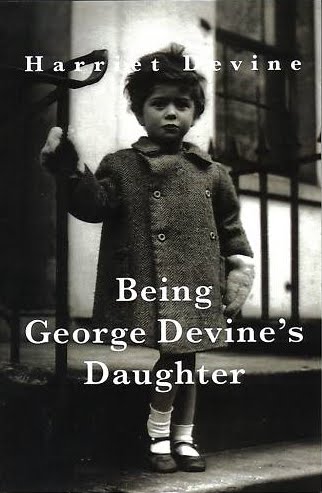
Harriet Devine
Novel Insights
Paperback Reader
Verity’s Virago Venture
Stuck-in-a-Book
and Hannah Stoneham has written about My Silent War by Kim Philby… click on the link to find out why it’s relevant to this read-along!

Ooo, EDIT: another review! Buried in Print

3.) A couple of links to BBC Radio programmes, probably only applicable for UK readers – these expire, I think, hence the time-sensitive thingummy. Jane very kindly emailed to tell me about Murder Must Advertise by Dorothy L. Sayers – you can listen to it here, courtesy of BBC7. I had to confess to not liking Ms. Sayers, but I’m aware that a lot of you do… You can see Jane’s thoughts about the same book here.

And a couple people alerted me to this Radio 4 programme about The L-Shaped Room by Lynne Reid Banks (which is in my 50 Books You Must Read). It’s the book’s fiftieth anniversary, and Banks is in fine fettle (at 80) as she discusses it with James Naughtie and some readers. Will I raise all sorts of fury against me if I say Naughtie’s questions are a bit asinine? But LRB is fascinating, as is the programme. Do have a listen – and read the novel, of course!

That’s all for today, folks. I spent my afternoon exploring Long Wittenham, chosen at random as a pretty-sounding Oxfordshire village – I was not disappointed, and I daresay there’ll be photos later in the week.

Project 24…

Project 24 – #11

I thought of Colin when I bought my eleventh book this year, because one of his (failed) missions in life is to stop me buying copies of books I already have. Well, I already have three other copies of this book… but it’s a personal favourite, and I don’t have this edition with this introduction, and… well, I don’t imagine I need to defend myself to you lot.

I bought it in the Albion Beatnik bookshop in Oxford, a lovely little shop which has both new and secondhand books (and, recently, a cafe – amazing how much they can fit in there). They shelve their new books by decade of publication, and even wrap up your purchases nicely:


But I will tease you no longer. The eleventh book I’ve bought this year is The Love-Child by Edith Olivier. I already have a couple Virago editions, and one from its first printing, but not this little gem – not only does it have a lovely dustjacket with an illustration by the Rex Whistler, it also has an introduction by Lord David Cecil. OH, it’s just lovely. And another lovely thing is that my camera has started doing its classy-closey-zoomy function again, after sulking for a year or more. It’s outlived several laptops, so I can’t get too cross with it.


Hope you had a good weekend – and have a great week ahead of you!

Stuck-in-a-Book’s Weekend Miscellany

Happy weekend, folks – my brother is staying, so hopefully lots of fun will be had. Tomorrow night I’m off to see The Real Inspector Hound by Tom Stoppard, which I loved about a decade ago and am hoping to love once more. Colin, given the option of seeing this or going to a friend’s house, revealed his culture-vulture nature and chose the latter. Twins, eh?

For those awaiting a round-up of The Vet’s Daughter reviews, I think I’m going to wait ’til Monday, because there are one or two in the pipeline… instead, let’s go for a book, a blog post, and a link.

1.) The book – isn’t out yet, but I’m looking forward to it (and hoping maybe one will come for review… *puppy-dog eyes*) – one of the new Bloomsbury Group reprints, Mrs. Ames by E.F. Benson, as recommended by Elaine at Random Jottings. I like the new colours they’ve picked, and applaud anything and everything to do with this series. AND was chuffed to see myself quoted in their new catalogue…

2.) The blog post – is not quite new, but it took me a week to get over my jealousy… here is Naomi (aka Bloomsbury Bell) and her account of the Charleston Literary Festival. I’m not an especial fan of Carol Ann Duffy (indeed, I have read a total of one poem by her) but I am a fan of lawns and chairs and cake…

3.) The link(s) – courtesy of my online book group, who have pointed me in the direction of 50 Crime Writers To Read Before You Die (an odd stipulation… how many will we read after we die? Then again, I really hope there are books in Heaven) and a link about some very fancy books to be sold at Sotheby’s. Thanks Sherry and Curzon!

Also, I made a map of Oxford bookshops for a friend who’ll be visiting soon, which I thought I’d share with you all, in case you’re ever here… Long-term readers of Stuck-in-a-Book will remember my Stuck-in-a-Book’s Oxford photo tour in three parts (gosh, three years ago). I’m planning on doing another one at some point soon. But here’s something to whet the appetite (it’s very small, but hopefully readable if you click on it? Otherwise email me and I’ll send you a copy):

Picture Perfect

I’ve so much enjoyed all the pictures you’ve put up on your blogs in response to my challenge this week! I suppose it ought to have a name… A Picture Paints A Thousand Books , perhaps? Well, I thought I’d put all the links into one post… and unveil the picture that reflects the other half of my reading! I gave you the one which is all genteel and middlebrow, but this represents the other side:


I immediately thought of Escher when I wanted to depict my taste for quirky, slightly surreal novels – I like that the image is also very domestic. This is quirky but not macabre, and still focused upon the home: perfect.

Here’s a list of links to follow up, to see other people’s choices – I’ll keep adding to the list as people send me the links! Do let me know if you’ve tried to find your Picture that Paints A Thousand Books…

Agnieszkas Shoes
At Pemberley
Bibliophiliac
The Blue Cabin
Book Bath
Book Snob
A Bookish Space
Books Before Breakfast
A Book Worm’s Haven
A Borrower Be
The Captive Reader
Cardigan Girl Verity
Chasing Bawa
Cornflower
David Nolan
Desperate Reader
Farm Lane Books
A Few of My Favourite Books
Find Your Next Book Here
Gaskella
Hannah Stoneham
Harriet Devine
Kiss A Cloud
Light, Bright, and Sparkling
Lizzy Siddal
Mental Foodie
Morgana’s Cat
My Porch
Off at a Tangent
The Oliva Reader
Overdue
Paperback Reader
Pattinase
Random Ramblings
A Rat in the Book Pile
Ready When You Are, C.B.
Roses Over a Cottage Door
Savidge Reads
Shelf Love
Tampa Bookworm
Tartan Wallpaper
Tea Time With Marce
The Treacle Well
We Be Reading
Winston’s Dad

The Vet’s Daughter

Right, then – The Vet’s Daughter by Barbara Comyns. Hopefully you’ve managed to find yourself a copy, and maybe even read it. I’ve already seen one or two reviews cropping up around the blogosphere, but there’s still plenty of time to get involved – let me know if you’ve blogged about The Vet’s Daughter (or even another Comyns novel, if that’s what you could find) and I’ll do a round-up post on Friday or Saturday. Polly (Novel Insights) and Claire (Paperback Reader) are also heading up this informal readalong, so pop over to them this week too.

I’ll hang my colours to the mast from the off, and say that I am a big Comyns fan. You can see my thoughts on four other Comyns novels here, and The Vet’s Daughter is vying for top place at the moment. In a slim novel, an awful lot seems to happen. Alice is the vet’s daughter in question, and starts the novel living with her sickly, scared mother and her unpredictable, violent father. There is little happiness in this depiction of home life, but nor is it a portrait of Dickensian bleakness. Alice’s father refuses to see his wife while she is dying, sells off people’s pets to a vivisectionist instead of putting them down, and has bountiful meals while keeping his family on strict rations. But, though selfish and unkind, he is not barbaric. Comyns knows, despite her often surreal style, that to create a truly cruel character there must be no exaggeration. Alice’s father is not an ogre, and he is all the more evil for it.

The slow dying of Alice’s mother is drawn perfectly – as is her fear, to the last, of causing her husband any annoyance. Once she is gone, she is swiftly replaced by Rosa – a selfish, silly, and bawdy barmaid with plans to use Alice as bait wherever possible. Eventually Alice manages to leave, but the house she moves to (half burnt-out; run by cacklingly insolent servants and occupied by the melancholic mother of a locum vet) is no romanticised escape. Even when a potential suitor comes along, Comyns privileges her surreal version of reality over a fairy-tale ending.

And I haven’t even mentioned the most surreal aspect (though one which feels completely congruous when reading the novel): In the night I was awake and floating. As I went up, the blankets fell to the floor. I could feel nothing below me – and nothing above until I came near the ceiling and it was hard to breathe there. I thought “I mustn’t break the gas glove”. I felt it carefully with my hands, and something very light fell in them, and it was the broken mantle. I kept very still up there because I was afraid of breaking other things in that small crowded room; but quite soon, it seemed, I was gently coming down again. I folded my hands over my chest and kept very straight, and floated down to the couch where I’d been lying. I was not afraid, but very calm and peaceful. In the morning I knew it wasn’t a dream because the blankets were still on the floor and I saw the gas mantle was broken and the chalky powder was still on my hands.
As Barbara Trapido said at a talk I attended the other day, “Some people criticised me for having a character levitate in Juggling, but I just thought – yes, he would levitate.” Something about Barbaras, obviously.

As with all the novels from the first half of Comyns’ writing career (she wrote eight books between 1947-1967, and a further three in the 1980s) the words ‘matter-of-fact’ come to mind. The Vet’s Daughter is told in the first person, and Alice’s naive and ingenuous voice never over-elaborates the cruelties she and her mother suffer. ‘One morning a dreadful thing happened’, for example, is how she introduces the fact that her father has prematurely sent a coffin-maker to measure her mother. This style is a diluted version of the child’s-voice in Sisters By A River, but is still strikingly unlike most novels’ style, and a remarkable gift of Comyns’.

I’m keeping a close eye on my depleting stock of Comyns novels – it will be sad once I’ve reached the end of them – but I know I shall return to The Vet’s Daughter as well as Comyns’ other books. It is a truly remarkable book, and she is a truly remarkable writer. The surreal meets the domestic, and the result is quite extraordinary.

Mememememe….

I’m so pleased with the responses you’ve given so far for the picture challenge – do keep them coming in.

I’m feeling too heavy-in-the-mind for a book review today (trying to make Big Decisions, and failing to get anywhere with them) but I thought I’d have a go at a meme I saw over on Harriet Devine’s blog – do have a go yourself if you’d like.


What is your favourite drink while reading?

A nice cup of tea. Earl Grey tea if it’s the evening.


Do you tend to mark your books while you read, or does the idea of writing in books horrify you?
It does rather horrify me… I make tiny pencil marks on the back of the title page, to denote pages I want to cite in a review. Biros aren’t allowed anywhere NEAR my books. Although, ironically, I do quite like it when other people have written in books before I buy them.How do you keep your place? Bookmark? Dog-ears? Laying the book open flat? I use a selection of art postcards as bookmarks, trying to match up the painting to the feel of the book… or the colour of the book, if I’m feeling superficial.Fiction, non-fiction or both? Usually fiction, but my favourite reads of the last few years have all been non-fiction… but I still read about 80% fiction, I’d estimate.Do you tend to read to the end of a chapter or can you stop anywhere? I stop anywhere, sometimes mid-sentence if I’m suddenly sleepy!
Are you the type of person to throw a book across the room or on the floor if the author irritates you? Only metaphorically… I don’t remember actually ever doing it.If you come across an unfamiliar word, do you stop and look it up right away? Sometimes, especially if I’ve seen a word I don’t recognise a few times in the same week. And almost invariably I immediately forget what the word means. I think my brain has reached saturation point…
What are you currently reading? Let’s see… The Sandcastle by Iris Murdoch, More Talk of Jane Austen by G.B. Stern and Sheila Kaye-Smith, The Eye of the World by Robert Jordan… actually, I think that’s it. Very unusual – I’m usually reading at least six or seven.
What is the last book you bought? That would be An Experiment with Time by J.W. Dunne.
Do you have a favourite time/place to read? Any place, any time! Not that much in bed anymore, but quite often on my bed. Actually most of my reading probably takes place on public transport.
Do you prefer series books or stand-alones? Stand-alones, definitely. I do get a bit snobby over series… though I don’t really know why.
Is there a specific book or author you find yourself recommending over and over? Hahaha, more or less anybody who has ever met, seen, or heard of me will have had Miss Hargreaves by Frank Baker recommended to them at some point.
How do you organise your books (by genre, title, author’s last name, etc.)? In Somerset, they’re arranged by author; in Oxford… well, they’re grouped vaguely by things I think are similar in mood. It wouldn’t make sense to anyone else, but it works for me… but I have to keep the ones in Somerset in some sort of rational order, because I expect Mum and Dad to be able to find things I want them to post to me!
Barbara’s additional question: background noise or silence? Hmm… I like music playing in the background when I read, but not chatter or television. Somewhere between the two.