StuckinaBook’s Weekend Miscellany

Happy weekend, everyone! I will be hither and thither for much of it, so I’m glad the heatwave is over. I’m also finding myself not super in the mood for reading at the moment, which is very unlike me and will hopefully pass soon. (Not an eye issue this time, thankfully, just not always able to get into a book – more like the reader’s block I wrote about for Vulpes Libris years ago.)

But here is a book, a blog post, and a link to entertain you this weekend, whatever you are doing:

1.) The blog post – I loved Brona’s reminder of why Dept. of Speculation by Jenny Offill is so good.

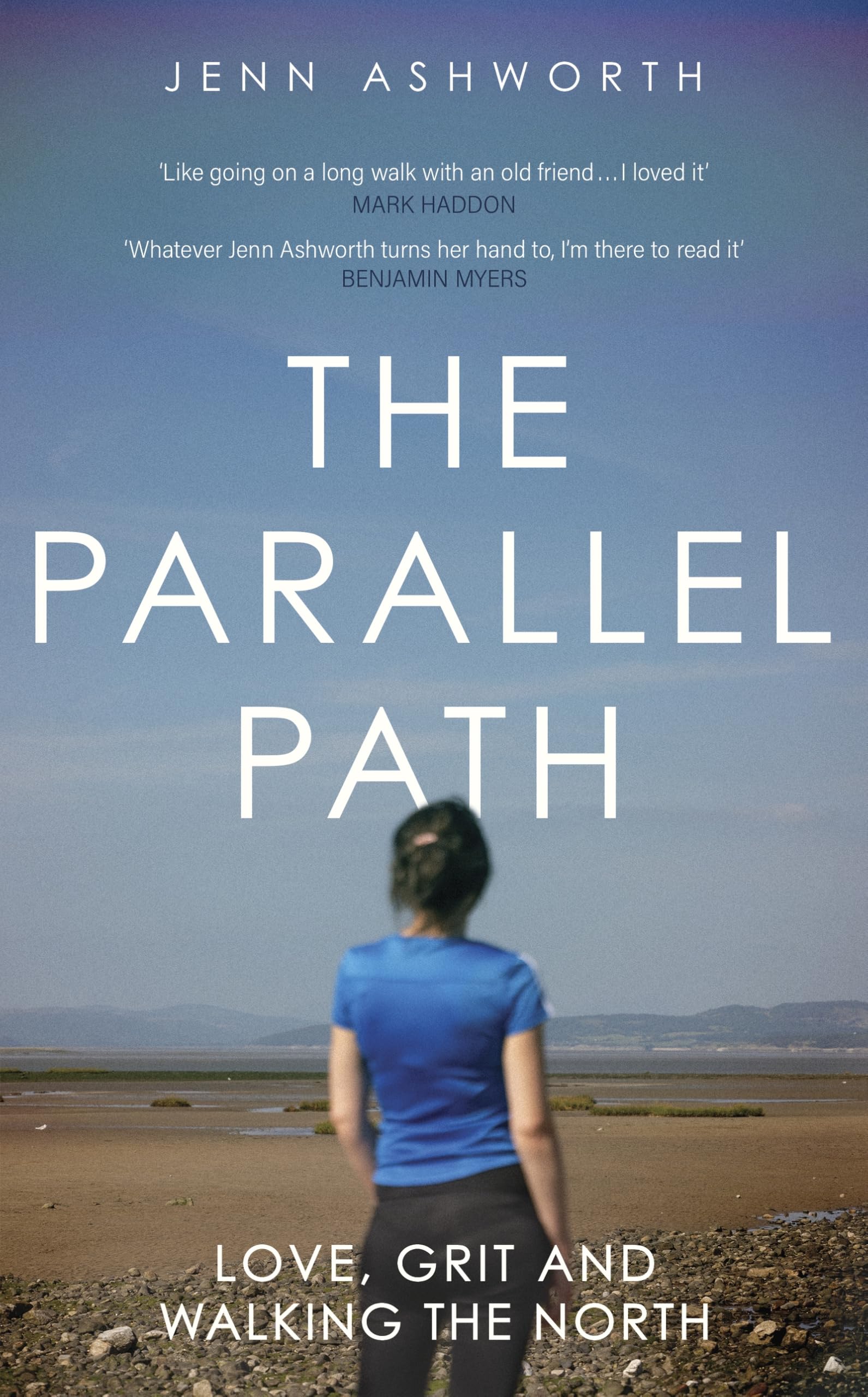
2.) The book– I love Jenn Ashworth’s writing, particularly her novel Fell and her memoir Notes Made While Falling. She now has another memoir out – tellingly, given the recent Salt Path debacle, it’s about walking as a way of healing. I’m really keen to try The Parallel Path: Love, Grit and Walking the North.

The Parallel Path: Love, Grit and Walking the North : Ashworth, Jenn:  Amazon.co.uk: Books

3.) The link – and, just in case that mention above is baffling and you’re the one person in the bookish community who hasn’t read the exposé on The Salt Path – here is some brilliant journalism from Chloe Hadjimatheou.

Huffley Fair by Dorothy Evelyn Smith

Huffley Fair by Dorothy Evelyn Smith | Goodreads

Ever since discovering the miraculously good O, The Brave Music by Dorothy Evelyn Smith, I’ve been steadily making my way through her other novels – wondering if anything will be equal to it. I’ve enjoyed everything I’ve read by her, though that extraordinary spark seems to have only struck once. The other novels are very good but not classics. So, what of Huffley Fair (1944), the most recent I’ve read?

The novel covers quite a long time period and several generations of a family, and we are back in a similar setting to several of Smith’s other novels – the moors and the surrounding villages. Here is the opening paragraph, with Smith’s ability to capture place beautifully and invite you in.

Up on the hill-tops the day was broad awake; warm with sun, bright with gorse and hawthorn and star-eyed daisies, loud with bird-song and the hum of bees, washed with dew and wind. But deep in the valley, where the Huff was a dark-and-silver thread between two towering hills, the day still slept, waiting for the sun.

Into this scene comes a group of travellers – of gypsies, in the language of the novel. I say ‘family’. There are quite a few tangential relationships between these people, but they are bonded together by their work and their lifestyle as itinerant fair-workers – rather disdained by all the communities they go to, and perhaps disdaining them in return, but accepted for their brief period of their work. The fair offers entertainment to the children and to the townfolk doing long hours at tedious jobs. Among them is Lou, a pretty, unsociable young woman who will come to the centre of the novel.

One family unlikely to be found at the fair is Abel’s. He is a serious-minded craftsman, opening the novel finishing off a chair. Unorthodoxly, he intends to use it to propose to Hilda, a neighbour for whom he feels no love and little affection, but who seems the inevitable choice as a wife. She, in turn, considers him her last hope (more on her in a minute). But while Abel gets his living from building furniture and the like, his passion is as a preacher at the Mission. He preaches fury and fire, the love of God swept up more forcefully in the wrath of God. It is the passion that draws people: his church is exhilirating, and far more people come than to the tamer churches nearby.

The kindest, loveliest characters in the novel are Abel’s parents – Alfred, who also preaches, and Eliza, who bakes and cares and worries. The evilest character in the novel is Hilda’s father – who brings out the sharpness of Smith’s pen:

Years ago, Samuel Berridge had come to Huffam to die. That he was still living was a matter of some regret to a number of people, not least of whom was his daughter Hilda.

Fat, timid, a good hosuekeeper and willing slave, and foolishly fond by nature, Hilda had been marked down from birth as her father’s lawful prey. Her mother departed this life at the earliest possible moment, thankful in the knowledge that in heaven there is no marrying or giving in marriage. Her brothers bolted from home as soon as they knew how to turn a penny, honest or otherwise. Her sisters leapt into the arms of the first young men who looked at them, safely entrenching themselves in homes of their own. On Hilda’s shoulders fell the task of caring for her father’s declining years, and it was a task no one wished to wrest from her.

Samuel is such a dark character in the novel, and some of the abuse was really difficult to read.

The moment that changes the trajectory of the novel – and Hilda’s future among others’ – is Abel stumbling across Lou on the moors, who has sprained her ankle. He tends to her, somewhat unwillingly, and somehow they go swimming together. Smith gives us three ellipses for what happens next – but when we see Abel come to the Mission (late for preaching), she gives an extraordinary scene of his preaching. We feel whipped up in the furore his congregation experience, and it’s clear he is driven by some new force. It’s hard to convey sermons (I remember two others in fiction, very different – Lease of Life by Frank Baker and Bewildering Cares by Winifred Peck) but Smith does it with brio.

What has made him so animated? If we hadn’t guessed, we can piece it together a little while later – when Lou reveals to her fellow fair-goers that she is pregnant. They reason that she can get some money from the father and so, reluctantly, she allows herself to be taken to demand it. What they don’t expect is Alfred insisting that his son marry the woman he has made pregnant. And so a marriage takes place that nobody truly wishes, least of all Lou. And there goes, it seems, Hilda’s chance of security.

The next section of the novel shows Abel and Lou living together in Huffley, Abel having refused to stay with the family – and, indeed, he cuts himself off completely. They live a few miles away but may as well be at the other end of the universe. Absurdly, Abel blames Lou for all of this – for tempting him to sin, and ruining his life. Smith doesn’t overly editorialise, but any reader will be deeply frustrated by him: he makes everything worse for everyone through his stubbornness, unkindness and selfishness. Lou believes that she has wronged him and, in a subdued, sad way determines to ‘make it up to him’ through her lifelong obedience. Huffley Fair keeps going into the next generation too, and beyond, with their child and her future. But I shan’t reveal any more of the plot because we’ve gone far enough.

So, what was Huffley Fair like to read? Smith writes beautifully, and her characters are so well-realised and believable. It’s that believability which makes them so painful to read at times. As elsewhere, she captures the landscape in a memorable and evocative way and, as the novel takes place over several decades, we see the shifts that come with modernisation and the approach of war.

There is brightness in the novel – chiefly Eliza, and perhaps her other son, Walter, whom I haven’t mentioned. I thought Huffley Fair was very well-written and I did like reading it but, gosh, what a heaviness to it all. I often say how surprising it is that O, The Brave Music is such an uplifting novel when so many sad things happen to the characters. The opposite is true for Huffley Fair: it is such a melancholy novel. The aftermath of one man’s stupid, cruel choices is drawn out through years and years, and it is bitterly sad. Maybe that’s the difference between the triumph of hope over unavoidable tragedies in O, The Brave Music versus the very, very avoidable tragedies in Huffley Fair where hope is deliberately trampled under pride.

It’s still very good, but goodness me it won’t cheer you up. I’m not sure I’ll reread, certainly not as often as I know I’ll return to O, The Brave Music throughout my life, but I’m glad to continue expanding my relationship with Smith.

#140: Our 10 Favourite Books from 10 Years

It’s time for our favourite 10 books from 10 years of ‘Tea or Books?’!

Rachel and I have looked through the books we read for the first ten years of the podcast and have each picked our ten favourites – thank you for everyone who suggested this fun idea. Do get in touch at teaorbooks[at]gmail.com if you’d like to suggest anything for further episodes. Find us above, on Spotify, Apple podcasts, or wherever you get podcasts.

Here are our top tens, with the episodes in which they first appear, if you’d like to read more. Don’t read this if you don’t want spoilers!

RACHEL’S TOP TEN

10. Catherine Carter by Pamela Hansford Johnson (ep 137)
9. Guard Your Daughters by Diana Tutton (ep 8)
8. A Winter Away by Elizabeth Fair (ep 36)
7. The Lark by E. Nesbit (ep 56)
6. Father by Elizabeth von Arnim (ep 91)
5. A Compass Error by Sybille Bedford (ep 47)
4. The Heir by Vita Sackville-West (ep 45)
3. A Pin To See The Peepshow by F. Tennyson Jesse (ep 34)
2. Four Gardens by Margery Sharp (ep 102)
1. One Fine Day by Mollie Panter-Downes (ep 13)

SIMON’S TOP TEN

10. Cider With Rosie by Laurie Lee (ep 20)
9. Perfection by Vincenzo Latronico (ep 137)
8. Enbury Heath by Stella Gibbons (ep 107)
7. The Ladies’ Paradise by Emile Zola (ep 130)
6. Four Gardens by Margery Sharp (ep 102)
5. The Semi-Detached House and The Semi-Attached Couple by Emily Eden (ep 48)
4. The Sweet and Twenties by Beverley Nichols (ep 52)
3. The Diviners by Margaret Laurence (ep 103)
2. My Family and Other Animals by Gerald Durrell (ep 20)
1. Greengates by R.C. Sherriff (ep 31)

The other books and authors we mention in this episode are:

Giving Up The Ghost by Hilary Mantel
On Being Ill by Virginia Woolf
Small Bomb at Dimperley by Lissa Evans
Dark Like Under by Alice Chadwick
Emma by Jane Austen
The Goldfinch by Donna Tartt
As I Walked Out One Midsummer Morning by Laurie Lee
Mamma by Diana Tutton
The Young Ones by Diana Tutton
Excellent Women by Barbara Pym
Westwood by Stella Gibbons
High Wages by Dorothy Whipple
Babbacombe’s by Susan Scarlett
The Enchanted April by Elizabeth von Arnim
Five Windows by D.E. Stevenson
The Stone of Chastity by Margery Sharp
A Favourite of the Gods by Sybille Bedford
Messalina of the Suburbs by E.M. Delafield
A Jest of God by Margaret Laurence
Cluny Brown by Margery Sharp
The Spring Begins by Katherine Dunning
Crooked Cross by Sally Carson

Roofs Off! by Richmal Crompton

Ten years ago, I wrote a blog post about my changing relationship with Richmal Crompton. She’d gone from being a favourite author I raced through in my late teens to being an author I felt a little less sure about – though a lot of that was probably connected with having read her best work so early. And yet I keep returning to her every few years, making my way through the collection of her adult novels that was compiled because I managed to get in there in the sweet spot – when secondhand booksellers online made her novels accessible, but before they became prohibitively expensive.

I’ve recently finished Roofs Off! (1928), which I bought back in 2010 and which seems now more or less impossible to source online. Which might make it annoying to say that it’s one of the best Cromptons I’ve read in a while – or, perhaps, simply that I was in the right mood for it. Because her writing is seldom nuanced or deep – but, at the right moment, it is compulsive and wonderful in a slightly soapy way.

That’s perhaps a bit unfair. Her characters are often interestingly constructed – she just reuses the same types over and over again. There are always posh people who aren’t happy; poor, honest folk with hearts of gold; stiff, loveless marriages; children who don’t understand the machinations of the adults around them – and, most specifically and most frequently, a pair of retired women in a toxic friendship with hidden lesbian undertones.

All are present in Roofs Off! but it takes a while to get to them. For a long stretch at the opening of the novel, we remain with one character: Martin Evesham. He is in his early 50s and recently widowed – mourning his wife, but also free for the first time in many years. Mary was clearly strict about rules, behaviour, and social climbing. Martin had to set aside his artistic ambitions for a respectable and lucrative career in business. I’m not sure Crompton ever convinces us that Mary had her up-sides (though she often tries to) – but she does convince us, on the other hand, that Martin is better off without her.

I always love house hunting scenes, and Martin starts looking at homes on a newish housing estate – not with any intention of buying, but swept along by an estate agent (who evidently knows Martin’s mind better than he does).

“Is this all the Estate?” he said; “Chestnut Drive and Woodlands Avenue?”

“There’s Fairview,” said the agent with a slightly pained expression. “Bungalows and cheapish houses. Quite distinct. No, you couldn’t do better than Woodlands Avenue. It’s between. It’s neither the one thing nor the other. It’s safe. It hasn’t the expenses of Chestnut Drive and it hasn’t the – I won’t say commonness – but you know what I mean – of Fairview.”

The British class system is thus rigorously delineated! Though when Martin moves to Woodlands Avenue – because of course he does – there is a wider range of class than you might expect from the estate agent’s description. At its pinnacle is a young woman engaged for years to a young man who will receive a title – but who strikes up a friendship with the working-class, shy man who lives next door. There are children who are dear friends but know they must hide it from their parents, because of their class difference. And Martin discovers (in a rather unrealistic coincidence) that the woman who lives at the manor, whose estate has been sold off for land to build these houses, is the woman whom he loved before he got married. Class runs like a seam through almost every dynamic in the novel.

When I was 17, I took Crompton’s enormous casts in my stride. Nowadays, I do struggle when we are suddenly introduced to 20+ people over a handful of pages. To be honest, I was quite enjoying the focus on Martin. And yet, in Roofs Off!, I did manage to work them all out and keep them in the correct places in my mind. The budding friendship/romance between the engaged woman and the working-class man was particularly lovely, and done better than such things often are.

The title is explained quite late in the novel, when Martin and other characters are discussing a child’s game with some cardboard dolls’ houses – where the roofs had to be remoed on the signal of ‘Roofs Off!’ to reveal the hidden and interesting lives of the dolls therein.

“I wonder,” said Martin dreamily, “which would be the most interesting life in Woodlands Avenue if someone said, ‘Roofs Off!'”

Mrs Glendower shot him her quick smile.

“They’d all be indescribably dull,” she said.

“I doubt it,” challenged the doctor. “I believe that there isn’t such a thing in the whole world and never has been such a thing as a dull life. What you see of it may be dull, but you only see a part of the pattern or a back side of the pattern. If you could see the whole you’d be amazed. You’d be thrilled. A life may be sad or even uneventful, but it can never be dull.”

Crompton’s characters are not dull – and nor are they especially memorable, particularly in the early- to mid-career. Her best novels do seem to have come in a run at the end of her writing. I think what makes many of her novels enjoyable romps rather than particularly nuanced works is that no characters ever act ‘out of character’. Once they are established as a type, you know they will behave precisely in that manner on every single page. I think the best writers of character are those who can make somebody act inconsistently, and make it both believable and significant.

I’ve also realised what marks out my least favourite Crompton novels: overuse of ellipses. So many of her earlier novels put ‘…’ at the end of almost every sentence, I suppose with the intention of adding airy poignancy. It quickly becomes too much. In Roofs Off!, she uses it sparingly – and that alone is enough to elevate it.

The cast of Roofs Off! has no real external reality to the novel, but sometimes that’s fine. Crompton is clearly very interested in her characters, even when they are strikingly similar to people in many of her other novels. There is enough entertaining stuff about houses and housing estates to mark this one out for me, and certainly plenty of plot to race through. In the right mood, in the right place, I think Roofs Off! can head up towards the upper half of Crompton’s prolific output – and it might even be one I return to when and if I finally get to the end of her many novels. But if you can’t find it for sale, you’ll find very similar things in almost any of her novels – and have a lovely, inconsequential time doing so.

Snow Road Station by Elizabeth Hay

It was only towards the end of reading Snow Road Station (2023) by Elizabeth Hay that I realised it was a sequel to an earlier book but, you know what, I don’t think it mattered. I bought it in Oxford’s loveliest independent bookshop, Caper, drawn by the cover, by the fact Elizabeth Hay is Canadian, and by the recommendation from Mary Lawson on the cover. I also have one of her books which I bought in Canada (not the prequel to this) but I think that came a bit lower than those other recommendations.

I was also very drawn by the opening to the blurb:

In the winter of 2008, as snow falls without interruption, an actor in a Beckett play blanks her lines. Fleeing the theatre, she beats a retreat to Snow Road Station – a barely discernible dot on the map of Ontario.

Now, that is good marketing copy! Consider me sold. The actor in question is Lulu. She has had a fairly celebrated career on the stage, but now she is in her sixties – still very attractive and with lots left to give, but with fewer and fewer professional demands, and a life that is looking increasingly lonely.

Beckett’s plays are notoriously difficult for actors, and Happy Days most notorious of all. As you may know, it is one long monologue for a character called Winnie who, as the acts progress, becomes steadily more and more buried in a pile of sand. Beckett demanded total precision in his plays, down to the ums and ahs, and Lulu cracks. She corpses on stage, forgetting her lines. And her confidence is gone. She decides to abandon rehearsals and retreat to visit her friend Nan.

Now, if I’d read His Whole Life, I’d doubtless be totally up to speed with the relationship between Lulu and Nan – as it is, I was piecing it together. Lulu is visiting for the wedding of Nan’s son, Blake, to a woman he doesn’t want to marry. Lulu sees the word through the lens of theatre, and Hay uses this in a way I found effective – not too often, to feel laboured, but giving you an understanding of her vantage on reality when so much of her day-to-day experience is understood through a prism of stage character.

Blake’s limp hair fell into his eyes. It could use a good wash, Lulu thought, but maybe that’s how it looked after a good wash. He was a blend of Nan and her brother Guy, but morose and much more confrontational in his born-again life as an evangelical preacher. She would have cast him as Iago or Angelo, a blend of hot and cold, an agitated man whose blood is very snow-broth, and Nan as some gaunt queen who’s in the dark.

I’m always interested in how writers create Christian characters (usually very badly), but I found Blake quite a successful portrait. He has the stubbornness that comes of a fixed morality, and perhaps the melancholy that can accompany sacrifice, but his happiness or otherwise stems from his beliefs and behaviours much as everyone else’s does. He is not marked out, by Hay, as particularly victim to his worldview – and, frankly, in modern literature that is up there with the better portraits of Christians.

There are a range of other characters – Jim, Blake’s half-brother, who was apparently the central character of the earlier novel; Lulu’s brother Guy, who still lives nearby and with whom she has a rocky relationship; Hugh, a piano tuner and handyman who is perhaps a little idealistically kind and wholesome.

The villain of the piece is Nan’s ex-husband, John. There is a harrowing scene where he gives Lulu a lift and expects them to sleep each other. It seems to be the ‘price’ of this favour. When she resists, he responds with a cruelty that is not physically violent – but so vile, and so precise, that you’ll remember it for a much longer time than most portrayals of abuse.

The novel is set in three ‘acts’ – called Snow, Road, and Station – and there is a lot that feels play-like in its structure. It is firmly set in a particular time and place, and time – 1995 – is significant because the second Quebec independence referendum is taking place, and characters align themselves on either side. But in another way, it is eternal. Snow Road Station is about relationships – between old friends, between parents and children, between somebody’s life and the life they had hoped to live. Hay has extraordinary control over her plot and her characters. Not in the sense that there is a tightly orchestrated set of story points, but in her clear, total understanding of who these people and how they will act – within language that feels loose and thoughtful, but is clearly chosen with absolute exactitude. I can see why Mary Lawson loved it. Hay is an expert storyteller.

Lulu thinks, of the town’s history, “Snow Road Station was an arrival, a departure, a long wait — a place of rest, a stoppage, yet a road.” In the novel, it is all those things. Hay certainly resists any hokey ‘Town good; rural bad’ or ‘Town bad; rural good’ dichotomy – though she recognises that there are certain places that allow and encourage you to develop different facets of yourself. It’s a beautiful, dark, curiously affirming portrait of a group of people who are seldom totally honest with themselves or each other, but whom we end up understanding totally. A triumph – and now I clearly need to read the previous book.

Woman Alive by Susan Ertz

I have only read one Susan Ertz novel before Woman Alive (1935) and it was a good, fairly traditional novel about generations of a family tangled up in domestic disputes and hopes. Nothing very unexpected, though a good version of that kind of thing. Ertz was pretty prolific, and nothing in that novel would have led me to imagine what I’d find in Woman Alive – which is a sci-fi dystopia.

It starts off in the present day, with a man sent by time machine into the distant future (erm, 1985). I’d say Ertz lingers a little too long on the mechanics of the thing – or, rather, it’s done pretty quickly but with more details than we need, because the time travel is pretty irrelevant and just a way to get us into 1985. (Two things to note: isn’t it interesting that it’s only one year off Orwell’s more-famous Nineteen Eighty-Four? and also, more personally, to the year I was born.)

What is happening in 1985, in the United States of Europe(!)? Well, our narrator can explain:

A new gas has been secretly manufactured by the attackers against which the people attacked had no defence. It was called, from its greenish-grey colour – it was not, like most gases, invisible – celadon gas, and it poisoned as well as burned. The destriction of property had ceased to be one of the objects of war; only the destruction of life was aimed at.

[…]

The bodies of those it killed generated a disease – a sort of by-product of the gas itself – which proved to be highly contagious and invariably fatal, but – and was the fact with which the entire world was now faced – fatal only to women. Within twelve hours of the launching of that brief war, which lasted only eight, women began to drop dead in the streets, in their houses, in the fields, in aeroplanes, everywhere. Some of them succumbed at once; others lingered on for days.

There is no escape from this sudden plague. ‘Women were isolated, sent up in captive balloons, taken to the tops of high mountains, injected with every known serum, but death came to them all.’ Across the whole of the earth, all women and girls perish.

And, of course, this means that the human race will be over – not immediately, not for the life-span of the youngest boys alive at the time of the crisis, but eventually. Much of the world grinds to a halt, and Ertz is interesting on the professions that continue and those that give up:

Only the painters and the scientists, it appeared, were going on with their work as before. The happiest, most absorbing, and pleasantest of all the arts furnished its own rewards. The world might end, but painters went on painting because it was so much pleasanter to paint than not to paint. Scientists, too, were able to forget mankind’s doom in their researches, their almost divine interest and passion for truth providing momentum enough to carry them through even such a monstrous tragedy as this. 

It felt quite telling, in current discussions of AI, that the very creative professions that AI is trying to replace are the ones that Ertz sees as essential no matter waht.

BUT – the title of the novel might have clued you in that all is not as it seems. There is one woman alive after all.

Again, Ertz is keen to give us some back story about how this woman has survived – something to do with an all-purpose innoculation given previously by a doctor, who then sadly died before he could pass it on to anyone else – but, again, it scarcely matters. The important thing is, the narrator and a couple of other men discover the existence of the woman: Stella. She is the sole woman in the world. And what a predicament to be in.

Soon, the world’s nations are feuding for the chance to have a man from their country be the father of the new generations of humankind. Things quickly turned militaristic. Stella finds herself celebrated as a queen – and yet expected to do the whims of powerful men. Her wishes are scarcely considered – until she takes a stand.

I enjoyed the ways in which Ertz thought through the likely responses to something of this nature, not least the proliferation of nay-sayers and conspiracy theorists. Leaflets are distributed denying that Stella truly is a woman, and can’t you imagine this sort of faction existing? We’ve already discovered they exist in almost any crisis. The leaflet reads…

“Men! You are easily fooled. This is not a woman at all, but a boy dressed up. It is a shameful trick on the part of the British Prime Ministre [sic] for the glory of Britain. There are no women. Go back to your homes. It is nothing but a hoax, perfidious and indecent.”

I haven’t even mentioned the boy in Stella’s care, and the other men who feature – there are villains and heroes – because this is really Stella’s book. She is forthright and determined, while also ill-equipped (as who would not be?) to deal with this mantle. Ertz has created a memorable heroine you’ll certainly be cheering on.

Woman Alive is an enjoyable, well-written, often rather clever novel that whirls past. Written during a period where the next world war seemed likely if not impossible, it does also respond well to the rising emnities between countries. My only wish is that Woman Alive had been a little more substantial. It’s a novella and is over almost as soon as it has properly begun – not least because we spend precious time, as discussed, on the mechanics of the sci-fi. It is very rare that I ask for a novel to be longer, but I think Ertz’s ingenious idea deserved more space for exploring it, and more development for the people involved.

But what an unusual find for 1935! And how (almost) totally forgotten it seems to be. I think Woman Alive makes interesting reading alongside dystopian sci-fi classics of the period – and is certainly more atuned to the specific plight of women in these sorts of futures than most books are. It does not have the substance of Nineteen Eighty-Four and other novels that are better-remembered, but it is still very much worth remembering as a moment in the history of early/mid-century dystopian fiction.

Oh, and one final point – throughout are wonderful illustrations by Bip Pares that I think do a brilliant job of combining futurism with a distinctively 1930s Art Deco style, with hints of Fascism in there too. I think Woman Alive is worth hunting out for the illustrations alone – here are a couple of them.

Project 24: Book 15

I have a handful of ‘want’ alerts set up at abebooks – books that aren’t currently available anywhere, at least not affordably, so that I get an email when they turn up. It’s how I got my hands on Cynthia Asquith’s novels, it’s how I’ve added some rarer A.A. Milne and E.M. Delafield titles to my shelves, and numerous other books have wended their way to me via those exciting ‘We’ve found the book you wanted’ emails to my inbox.

I don’t remember why or when I added Iris Barry’s Here Is Thy Victory to that list, but I daresay I must have been sold by the description of the novel somewhere: it is about a plague of involuntary immortality. That’s so up my street – something fantastic, but in the real world, and able to comment on human behaviour and anxieties – and I patiently waited until it could be mine.

Even better, as you’ll see if you swipe in this Instagram link – it came signed by the author!


View this post on Instagram


A post shared by Simon Thomas (@simondavidthomas)

For Flute and Piccolo by E.H. Lomer

One of the loveliest parts of being Series Consultant for the British Library Women Writers series is getting to speak to the relatives of authors we’re republishing. When the extraordinarily good The Spring Begins by Katherine Dunning was brought back to life, I got to have a phone call with Dunning’s great niece. Did I know, she asked, that Dunning’s sister also wrote books? Then, so kindly, she sent me not only a pile of Dunning’s novels – but one by Dunning’s sister (her grandmother): For Flute and Piccolo (1955) by E.H. Lomer.

At the centre of the novel are Alice and her adult (or almost adult) children – Harold, Stephen, Jenny. Alice is a widow who is not as well-off as she once was, and she borrows money from a dear, long-standing friend, Mark. The first conflict in the novel is the dispute this occasions between Mark (and Alice) and Harold. He is staid, fiercely respectable, abiding by rules that he believes must be stringently enforced upon others, whatever the cost – though these rules derive as much from pride as decency. And other rules, as we shall learn in the novel, are not rigorously followed.

“So you wish to repay what you consider your mother has borrowed from me – is that it?” he asked.

“Precisely,” said Harold, but he was on his guard.

“Can you afford it?” said Mark, hitting below the belt.

Harold’s face grew pink and offended and a different note entered his voice. Now that he was no longer sparring with Mark but stated his case in a way that carried conviction.

“What I certainly cannot afford is to have it said that I cannot support my own mother – that she must turn to someone else for money on which to live.”

Alice moved uneasily. “I hadn’t thought of it like that,” she admitted, and threw a look of apology towards Mark.

“Neither had I,” said Mark, but without apology.

I love the small moments that mark Lomer out as a thoughtful stylist. She often does those little twists – like ‘but without apology’ – that do so much to elevate the writing, and to give an arch wit to depictions of the dynamics between characters. It’s that sort of sharp writing that really sets apart books like For Flute and Piccolo from the many other novels that look at the conflicts of domestic life in small communities.

The dynamic of Alice and Mark is also interesting. I wished the novel had a little more of Alice, and a little more of her psychology, for she plays the role of so many older woman in novels of the period (and in life) – considered chiefly in the light of mother and wife, and undervalued or disregarded for any other personality or autonomy that she might have. But – and I enjoyed this choice by Lomer – Mark also plays the role often played by women in novels. Throughout the anxieties and disagreements of the central family, Mark is the calm bystander – wise, listening, keeping his views concealed until they are asked for. He is perhaps the emotional heart of the novel, but also the most reticent.

Harold is the opposite of reticent. He is a very successful villain – because he is so frustratingly believable. Like so many naturalistic villains, he is able to twist anybody else’s words and actions into a slight against himself, meanwhile never considering or caring how his words and actions impact anybody else. He reminded me of the mother in E.F. Benson’s Mr Teddy. Here he is with his longsuffering (but not contentedly) wife, May:

“I really wouldn’t have liked to start my tea without you, Harold.”

“I can’t see why not.”

“But I always wait for you,” she said, her voice rising.

“Well, there’s really no necessity,” said Harold, getting impatient. He looked around the table, waiting for his tea, and because there was nothing else to do, May poured it out for him. She poured herself a cup, too, and the silence gathered. No one would talk now until Harold was satisfied, and whether May herself had anything to eat or not would be unnoticed by him. Perversely she ate nothing, hoping he would notice, knowing he wouldn’t, feeling aggrieved.

Isn’t that final sentence perfect – about the petty points that are disregarded by the one they’re aimed at, and the resentment that is tangled up in the useless action? Lomer is very good on the simmering fury of small feuds.

She is equally enjoyable on the possibility of happiness on a similarly small scale. The title comes from a scene in the novel between Mark and Lanty, the latter being enamoured with Jenny (and I believe Jenny and Lanty are depicted on the novel’s cover.) Lanty explains what he is hoping for:

“So that’s your idea of comfort?”

“What’s yours, Lanty?”

Mark asked the question smiling, but Lanty took him seriously.

“A home of my own,” he said after a moment, “and someone waiting for me. The kettle singing on the hearth and a wide arm-chair. Bright fires in winter, open windows in summer – ordinary things, Mr Hillary.”

“I see,” said Mark.

“Just ordinary things,” said Lanty again. “Everyday lives. A tune for flute and piccolo, if you get my meaning. No big drums.”

I’m never sure this sort of title works well – something that needs explaining, or a quote that doesn’t make sense out of context (I am famed for my dislike for Barbara Pym’s titles The Sweet Dove Died and Some Tame Gazelle). Perhaps Lomer gets away with it because the title somehow conveys the tone of the novel, even if you don’t know quite what she’s referring to.

Writing about animosity and petty resentment is perhaps easier than writing about infatuation, and there are occasional moments in the romantic storyline that land a bit falsely (e.g. ‘”I love the very ground you walk on,” said Lanty, carried away’) – though ‘carried away’ at least makes a nod to the jarring tone. But Lomer is overall so successful at her depiction of the emotional highs and lows of unambitious lives. On a grand scale, the disagreements of the family make no difference – but, to the people involved, they are everything. She conveys that beautifully.

As I’ve written above, what makes a small-scale domestic novel stand out is the writing – and I think the sharp precision of Lomer’s turns of phrase that make For Flute and Piccolo stand out. And this, of course, in turn gives the characters greater reality and distinction.

In a battle of the sisters, Katherine Dunning’s The Spring Begins is still the greater book, in my eyes – but I consider it a masterpiece. For Flute and Piccolo might not be quite a masterpiece, but it is extremely good. The sort of sharply written, keenly plotted novel with memorable, individual characters that you could easily imagine being a modern classic – and yet, because of the vagaries of publishing, has been nearly forgotten. I’m so glad that I had the chance to read it – and should you ever stumble across it, I think you’d enjoy doing so too.
StuckinaBook’s Weekend Miscellany

Man, this hay fever is wiping me out. I’m so tired with it! And that’s even without taking the antihistamines that make me super drowsy (I’m taking the less drowsy ones). This is all small fry, but it’s my poor excuse for why I haven’t blogged much recently. There are some very enjoyable books I want to tell you about. Soon. But for now, it’s book, blog post, link time. Happy weekend, y’all.

1.) The blog post – Brad at Neglected Books has done a fascinating round up of lesser-known novels that take place in a day. He calls them circadian novels. By the nature of such a list, you might find they’re not very easy to track down – but I really enjoyed reading about them nonetheless.

Autocorrect: Amazon.co.uk: Keret, Etgar, Cohen, Jessica, Silverston,  Sondra: 9781803510668: Books

2.) The book – I absolutely loved the bizarre, compelling stories in Suddenly, A Knock on the Door by Etgar Keret, but haven’t yet read any more of his fiction. But I’m still excited to learn that a new collection of his short stories has just come out – Autocorrect. Fingers crossed I’ll get my hands on it!

3.) The link – self-indulgently, it’s to my new podcast! My friend Lizzie and I now co-host an irreverent podcast about the soap opera Emmerdale called Dingle All The Way. The crossover audience with Stuck in a Book might be slim, but I thought I’d mention just in case… find it on Spotify or wherever you listen to podcasts.

Robert Sugden has chemistry with anyone (Emmerdale 16-27 June 2025)

#139: 10th anniversary special! O Caledonia vs The Sundial, and celebrating 10 years

Shirley Jackson, Elspeth Barker, and your emails – welcome to episode 139 of Tea or Books?!

Can you believe we’ve been going for ten years? It’s wild to me! In the first half of the episode we compare two gothic-inspired novels – O Caledonia by Elspeth Barker and The Sundial by Shirley Jackson. In the second half, we share lots of lovely, lovely emails from you guys. We asked about the books and episodes that stand out from our first decade – and were so touched by everyone who got in touch. Apologies for the handful of people who messaged after we’d recorded. I’m afraid you aren’t in the episode, but we were grateful for the messages of course.

You can get in touch with suggestions, comments, questions etc (please do!) at teaorbooks[at]gmail.com – we’d love to hear from you, even if I’m quite bad at replying quickly. Find us at Spotify, Apple podcasts, wherever you get your podcasts. If you’re able to, we’d really appreciate any reviews and ratings you can leave us. And you can support the podcast at Patreon.

Because there are so many books and authors mentioned in this episode, I’m not going to do a full list – but if you’d like anything clarified, do ask in the comments.