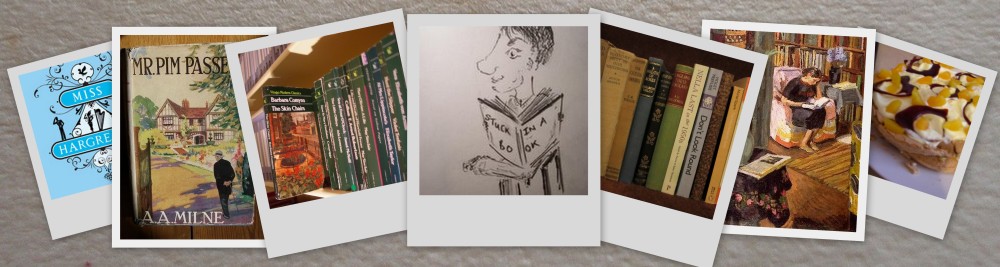
Dorothy Whipple, how I do love thee


Though I now space them out, a new Persephone Books read is always a wonderful treat, and something to be treasured. When I first found out about this publishing company, through their publishing of Richmal Crompton’s Family Roundabout, I went on a bit of a rampage, and read lots. Though they cover quite a range of decades, genres, authors, forms – and, yes, some of the writers are even male! – there is something unmistakably Persephone about everything they issue, and thus something unmistakably great. The Closed Door and Other Stories, one of the latest batch of three, was no different. Nicola Beauman, who runs Persephone Books, very kindly sent me this to review when I made ingratiating noises in her direction – and, of course, I loved it.

Most aficiandos of Persephone agree that Dorothy Whipple is one of their major finds. Crompton and EM Delafield were already firm favourites with me, and I was delighted to see them come back into the light of day, but it is Whipple who has been the nicest new face. Though decidedly a domestic-fiction-writer, she demonstrates that this need not mean anything derogatory about writing style. Nicola Beauman has had to fiercely defend Whipple against some critiques over the past few years, mostly from people who, bewilderingly, have been against niche publishing in any shape or form – but just pick up Someone at a Distance or They Knew Mr. Knight and it is indisputable that Whipple needed bringing back into print.

The Closed Door and Other Stories is different from any other Whipple I’ve read, not least because it’s short stories rather than full-length prose. The first story, ‘The Closed Door’, is easily the longest – 75 or so pages – and the other eight are snapshots of characters’ lives. I read them all together at a fast pace, which probably isn’t the ideal way to approach short stories, and I must confess I found a lot of them to be quite similar – a daughter (always a daughter) is repressed by her selfish parents who expect her to act like a servant, and dismiss any academic or romantic ambitions the daughter has. I like that Whipple doesn’t aggrandise either of these ambitions over the other, but sees both as valid modes of self-expression and fulfilment. Anyway, as you read more of the stories in the collection this scenario becomes very familiar – but each story presents a different ending/solution/irresolution. ‘After Tea’ is an especially nice contrast. When presented together, the particular culminations grow even more significant, playing off against each other, and become less ‘closing’, as it were – more problematic, occasionally more triumphant.

Against the stories which fall into this mould, a couple stand out as really beautiful evocations of character and predicament – ‘The Rose’ and ‘Wednesday’ particularly. The latter is quite a brave portrait – a divorcee adulteress (though one coerced into it by her husband, we are led to understand) on one of her monthly permitted visits to her children. Agonising and realistic and a painful gem.

In case you hadn’t ascertained this yet – The Closed Door is a book definitely worth buying! Just spread the stories out a bit.

Library Life


Time for a bit of a library update, I think, before we plunge back into the world of literature – review coming up tomorrow of one of the latest Persephone books, so keep your eyes open for that. This week I have been shadowing one of the other library trainees, but have yet to leave the Science arena – but rather than the torrent of scientific subjects bundled into the aptly named Radcliffe Science Library, my usual home, these have been rather more specific. Started the week in Zoology and Ornithology (let me tell you, pictures of birds are rather more appealing than Heart Surgery Weekly or Dermatology Update) and now in Plant Science. Ever wondered how much forestation there is in Canada? Me neither, but it’s the place to be if you ever do. Having said that, it seems our indifference is shared by the populus of Oxford, as all of these libraries are fairly empty. In fact, I don’t think there was a single enquiry in the Plant Science library today – certainly not whilst I was around. Even without the general public milling around, though, I enjoyed today – I was processing books and journals. In the RSL this is all done by the cataloguing staff in a separate section of the library – the benefit of a smaller library is that it’s all hands on deck.

So, I’m sticking stickers, measuring spines, attaching plastic covers, gluing in date sheets, ya-dah-ya-dahhhhhhhhwaitaminutewhat?! I have to STAMP the SIDES of the BOOK?? With a rubber stamp? Emblazon ‘Oxford University Library Services’ on all three sides of a book which aren’t the spine? Oh dear. You’ll have gathered over the past few days that I’m not a big fan of writing in/on/near/over or under books. In fact the only preposition I’ll concede is ‘about’ – I love writing about books. But stamping dirty great rubber stamps all over them? Houston, we have a problem. And that is the central paradox to librarianship. Despite what we are told, I hope against hope that people becoming librarians love books. Yes, we have to love aiding research, and the latest technology, and guiding people, and making information accessible – all essential. But surely we should love books too? And there is a certain type of book-lover (not all) who cannot bear to see the poor things covered in possessive ink. So I had to screw up my eyes and stamp the thing within an inch of its life, feeling like a hoodlum… now I can feel the books in my room looking at me reproachfully… there’ll be warning posters distributed around my shelves soon.

Anyone concerned for my sanity, email mad@libraryboy.co.uk…

Sense and Cinematography


I saw The Jane Austen Book Club at the cinema tonight, and thought I’d use its various links to literature to excuse a rather more pop-cultural reference than usual… I read Karen Joy Fowler’s novel, from which the film was adapted, over the summer – must confess, not very impressed. Lots of unnecessary sex and not enough literary comment. My preference probably puts me in the minority, but with ‘Jane Austen’ in the title, I hope I’m not alone… Anyway, it was fun to read the novel and spot comparisons and parallels with JA’s oeuvre, but that was about where the enjoyment ended, give or take a few quite emotional scenes. Essentially six people meet up to discuss the six JA novels, one chosen by each of them, and the resultant book group is a backdrop for their relationship goings-on – divorcee, lesbian, teacher-with-crush-on-student, woman with Wife of Bath tendencies, dog-loving singleton and convenient token male. With SciFi obsession, like all guys, obviously.

The film hadn’t removed any of these elements, but I am more forgiving of modern films than I am modern novels – largely, I imagine, because I’ve seen hardly any older films. Somehow what seemed rather fatuous and saccharine in prose became sweet and passingly profound on the silver screen. It was refreshing that they anticipated their viewers had read at least some Jane Austen – reminds me of a different experience sitting in the cinema while watching the 2005 Pride and Prejudice; the number of people who laughed uproariously at certain bits suggested they hadn’t encountered them in prose beforehand. Literary snobbishness over… for a moment or two, anyway. Where was I? Oh yes – the film laboured the parallels between novels and book group members even more than the novel did, but that was quite entertaining. What really made the film work was the cast – especially the brilliant Emily Blunt as Prudie, the teacher-with-a-crush. Her marriage was falling apart; she joined a book group to avoid thinking about her thoughtless husband, and cannot countenance other members being trivial or unacademic. Oh, and she speaks in French quite a bit – despite having a potentially irritating character, Blunt makes Prudie loveable and endearing. I didn’t know the rest of the cast before (except Lynn Redgrave, who makes a fleeting and funny appearance as Prudie’s hippy mother) but they are a great ensemble.

Worth a watch, if only because IMDB imaginatively lists the Plot Keywords as ‘Book Club / German Shepherd’…

Big Read


Does anyone remember the BBC’s Big Read? It was in 2003, and is sadly also the last bookish programme they’ve shown on terrestrial, so far as I’m aware. I’ve just about got used to the fact that popular television will be far, far removed from literary matters – mostly being devoted to reality shows or cheap drama or sport. I like the odd bits of the first two of these, but the humdrum of terrestrial television became unfathomably lightened up by The Big Read. A lot of people have scoffed at it, or thought the Beeb were dumbing down in their presentation of great literature – nothing is more likely, but it is so rare for books to make primetime that I took everything else as a bonus. For people who missed it, or live in a country which doesn’t show BBC, I’ll give you an intro. Incidentally, though, the US channel which has the word ‘BBC’ in it – BBC UK or something, maybe? – is so much better than our version! You get the classic sitcoms and so forth that they haven’t shown here for decades, or are used when snooker matches don’t last as long as anticipated. Tshaw. Grumble over. The Big Read asked people across the country to nominate their favourite fictional book ever (favourite, mind, rather than the one they believed to be the best – a huge difference. My family are my favourite people, but I am not so blind as to suggest they are the best people. Sorry folks!) A list of 100 was compiled, and revealed, with the top 21 given only in alphabetical order. The ensuing seven weeks saw programmes devoted to three of these books at a time, and an eventual final, which saw Lord of the Rings being voted the best book ever. Ahem. Well, if the word ‘convention’ is not congruous with a book, then the fans are likely to be the type to ‘phone in… ooo, catty! I loved the programme from beginning to end, even when Pride and Prejudice was advertised as being “all about sex!” – all? Really? – and got my first taste of literary e-conversation in the Big Read Forum. The eventual list was a pleasing combination of classics and potential discoveries, and not overrun with modern things which would be forgotten by 2004, thank goodness. The whole list can be found here, but I’m going to offer a rather more subjective view… of the top 100, here are the ones I’ve read, in the order that I like them. Like, not evaluate, you understand. Though the same one comes bottom on both, believe me. A lot of nostalgia on this list… You can thus work out which ones I’ve not read, and gasp at the order in which I put them…
-Pride and Prejudice (Jane Austen)
-Emma (Jane Austen)
-Winnie the Pooh (AA Milne)
-Rebecca (Daphne du Maurier)
-I Capture the Castle (Dodie Smith)
-The Lion, the Witch and the Wardrobe (CS Lewis)
-Alice’s Adventures in Wonderland (Lewis Carroll)
-Cold Comfort Farm (Stella Gibbons)
-1984 (George Orwell)
-Wuthering Heights (Emily Bronte)
-Jane Eyre (Charlotte Bronte)
-The Wind in the Willows (Kenneth Grahame)
-The Secret Garden (Frances Hodgson Burnett)
-Harry Potter and the Prisoner of Azkaban (JK Rowling)
-Harry Potter and the Philosopher’s Stone (JK Rowling)
-Harry Potter and the Goblet of Fire (JK Rowling)
-Harry Potter and the Chamber of Secrets (JK Rowling)
-Little Women (Louisa M. Alcott)
-David Copperfield (Charles Dickens)
-Persuasion (Jane Austen)
-Tess of the D’Urbervilles (Thomas Hardy)
-Animal Farm (George Orwell)
-Goodnight Mister Tom (Michelle Magorian)
-The Magic Faraway Tree (Enid Blyton)
-Double Act (Jacqueline Wilson)
-The Great Gatsby (F Scott Fitzgerald)
-The Story of Tracy Beaker (Jacqueline Wilson)
-Of Mice and Men (John Steinbeck)
-Matilda (Roald Dahl)
-Bridget Jones’s Diary (Helen Fielding)
-Charlie and the Chocolate Factory (Roald Dahl)
-The Catcher in the Rye (JD Salinger)
-The BFG (Roald Dahl)
-Ulysses (James Joyce)
-Captain Corelli’s Mandolin (Louis de Bernieres)

Grammar Police

Inspiration is dry tonight, so shall try to show you a cartoon Mel drew for me a while ago. My natural inclination for accuracy, and generous willingness to bestow such accuracy on others (which said ‘others’ have been known to label pedantry) led to the joking initiation of the Grammar Police. With appropriate disciplinary action. Click on the picture to enlarge it – in case that doesn’t work, I’ve included a typed version below.


“So I told him, I didn’t know who she was going with…”

“Freeze! Her Majesty’s Secret Grammar Police!
My duty compels me to retract that sentence and replace it with ‘I didn’t know with whom she was going’. And to administer the following penalty…”

*WHAP* with the Oxford English Dictionary

“Ow… What the…?”

“You reckon she’s going with Pete though?” “Yeah…”

Let’s Put Shakespeare Among The Pigeons


Goodness, Booking Through Thursday brought out some strong opinions, didn’t it? How strange – we all love the contents of books, but have disparate views about the vehicle for that content. A few of the comments made me ponder, and I’ll meander through some musings – but this post is mostly about Billybob. My very lovely parents, Our Vicar and Our Vicar’s Wife, heeded my unsubtle references this year, and I now have the new RSC edition of the Collected Works. Oh, it is BEAUTIFUL. I ‘needed’ another one, because of the scribblings in my old copy, and the fact that the spine has fallen off – and this one came recommended by Judi Dench. Says so on the back. (Just seen the Dame in Cranford, which was wonderful, though the odd amalgam of three sources was a little hit-and-miss). Anyway, my new Shakespeare. It comes in its own box, much like Folio books, and has that pretty yellow design on it. Feels great; smells great (and I’m not usually a fan of New Book Smell, preferring Old Book Smell. That’s another interesting division for book lovers, with people firmly and resolutely in one camp or the other); can’t honestly say it sounds or tastes great, but three out of five senses isn’t bad. As Susan Hill wrote on her blog a while ago, I think, if one is buying a classic which is available everywhere, then of course appearances and so forth are going to influence one’s choice. So judging by covers is positively sensible in this case.

And I warn you – write in it and heads will roll.
It’s not that I think books are sacred objects – but neither is wallpaper. Wouldn’t scrawl over that either. And while I love to make my own response to a book and its ideas, that has to go on in my head – I’d hate to return to re-read a book and discover I couldn’t read the book – only read my previous response to it. Perhaps because there is something eternal about a book, and something so transitory about my thoughts when reading it. Contrarily, though, I enjoy finding secondhand books with people’s opinions in them. Especially if they’ve been done in pencil, of course. That way I can read the book and make up my own mind, and see what they’ve thought – if it’s my own writing, then I just feel slightly mad disagreeing with my previous self…

Just musing. No point in trying to convince anyone to see my point of view, or vice versa, because somehow one’s sensitivity or otherwise to books themselves is inbuilt and impossible to alter. But there isn’t the slightest chance of it stopping others reading, I shouldn’t think, as there are enough scrawlers out there for it to be a valid option for anyone wanting to do that. Just so long as people learn NEVER to do it in books they’ve borrowed (I know nobody visiting here would dream of it). Or in front of me, please.
(!!)

For now, just admire my beautiful collection of Billybob – and I relish the fact that the words are even more beautiful. I feel a re-read of All’s Well That Ends Well coming up next…

Lazy…

Too sleepy for full update, so here is my day in bullet points:

– morning… tired and cold
– teabreak – mmm, tea. Fine invention.
– meet Our Vicar’s Wife for lunch, lovely
– worky worky work
– friends come over
– aubergine and mozarella rolls (mmm)
– Sound of Music: Songs Only Option
– Children in Need for a bit (gosh, Boyzone haven’t aged)
– bed…

Booking Through Thursday

This week’s BTT is something we’ve covered a while ago, but I’ll throw it out there again. For those who were baffled last week, apologies for the incorrect hyperlink on ‘Booking Through Thursday’ – just pop along to www.btt2.wordpress.com. Every week they pose a bookish question for those of us who have run out of inspiration by Thursday, and then I encourage all of you to ponder it yourself. This week:

…how many of us write notes in our books. Are you a Footprint Leaver or a Preservationist?

Well, we came across this perilous question in my review of Anne Fadiman’s Ex Libris, I think, which can be read here. And you may remember that I am VEHEMENTLY against writing in books, or defacing them in any manner. The library trainees recently went on a training session about boxes and foam pads (it’s like a rollercoaster, I tell you) which included the speaker tearing pages out of a book as a shock tactic. Although the book was destined to be thrown away anyhow, it was still painful… an actual physical pain, running through my body, and quite a loud involuntary gasp. Shared, I’m proud to say, by those either side of me. Anyway – books are not notebooks, they should be treated with dignity.

Having said that…. this is where the hypocrisy comes in. My name is Simon and I am a Footprint Leaver. Very occasionally. Though a repeat offender, I must confess. The worst instance is my Collected Works of Shakespeare – reading this, while being shaken around on Filipino Jeepneys, I had to scrawl notes (always in pencil, mind) or remember nothing when I started writing essays months later. Nor could I keep a notebook – the quotations would take an age to write out, and while I could jag a line on a rickety journey, legible writing was beyond my capability. What is amusing is the type of notes I make in the books, when not simply underlining. I write things, for the most part, not as analysis, but pointers. I.e. when I later write an essay on a certain topic, I’ll be able to locate all the relevant passages. Which leads to such erudite pronouncements as ‘death’ alongside deaths, or ‘time’ by the use of the word ‘time’. As Our Vicar’s Wife’s teacher used to say – “If you are the cream of the intelligentsia, Heaven help the skimmed milk”.

Howsabout yourself? I promise I won’t shout if you perennially leave footprints…

Book Group: The Results


I’ve talked so much about Tove Jansson’s Fair Play, without actually saying anything, that many of you will probably think Book Group was months ago. Well, I’ve just come back from it, and nine other people who had read Jansson’s book over the past six weeks. So here is my opinion of Fair Play, and what the group thought of it, so pile in with your feedback too, please! The cartoon is recycled, and not as appropriate to the topic for today, but I like it as an image of the bookish blogging community, and it’ll appear whenever I report back from my terrestrial Book Group.

I’ll start off a little defensively – I don’t think Fair Play was as good as Tove Jansson’s other works, those I’ve read anyway. Have a look at A Winter Book and The Summer Book by searching in the blog searcher, if you like – short stories and a sort of vignettey-novel respectively. Having said that, Fair Play was still a delight. Marketted as a novel, it is in fact a series of short stories/ideas/vignettes/snapshots featuring the same characters. Jonna and Mari live on the same, small Scandanavian island, artist and writer, and… well, that’s about it. Jonna rearranges Mari’s pictures; a girl obsessed with Mari’s mother comes to visit; they discuss their fathers; they watch an old film; edit one of Mari’s stories, and so forth. Each chapter has a small incident occur, and Jansson wraps her delicious prose around it. By the end she has provided a beautiful portrait of an unconventional couple, co-dependent and close rather than affectionate. Jansson doesn’t allow the narrative to become twee, but she does give beauty. This was especially true on my re-read (the first time in many years I have re-read a novel immediately) where I could just wallow in the prose.

So, what did the Book Group think? I must confess, I was worried whilst I was reading it. Plot is quite far down on my list of priorities when evaluating a book, but I know that’s not the case for a lot of people – Jansson’s novels are either viewed as beautiful writing, or just fairly pointless. One guy definitely took the latter view – just couldn’t see the point, engage with the characters, or be bothered to read on. A few others agreed to a lesser extent. That’s fine – I deliberately suggested one I hadn’t read already, so that I wouldn’t be too sensitive about people’s reactions. Most of the group found the writing to be very good, the novel to be gentle and evocative, and the characters intriguing, if slightly distant from a depiction of ‘love’, which the introduction suggested. Nobody loved it, desperate to read more (if only they’d started with The Summer Book!) but a few said they would if they came across some.

So, not a failure, not a success – but people were happy to have read something they wouldn’t otherwise have come across, and that is, after all, one of the main reasons that people join Book Groups.

Over to you! As far as I know, Curzon and Carole have read Fair Play – and of course anyone else is welcome to join in. Thoughts?

Odd…

As an addendum to the previous post… strangely, my Blogger homepage tells me I’ve written 150 posts (as declared yesterday)… but the little drop-down bit in the left column says 145 (146 including this one, I suppose). What’s happened to the other five? Where are they? What are they? Curiouser and curiouser, as Alice would say.