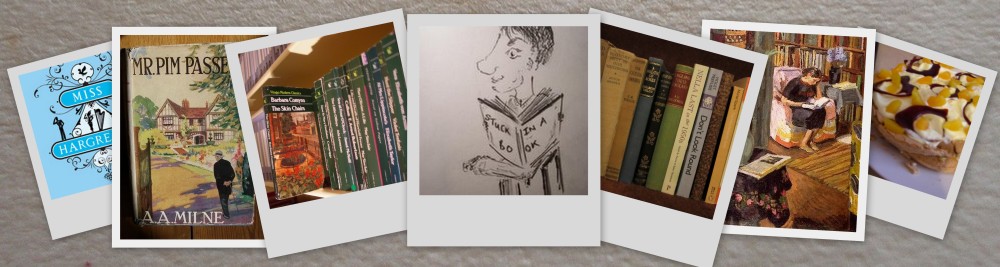
A Life Less Ordinary

The dovegreybooks group I chat about a lot has been discussing something, which I thought I’d allow to tumble over onto my blog. Sometimes my brain just won’t think of new topics every night… plagiarism is just a word for people who don’t copy enough different people…

Biographies. Particularly literary biographies (which, I’ll be honest, are more or less the only ones I read). I have of Fanny Wollstonecraft (yes, Fanny) which I’m going to start very soon, expect reports back in a week or several. A literary biography well done is a wonderful thing, offering new lights on a writer’s work, and allowing one to engage with their life, surroundings and acquaintances. So far, so good.

But readers are not rational creatures. I know it shouldn’t matter whether or not an author is ‘nice’ (whatever we choose that to mean) – if a novel or play or poem is great, then that should be it, but of course this isn’t the case. If someone discovered a beautifully written ode by Hitler, I doubt I could consider it a favourite. So, today’s point to muse and respond to – has a writer’s biography or autobiography ever spoiled the way you read their work? Or maybe improved it?

For me, a couple have been compromised. I adore Katherine Mansfield’s short stories, but Claire Tomalin’s biography left me not fond of the woman. Virginia Woolf, as you may know, is a firm favourite – but Hermione Lee depicts her as quite selfish and arrogant (though other biographies have made her seem much more gentle, self-deprecating and witty). On the other hand, biographies of Jane Austen, Richmal Crompton and AA Milne have only made me like them more. I’m determined to avoid Margaret Forster’s biography of Daphne du Maurier, after Our Vicar’s Wife said it spoilt the novels for her somewhat. So, it unquestionably does make a difference to me, what an author was like as a person – but should it? And does it for you?

Went The Day Well?


There is something about black and white films which makes everything classier, isn’t there? Although colour television has been around all my life, it was a b/w television I took to university (belonging to Our Vicar’s Wife) and I enjoyed my monochrome world for a while. A little more distant, perhaps, but so entertainment ought to be – I’m suspicious of this High Definition thing coming in; I don’t want to feel as though I’m ‘in’ the television. I want to escape there for a bit: not the same thing.

The b/w film I watched tonight was Went The Day Well? which several people recommended after I watched Mrs. Miniver some time last year. Really enjoyed it – quite pacey, which is the one thing many older films lack. Made in 1942, it depicts what could have happened, had German troops infiltrated an English village, under the guise of being British soldiers. Lots of British Stiff Upper Lip and “There is a war on, you know” attitude. People sacrifice themselves for others all over the place, and there are genuinely touching moments to remind of a all-for-one England which probably never quite existed to the propagandists’ extent. Amazing to think that the original audiences wouldn’t have known how the war would end, nor whether or not England would be invaded.

Quite an emotional film – you definitely get caught up in the lives of these villagers, and it isn’t comfort viewing, really, especially in 1942 I’d imagine.

Other reasons for watching this film:
– It’s filmed in a village in Buckinghamshire called Turville, where The Vicar of Dibley was also filmed. And Chitty Chitty Bang Bang, and more or less everything else.

-One of the main characters is a young Thora Hird!! Don’t know how well she is known outside the UK, but here she is renowned for chairlift adverts, Songs of Praise, and a sitcom about the elderly, Last of the Summer Wine. Difficult to believe she was ever young, but here she is, still rather older than I am, in the war.

Any other classic b/ws to recommend? Not necessarily from the war, but b/w please… I’ve had a few ‘digitally remastered’ or somesuch – such a disappointment! That feeling of class doesn’t come from colour…

Mwuh?

This week’s Booking Through Thursday could have been written for me.

What’s your favorite book that nobody else has heard of? You know, not Little Women or Huckleberry Finn, not the latest best-seller . . . whether they’ve read them or not, everybody “knows” those books. I’m talking about the best book that, when you tell people that you love it, they go, “Huh? Never heard of it?”

Anyone paying attention here on Stuck-in-a-Book will not be surprised when I offer a resounding “yes!” It always comes as a shock to me if anyone has heard of the books I like. Of course, there is the odd Jane or Virginia to balance out the rest, but in general my favourite books are obscure, usually out of print. In fact, being obscure adds to my enjoyment – more exclusive; I feel like I’ve made the discovery myself; just special. Everyone knows Pride and Prejudice is brilliant – Miss Hargreaves is a little more personal.

And that’s given the game away. Miss Hargreaves is my favourite obscure book. But I have given the matter a little more thought, as I hope regular visitors will have noticed. Down the left-hand column is 50 Books You Must Read But May Not Have Heard About. (BYMRBMNHHA if you like). Does what it says on the tin – though we’re a long way off 50 at the moment. It’s not in any particular order, but clicking on any of the titles will take you to my comments and advocations.

And so, my little Mwuh?-test. How many of the 17 BYMRBMNHHA had you heard about before I mentioned them? Comment, and let me know… and don’t worry, zero is an anticipated answer!

200!

Happy 200th post!

There are some discrepancies between my Blogger homepage and the actual Stuck-in-a-Book webpage, due to draft entries I think, so my own mini-celebration was a few days ago. Now you can all enter in the fun – 200 posts!

I usually steer clear of ‘widgets’ (funny little applications and things one can add to a blog) but spotted one on several blogs which I couldn’t resist – the Feedjit thingy down on the left. It has a map of the world and dots over it where recent visitors have come from. Unsurprisingly, half of my recent visitors are from the UK, but these are all the countries which have had a look in recently:

UK, USA, Japan, Canada, France, Australia, New Zealand, The Netherlands, Portugal, Brazil, Bulgaria, Italy, Cyprus, Belgium, Norway, South Africa, Puerto Rico, Finland, Germany, Poland, India


If you have a blog, I recommend popping this in. It’s incredibly easy to insert, doesn’t seem to slow the page down much, and I’m learning! My geographical knowledge wouldn’t impress a five-year-old – as I once famously declared, while sick with Geography homework and the importance attached to it: “Geography isn’t the world, you know!” So I’m discovering just where Bulgaria is, and that Puerto Rico is a nation and not just something in Westside Story. For the brighter amongst you, perhaps you can learn about the nations’ flags…

Nothing to hold a Candleford to…

BBC i-player really is a wonder. I don’t know if it’s available to people outside of the UK, but it is rather ironic that the only channels which benefit from my television licence payment are also the only channels I can watch without having a television.

I have just caught up on Episode 2 of Lark Rise To Candleford. Now, throughout my book buying career there have been two books which have followed me around everywhere. Put down the ‘phone, I’m not a shilling short of a pound, let me explain. In nigh on every bookshop or charity shop I go, these books are there. Such is their ubiquity that I have stubbornly refused to either purchase or read the books. Just a natural perverseness (perversion seems such a horrible word) and being-difficult-ness. Those two books are South Riding by Winifred Holtby, and Lark Rise To Candleford by Flora Thompson. I had no idea either had anything of a following, and so was surprised to see the latter on the BBC schedules.

Perhaps they’re grabbing anything in sight? As has been noted by a lot of people, including Elaine quite recently, the BBC are doing bucketloads of costume drama, and casting the same half dozen people in all of ’em. If you include the other channels, we’ve recently had Cranford, Sense and Sensibility, Mansfield Park, Northanger Abbey, Persuasion, Oliver Twist, Old Curiosity Shop, Ballet Shoes and probably a few more I can’t remember. I love a costume drama, but perhaps too much of a good thing? Well, perhaps not. If it’s done well, there’s always room for more – so long as television producers realise a few bonnets and “thee”s thrown hither and thither don’t amount to character, writing or plot. Sometimes they make the mistake of believing a period setting will excuse deficiencies in every other part of a production – though usually the vague glimmers of a novel, beneath an adaptation, are enough to save a series. Novel writers just seem much better at all aspects of writing than scriptwriters. Which makes me wonder – why do we so rarely get period productions which aren’t adaptations? I can’t think of any.

Having not read Lark Rise to Candleford I can’t judge on how faithful the BBC’s version has been thus far, though I would wager not very, since Flora Thompson was writing autobiographically and the events have been pretty far-fetched. I’m firmly in the camp that an adaptation should be as close as possible to the original, and certainly not add or change things, but perhaps exaggeration and extension is the order of the day. Like most BBC costume dramas, it is the combination of background novel and foreground cast which make desirable watching – for Lark Rise To Candleford step forward Julia Sawalha, Linda Bassett, Liz Smith and Dawn French. I wonder if the lovely Julia, whom I first encountered as Lydia Bennett, has ever acted without a bonnet…
Anyway, it’s been enjoyable watching, but not ground-breaking – but has pointed me in the direction of the book. Will I succumb the next time I come across it? Maybe. But I certainly shan’t buy a TV tie-in edition.

Anyone else been watching this? Or have you had a surfeit of costume drama?

50 Books: The Love Child by Edith Olivier


I bet you never expected to read the words ‘love child’ on Stuck-in-a-Book… well, if you’ve been paying careful attention, you’ll have seen them a couple of times already. Edith Olivier’s novel The Love Child came in at no.3 on my favourite books read last year. I’ve just realised that I’ve been referring to Olivier as Oliver for a long while, and thus may have misled people… I must go back and alter.

This novel has had mixed reception – I’ve only ‘tried it out’ on a couple of other people; one liked it and one wasn’t so sure. I know Lisa at Bluestalking would love it and am waiting for her to clear space in her schedule to read it! (That is, unless she already has, and kept quiet about not liking it…)

Agatha Bodenham, at 32, finds herself alone for the first time, after the death of her mother. She has been kept quietly at home, and has no real friends or chance of marriage. She turns her attention instead to an imaginary friend of her youth, Clarissa – who then appears, ‘gathering substance in the warmth of Agatha’s obsessive love until it seems that others too can see her’, to quote the blurb. Though a great joy to Agatha’s lonely life, as Clarissa begins to explore the more exotic features of 1920s life (tennis, dances, boys) something of a power struggle develops, and it is unclear who possesses whom…

There are similarities to one of my favourite books, Miss Hargreaves, though Baker’s novel was funnier and less affecting. The Love Child (1927) is a touching portrait with edges of surrealism and heartache. A very slim novel, it contains many intriguing ideas about love and possession and neediness – I also found the writing to flow beautifully. I’d love to discover other fables of this ilk – where Miss Hargreaves and Lady Into Fox also fit.

My Virago copy (bought on a whim for 75p in an Oxford charity shop) has an introduction by Hermione Lee which is illuminating. And, like so many other authors, Edith Olivier was related to a clergyman. Daughter, in this case. She spent nearly all her life in her native Wiltshire, except for some time at Oxford University on a scholarship – and The Love Child, where it does not wander into fantasy, appears to be influenced by autobiography.

Like all the other books so far in my 50 Books… I really recommend that you seek this novel out – it may well become a treasure you’ll remember for a while.

Self-Knowledge…

Well, that didn’t last long…
I realised that I was getting a tiny bit sated by modern fiction, not review books per se, and have been plying a lovely publisher or two for reprint fiction or literary crit/letters etc. Wonderful how a night’s sleep can make one remember how wonderful receiving review books is!

Reviewing How I Review

This wonderful picture came from seasonalsoundings.blogspot.com – go and have a look!
Lynne has been sharing the secrets of her success, as it were, talking about how she reads and reviews – and, along with a few other things, it’s got me thinking.

The first time I was offered a review book I was beyond excited – thank you very much lovely Ellie at Hesperus Press, and if you ever want to send some more..! – and I still get a little joyous at the sight of a review request in my inbox. I’m not inundated with them, so every one is still a nice surprise, and I have only turned down one so far, because it was an area of non-fiction which I didn’t feel qualified or interested enough in to read.

That’s the thing, you see – unlike Lynne, I haven’t got to the point where reading every book sent, cover-to-cover would be impossible, and so I can maintain my strict reading of everything that is sent. Perhaps it is the dizzy naivety of a 22 year old who believe that an eternity of reading lies ahead of him, or something like that, but I can’t start a book and leave it unfinished. Yes, yes, I know that liberation of putting aside reads which don’t satisfy, and it is a trait I almost admire, but I feel I have made something of a contract with the author. Let’s ignore Reception Theory for the moment (and forever, if that’s ok) I just think to myself “Hmm, well, if I’d spent months writing this book, the least I’d expect would be for the reader to spend a few days on it.” Which isn’t espeically rational, but is fixed in my head nonetheless.

Don’t get me wrong, it’s not a chore to read the books I’m sent – far from it. Some have become firm favourites. But I can’t cope with many more! I was recently asked to have my name put down as a blog reviewer in an article which would be circulated to vast numbers of writers, and, with regrets, I had to decline (well, first I excitedly accepted, but then my sensible hat came out of the wardrobe and was dusted thoroughly). I never thought I’d turn down piles of free books, but I’d feel obliged to read them – and I don’t have the time to read many more than I do, especially with a potential Masters looming. I’ll still accept everything sent to me, trust me, I just won’t court attention for hundreds… and writers can be content in the knowledge that I will read nigh on everything sent to me, though sometimes it may take a while…


My other issue – almost everything I’m sent has been written in the last year or two, unsurprisingly. And I want variety! Hence the picture – I’m embroiled in some wonderful re-reads… However wonderful a novel is, a modern writer can’t write it in 1840. So what I’d really love is more reprint publishers to send me things… can anyone recommend a reprint publisher who might be pleased with some publicity? Or perhaps I should get back in touch with my first firm friends, Hesperus Press

The Crowded Bed

As promised, a review of Mary Cavanagh’s The Crowded Bed today. For those keeping tabs, Blogger appears to have once more changed the format for posting, so we’ll see how this goes…

“Good evening, dear friend. I’m extremely pleased to see you, but I’m sure you’ll understand why I can’t give you my full attention. Joe Fortune is just about to kill his father-in-law, and I’ve no intention of missing this long awaited event.”

So opens The Crowded Bed…

Gosh. From the first sentence I sensed this wouldn’t be an uneventful novel – and, genre-wise, it’s a canny decision by Cavanagh. If it hadn’t been arranged thus, we’d have had a Hamlet-esque tussel over whether or not Joe wanted to kill his father-in-law – and let’s face it, who hasn’t watched Hamlet and thought “to be or not to be, don’t care, just get on with it!”

I digress. The Crowded Bed follows Joe, a Jewish boy and later doctor, from childhood through various relationships and to just after the pivotal moment described. Like many recent novels I’ve read, the narrative jumps about a bit, so ‘the present’ is shown parallel to various sections of the past – though, like those novels too, it’s not confusing. I found Joe a fairly repugnant character, but I think that’s ok – he has manifold sins under his belt, and more or less his only redeeming trait is a deep love for his son. And an abiding love for Anna.

She’s the other lass. Liked her. Despite her name, she’s not Jewish – she’s more like Botticelli’s Venus, as shown on the cover. My favourite sections of this novel were the opening chapters, when the childhoods of Joe and Anna were depicted alongside each other, and thus contrasted. Where Joe has indulgent and proud parents, Anna had a vicious father and a passive mother. And a twin brother, a theme popping up in quite a few recent reads. Reading their childhoods in this comparative way is so revealing about the characters and the way they interrelate.

The path isn’t smooth for Joe and Anna. That crowded bed gets pretty crowded as the novel progresses, and I’ll keep schtum over whether or not they manage to kick everyone else out but, suffice to say, the shocks keep coming to the very end. Cavanagh has written a novel which is both gentle and vicious, warm and unsettling. It’s hard to like many of the characters, but that doesn’t stop being compelled to find out more – and the rollercoaster they go through is dramatic but believable. Certainly not comfort reading (though someone recently described The Kite Runner as that, so it takes all sorts) but is a very engaging and perpetually surprising novel. Oh, and it features Oxford, which is always exciting!

Booking Through Thursday – Reviews

There’s been something of a change in the Blogger-post-writing malarkey, which probably doesn’t make any difference for reading the blog, but is rather exciting and confusing. If anything goes wrong – not just in the blog, but in the world – let’s pretend it’s the new format’s fault. I love blaming technology for things – think of all that it (probably) perpetrates without us noticing, it’s only fair to redress the balance.

You’ll be impressed to note that I’m doing Booking Through Thursday on a Thursday, if only just. I had intended to write a review of Mary Cavanagh’s The Crowded Bed, but you’ll have to wait for tomorrow now. Suffice to say, it’ll be quite positive.

And that brings me neatly to this week’s BTT:

How much do reviews (good and bad) affect your choice of reading? If you see a bad review of a book you wanted to read, do you still read it? If you see a good review of a book you’re sure you won’t like, do you change your mind and give the book a try?

I’m going to take it as read that we’re talking about Blog Reviews, since I don’t read any others. Without wishing to open the can of worms that is the blogger vs. literary critic debate, on a personal level I get very little from newspaper reviews. More specifically, The Times, since it is the only newspaper I have occasional access to, being the one my family reads. (I don’t read the newspaper myself – takes up too much other reading time, and the experience is inherently transitory, I reckon.) The reviews printed in The Times are always too long, too unconnected with the book, and too highbrow for me. They muse around topics vaguely in the same area as the book, present their own opinion as though it were fact, and end up telling me almost nothing about whether or not I’d want to read the book – unless, of course, they just give the end away. And as for the books they review… worthy biographies are not my staple. Plus, quite naturally, they review only recently published books.

The blog acts as an opposite to almost all these points. I’m not arguing that they are more intellectually qualified etc. etc., but rather they serve the purpose I have in mind. Will I like this book? Will I value reading it? There are certain bloggers I trust as having similar opinions to me – Elaine, Karen, Lisa, Danielle and Margaret are all likely to influence whether or not I buy a book. To be honest, though, if a book immediately doesn’t appeal, even the most glowing appeal will leave me cold. If a close e-friend adores it, but it still doesn’t appeal, I’ll probably dither and buy it if ever seen in a charity shop, and read it four years later. I might read around thirty blog book reviews a week, most of them positive (because we tend not to comment if we’ve not enjoyed a book) and I can’t read the lot.

Oh, and blogging has the immense advantage that reviews talk about books from the last three hundred years, not the last three weeks. Anything could come up.

So what does a blog review do in terms of convincing me to read a book?
catapaults ones I already own up the tbr pileconvinces me to buy ones which sort of appeal alreadyputs books in my mind… if I hear about them another two or three times, I’m done for…