Badly done, Emma?
, and she’ll be playing Miss Bates. I saw her play Beatrice in Much Ado About Nothing at the RSC in London a while ago, and it was both the funniest and the best Shakespeare performance I’ve seen (she won the Olivier too). You might know her from sitcoms like Black Books and Green Wing, or perhaps as Debbie Archer on The Archers. She was also in the recent, very good, Anne Frank series on BBC. Who else… Michael Gambon, fresh from brevity but successful brevity in Cranford will be Mr. Woodhouse, and Jonny Lee Miller is becoming Jane Austen’s creepiest hero (in my opinion) Mr. Knightley. I’d vaguely heard of JLM, and a quick trip to IMDB.com tells me that not only was he Edmund Bertram in 1999 Mansfield Park, but Charles Price in 1983 Mansfield Park. What credentials.Love Leonard

I always have a collection of the letters on the go, usually several, and the other day I finished Love Letters: Leonard Woolf and Trekkie Ritchie Parsons 1941-1968, edited by Judith Adamson. (Which, incidentally, was on my list of books I intended to read soon, back in April 2007. After two years I’ve read… 12 out of 17, having started and given up on another one. Not bad.) It was catapaulted to the top of my reading pile when my friend Phoebe gave me a second copy of it.
My interest in all things Bloomsbury, especially all things Virginia Woolf, presents something of a quandry – yes, I want to find out more about their lives, but reading Leonard professing love for someone who isn’t Ginny – ‘To know you and to love you has been the best thing in my life’ – is a little disconcerting. True, this started a while after Virginia’s death – but not that long.
Leonard’s met Ian Parsons through publishing, they were colleagues somewhere or other, and through Ian met his wife Trekkie, a painter. And they fell in love. Being the wacky world of Bloomsbury, none of the three seemed to think it particularly odd to carry on as they were – eventually Leonard moved in next door to the Parsons, and Trekkie would spend some holidays with Ian, some with Leonard – basically living two separate, but close, lives.
These letters, then, made slightly odd reading. By the second half they were the sweet, attached letters of two people who loved each other going about everyday life (with Ian usually quietly not mentioned) but the first half was quite awkward – Leonard professing his love in flowery, lengthy descriptions and Trekkie replying about her vegetable patch or latest clothing purchase. Really quite embarrassing how ardent he was and how cool she is in comparison – but obviously he wore her down.
They do make a slightly odd pair, and one with some connection with Two People – Leonard being both older and more intelligent than Trekkie – though she was an independently creative person, which Sylvia was not. She doesn’t come across as being remotely like Virginia, which is probably why Leonard’s relationship with Trekkie worked and Virginia is so seldom mentioned in these letters – but, for me, her absence spoke volumes over the entire, ahem, volume. Though interesting, this collection of letters really demonstrated to me how central Virginia Woolf is to my interest in Bloomsbury, and how bizarre I found the idea that it all carried on without her.
Puds and Psychoanalysts
Having attempted a Apricot Roulade a while ago, with fairly disastrous results (albeit very tasty ones) yesterday I returned to t
he Afternoon Teas recipe book. My friend Lou had half a carton of double cream which didn’t have long left to live, and thought we might be able to use it… and I knew there was a recipe that I wanted to use involving double cream. Not only that, but ‘double (heavy) cream’ – do they intentionally include the inevitable result upon the consumer?
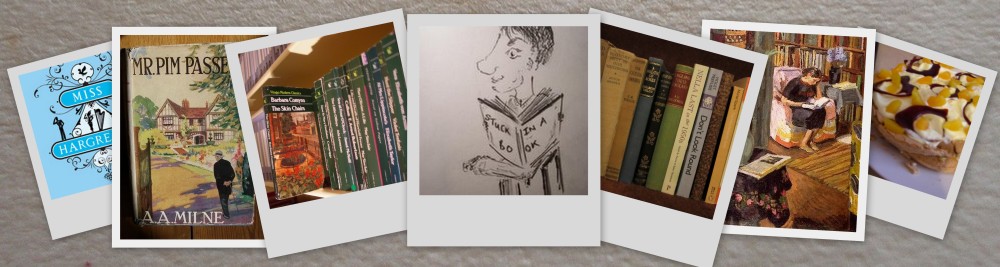
That recipe was for Chocolate Torte. Mmmmm. As you can see from the picture, it turned out pretty well – and tastes amazing. But when the main ingredients are cream and chocolate, you can’t go far wrong. We didn’t have any liqueur, so that couldn’t go in. Being this recipe book, though, everything was slightly over-complicated. They kept wanting me to leave the pastry to rest for an hour, and thought I should use an electric mixer to make flour and fat into breadcrumbs… tsk. But it was worth all the labour, and I can feel myself getting larger just looking at it.
What else has happened lately… Today I read my first Freud! ‘Femininity’ (1933). I’m really interested in the reception to Freud, especially in middlebrow literature of the 1920s and ’30s – it’s amazing how pervasive his theories, or vague outlines of them, were – but I hadn’t ever got around to reading anything he’d actually written. Somehow it *felt* like I’d read it before… and that must be more or less how these interwar novelists dealt with Freud. I’d go so far as to say most of the novels I’ve read from the period make glancing mentions of him – for example, EM Delafield’s The Way Things Are, as quoted in Nicola Beauman’s A Very Great Profession:
‘Well,’ said Christine kindly, ‘I can’t say that I believe you. And any decent analyst would tell you that you’re doing yourself a great deal of harm by this constant pretence. It’s bound to create the most frightful repressions. What sort of dreams do you have?’
But Laura, even though she did live in the country, knew all about Herr Freud and his theories, and declined to commit herself in any way upon the subject of dreams.’
In fact, I’ve proposed a section of my doctorate on the influence of, and response to, Freud – so if ever you find a comment about Freud in an interwar novel, do let me know!
Two People
Hurray for Capuchin Classics, reprinting an AA Milne novel – Two People, which was first published in 1931. A slightly less significant event in the Two People timeline is January 2003, when I first read it. This was back in the days when I could really blitz a single author, and read everything they’d written – by the time I read Two People (doing quick sums) I had read 29 books by AAM in the space of two years. Gosh. I’ve read only nine since, so I was pretty much getting to the end of the available AAMs.
With plays, sketches, essays, short stories, an autobiography, pacifist literature, poetry and, of course, children’s books to his name, his novels have always felt a little like an afterthought. Not quite the same joyously whimsical Milne of the early days, nor yet the serious Milne of the Second World War. And, for the most part, I have forgotten everything that happens in his novels. What really remains is a single image from the book – for Mr. Pim it is a pair of orange curtains; for Four Days’ Wonder it is a haystack; for Chloe Marr it is a woman looking into a mirror. For Two People I mainly remembered those two people standing by a pond… which turned out to be fairly insignificant.
As Ann Thwaite points out in her short introduction, and is evident to any who has read her very excellent biography of AAM (in print, or available from a penny on Amazon), Two People is pretty autobiographical. Not only is the male half of those two people a writer, but the portrayed marriage between Reginald and Sylvia Wellard bears a striking resemblance to that between Alan Alexander and Daphne Milne. There are two novels in Two People – one about a naive rural novelist seeing his first book, ‘Bindweed’, become a success in London literary society; one about a man married to much younger, beautiful woman who is not his intellectual equal.
And that’s the crux. Sylvia is often wise, always kind, ludicrously good – but she doesn’t understand Reginald’s jokes, ignorantly assumes any obstacle will be simple for him, would be content to live a quiet, unassuming life in Westaways – a thinly disguised Cotchford Farm, the Milne’s Sussex residence. At first I though Sylvia’s astounding beauty was showing the prejudiced viewpoint of Reginald, but
people all over the place stumble over themselves and exclaim involuntarily at her beauty – which is sweet but a little exaggerated and, it has to be said, no true depiction of Daphne Milne.
Ann Thwaite warns in her introduction that even those who ‘have an aversion to novels about writers’ will enjoy this. I didn’t know people had such aversions – I think novels about novelists are fascinatingly revealing about the author. But there is much more to Two People than that – I’d be astonished if anyone could finish the novel thinking Reginald wholly appealing (his views about laying on water for villagers are rather reprehensible, for example) but, much more importantly, it is an honest and true depiction of a marriage. Says I, who is not married, but certainly it seems to deal with the genuine, everyday issues that a marriage would face – with temperaments as catalysts, rather than adultery and murder and all those extremes.
Being Milne, the novel is also very funny. I recognise that AAM is an acquired taste – some find the whimsy a trifle sickening, whereas I find it delightful and clever. Two People isn’t the most representative of Milne’s work (I’d look towards The Sunny Side for an in-print example, from Snow Books) but I do encourage you to seek it out. Milne’s non-children’s work is seriously underrated, and I loved this novel upon re-reading it. Bright but also with a serious undertone – and possibly the nearest thing Milne wrote to an autobiography of his marriage, since his actual autobiography It’s Too Late Now rather skirted around it.
Here’s a scene which illustrates the perils-facing-a-writer strand, and the humour (they’re at a tennis party):
“Fella in the Sixtieth out in Inida with me wrote a book,” said Colonel Rudge suddenly.
“Oh?” said Reginald
“Fact,” said the Colonel. “Fella in the Sixtieth.”
Reginald waited for the rest of the story, but it seemd that that was all. The Colonel was simply noting the coincidence of somebody over here writing a book and somebody in India also writing a book.
[…]
“Tranter, that was the fella,” came from his right. “Expect you know him.”
Reginal awoke and said that he was afraid he didn’t. (Why ‘afraid’, he wondered. Afraid of what?)
“Well, he wrote a book,” said the Colonel stubbornly. “Forget what it was called.”
[…]
“What d’you say your book was called?” said the Colonel, evidently hoping that this would give a clue to the title of Tranter’s book.
“Bindweed,” grunted Reginald, feeling suddenly ashamed of it.
“What?”
“Bindweed!” (What the devil does it matter, he thought angrily.)
“Ah!… No, that wasn’t it. Bindweed,” said Colonel Rudge, pulling at his moustache. “That’s the stuff that climbs up things, what? Gets all over the garden.”
“Yes.”
“Thought so. […] Sort of gardening book, what?” said Colonel Rudge.
“What?… Oh… No.”
“It is the stuff I mean, isn’t it?”
“What is?”
“The what-d’you-call-it.”
“Is what?”
“What I said. Climbs up things. Gets all over the garden?”
“Oh yes, yes. Always!”
“What d’you say it was called? This stuff?”
“Bindweed.”
“Yes. And what d’you say your book was called?”
“Bindweed.”
“That’s right,” said the Colonel fretfully. “That’s what I said.”
This, thought Reginald, is one of the interesting people brought down from London who want to talk to me about my book.
West is West
Quick post today – slowly reading through the Paris Review Interviews, and came across this great, slightly catty, bit from Rebecca West (who was interviewed by Marina Warner):
MW: Do you do many drafts?
RW: I fiddle away a lot at them. Particularly if it’s a fairly elaborate thing. I’ve never been able to do just one draft. That seems a wonderful thing. Do you know anyone who can?
MW: I think D. H. Lawrence did.
RW: You could often tell.
Ouch!
Parnassus on Wheels by Christopher Morley
If you can cast your mind back to 27th November 2007 and this post (yes, that is 16 months ago) you’ll remember Danielle and I did a book swap. Miss Hargreaves sailed across the Atlantic, and in return I got two books by Christopher Morley – Parnassus on Wheels and The Haunted Bookshop, both featuring Southern farmer’s-sister Helen McGill and travelling bookseller Mr. Mifflin. And earlier this month I got around, finally, to reading… er, one of them. But it was rather brilliant so I will be reading the second one soon.*
Parnassus on Wheels, which is nice and short, was written in 1917 and has that unmistakable early-20th century tang to it. Wise, straight-talking women of the sort people like Ethan Frome probably stumbled over all the time. Helen McGill, said straight-talking woman – at one pointshe measures a length of time as ‘about as long as it takes to peel a potato’ – lives a life of domestic routine on a farm, and is disgruntled rather than delighted when her brother someone writes a book which becomes famous. She burns letters from publishers and tries to distract him from this high-falutin’ life, which seems insignificant compared to finding all the eggs in the farmyard.
Until Mr. Mifflin comes along, in his Parnassus. A travelling wagon, the sides come down to reveal shelves of books, which he travels the countryside selling. His patter is wonderful; he truly believes in the power of good literature for anyone and everyone (often his only competition is the man who has been around the area previously, selling everyone bound funeral orations). Known as The Professor to most, he is a firecracker, but one with an utterly infectious love of books.
“No creature on earth has the right to think himself a human being if he doesn’t know at least one good book. The man that spends every evening chewing Piper Heidsieck at the store is unworthy of to catch the intimations of a benevolent Creator. The man that’s got a few good books on his shelf is making his wife happy, giving his children a square deal, and he’s likely to be a better citizen himself.”
However, he’s come to the farm to sell Parnassus on Wheels to Helen’s brother, Andrew. His literary reputation makes him a potential seller – and Mr. Mifflin wants to retire. S
imply to prevent the distraction to her brother, Helen decides to buy it – leaving a note for her brother:
Dear Andrew, Don’t be thinking I’m crazy. I’ve gone off for an adventure. It just came over me that you’ve had all the adventures while I’ve been at home baking bread […] I’m going off for a little while – a month, maybe – to see some of this happiness and hayseed of yours. It’s what the magazines call the revolt of womanhood. Warm underwear in the cedar chest in the spare room when you need it. With love, Helen.
How can you not like a woman like that?
So, off she goes. Mr. Mifflin shows her how, and soon Helen’s off selling the books herself – though as exuberantly wonderful a creation as Mr. Mifflin can’t stay out of the narrative for too long, and he’s back soon, and in the sequel. This short novel isn’t filled with ‘exciting adventures’ (though there are one or two) – rather it is a paean to the love of books in whatever shape or size they come, and a good-humoured, sensible depiction of a slightly bizarre couple of people pursuing a slightly bizarre aspiration. Utterly wonderful, it’s one of my books of the year already, and I encourage any and every book-lover to give it a go.
*Soon is a relevant word. I mean before books become obsolete.
The History Book On The Shelf…
Sorry to start this post by setting the cultural barrier quite low… if you don’t recognise the lyric in the post title, then consider yourself much more highbrow than me.
As promised, The History Boys by Alan Bennett. I did the unthinkable and came to this play through the film first – in fact, I still haven’t seen it on stage, but I have read it. What first attracted me to the film was the shots of Magdalen in the trailer – I thought it would be fun to see my place of residence on the big screen. As it turned out, the shots from the trailer were about all you saw of Magdalen in the film. Which makes sense, as they only go to Oxford towards the end…
A bit of plot synopsis, for those who don’t know. It’s a 1980s boys’ school, and eight students are going for a place studying History at Oxford. They have a wise, quirky, lonely teacher Hector – and in is brought a savvy, slightly awkward teacher Irwin. In between is the quite wonderful feminist teacher Mrs. Lintott. The play is really about different styles of knowledge and uses of it, and the purposes of education. Hector has taught them enormous amounts of interesting facts, but focuses equally on re-enactments of famous film scenes, and practising French through rather bizarre scenarios. Irwin is all about getting them into Oxford, teaching them the way to answer interview questions which is a little edgy, a little conspicuously different. Hector thinks examinations ‘the enemy of education’, and thinks with the boys that he has ‘lined their minds with some sort of literary insulation, proof against the primacy of fact’ – Irwin sees this trivia as ‘gobbets’ to be sprinkled into any exam or interview answer.
I didn’t think much of the film. All the acting was great, but the fact that almost everyone was lusting after each other (which I missed out of the synopsis because it’s complicated and quite dull) rather ruined it. Reading the play, there are so many fascinating ideas in it – alongside genuine wit – and it isn’t all clear-cut. It seems that Hector is right to start with – but so much of the entertainment of the play comes from these ‘gobbets’, out of context, out of passionate discovery. Tricky. The depiction of Oxford is hideously out of date, even for the 1980s, but Bennett’s introduction detailing his own application experiences is worth the cover price alone.
Bennett’s major achievement is having so many distinct schoolchildren. So many in fiction are good or disruptive or clever-but-misunderstood, and so forth – these are all intelligent creations and memorably characterised. Dakin – cheeky, bright, canny – is the most impressive, perhaps, but I grew fond of vulnerable Posner and authentic Scripps. Having seen the original cast members in the film, they are inextricably linked in my mind – especially Frances de la Tour’s beautifully sardonic portrayal of Mrs. Lintott – and this helped a reading of the play.
Do seek out a copy to read, or hopefully a local theatre will put it on (is someone still touring with it? I don’t know. Obviously the original cast aren’t). And you could watch the film, but it doesn’t do The History Boys justice at all.
The Play’s The Thing
This morning I handed in the thesis I mentioned the other day, and I have a few days off before I need to start thinking about my dissertation (the difference in definition is perhaps negligible, but in practice a thesis is 5-7000 words and a dissertation is 10-12000). My end-of-year book total is going to be quite massive for 2009, and that’s because of all the plays I’ve been reading, which can be got through in an hour or so (can’t take longer to read than they are to watch, I figure). But, though they’ve dominated my reading this year, they’ve not been mentioned much on Stuck-in-a
-Book. A bit like the elephant in the room – or perhaps rhinoceros would be a more apt theatrical simile.
Difficult to discuss them all, though below is a list of the ones I’ve read over the past three months in case anyone wants to launch into a discussion about any of them, or ask me to elucidate – I’ll talk about two or three over the next few days, and welcome any suggestions!
Drama is a surprisingly unpopular medium for study amongst my masters course. We all like prose or poetry best (which is a rather reductive statement, but seems to hold true) while most of the group put drama a distant third – for myself, it is second to prose, but not too far behind, and far above poetry. The history of theatre, and how performance influences text and vice versa, fascinates me – studying Shakespeare from contingent angles of the effects of actors, stages, all male casts, printers etc. etc. was captivating. In fact, the whole history of theatre interests me – because the texts are so unstable, presented in inherently variable performances, but all this can be imagined and investigated by reading a playscript too. Now I’m babbling, but I hope I can make my enthusiasm contagious, because so few people seem to read plays! Even those who love going to the theatre (and of course this is the ideal way of experiencing plays) find it difficult to read plays themselves. I think AA Milne helped me read plays, because he wrote so many of them and he was the first author I got really excited about post-teenage reading.
So. The list. Do say any you’ve read, or would like to hear more about. I’m going to kick off tomorrow with The History Boys by Alan Bennett.
The Colleen Baum – Dion Boucicault
The Octoroon – Dion Boucicault
Black Ey’d Susan – Douglas Jerrold
The Bells – Leopold Lewis
Uncle Tom’s Cabin (adapted) – George L. Aiken
Mrs. Warren’s Profession – George Bernard Shaw
The Philanderer – George Bernard Shaw
The Second Mrs. Tanqueray – Arthur W. Pinero
The Notorious Mrs. Ebbsmith – Arthur W. Pinero
Mrs. Dane’s Defence – Henry Arthur Jones
A Woman of No Importance – Oscar Wilde
The Master-Builder – Henrik Ibsen
The Lady From The Sea – Henrik Ibsen
Hedda Gabler – Henrik Ibsen
A Taste of Honey – Shelagh Delaney
The Lion in Love – Shelagh Delaney
The Deep Blue Sea – Terence Rattigan
The Winslow Boy – Terence Rattigan
Separate Tables – Terence Rattigan
The Entertainer – John Osborne
The Birthday Party – Harold Pinter
Travesties – Tom Stoppard
Indian Ink – Tom Stoppard
Rock and Roll – Tom Stoppard
Arcadia – Tom Stoppard
Saved – Edward Bond
Early Morning – Edward Bond
Loot – Joe Orton
What The Butler Saw – Joe Orton
Blasted – Sarah Kane
Cloud Nine – Caryl Churchill
Making History – Brian Friel
The History Boys – Alan Bennett
Our Country’s Good – Timberlake Wertenbaker
Oh What A Lovely War – Theatre Workshop
The Letters
Violet doesn’t have the best people skills in the world, but when she moves to the coast after her divorce she’s determined to become a part of the community. She’s just finished a stormy relationship with a new lover when mysterious letters start arriving on her doorstep. They’re written by a young girl who’s staying in a mother and baby home, and they’re dated 1959. Who is this young girl, and why are the letters being sent to Violet?
Think you’ll agree it sounds very enticing… but sadly I didn’t find time to read The Letters before my allotted blog tour spot (what with the theses and all) – so instead I decided to challenge Fiona to a little game, involving the *other* sort of letters! A bit of a tangent (and do go find out more about the book or Fiona’s blog tour at her websites) but it really makes me want to read the copy I’ve got…