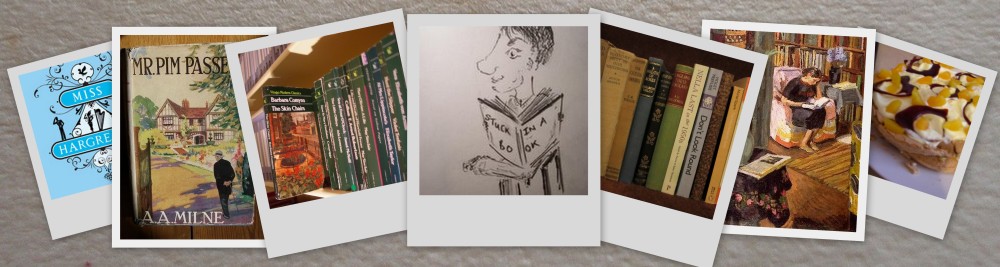
To translate or not to translate?

I was chatting to a friend about Les Miserables by Victor Hugo – which, I should add, I haven’t read – and it got me wondering about titles and translations. Most novels published into English have their titles translated too – sometimes differently in different translations (have you read The Outsider by Albert Camus or The Stranger by Albert Camus? Closely Observed Trains by Bohumil Hrabal or Closely Watched Trains by Bohumil Hrabal?) But usually they find their way into English.

But not Les Miserables. Is that just because it doesn’t translate easily? But what about – and this is the only other example I could think of off the top of my head – Bonjour Tristesse by Francoise Sagan? That could easily be Goodbye Sadness [I meant to write Hello, but see comments on this!], though maybe it’s missing something that’s in the original; my French is far, far away from idiomatic levels, so somebody else would have to tell me.

At least one of you is thinking right now about Proust and A la recherche du temps perdu, I guarantee it. That’s been translated as Remembrance of Things Past and In Search of Lost Time – and is still known as the French title, of course. ‘Remembrance of things past’ is from Shakespeare’s Sonnet 30, and I had heard a story that the equivalent line, in the French translation of Sonnet 30, was ‘a la recherche du temps perdu’… but, sadly, the internet has no evidence for that. There goes a fun anecdote.

Can you think of other books which kept their non-English title when translated into English? Or maybe the polymaths among you can tell me whether or not English novels often keep their titles when they are translated.

Stuck in a Book’s Weekend Miscellany

Am I getting my first cold of 2018? Quite possibly. I only had two last year, and that is nigh-on miraculous for me, since I’m usually just counting the days between them. But whether or not I’m a picture of health (let’s face it – at the best of times, I’m not), here is a book, a link, and a blog post. Happy weekend!

1.) The blog post – I love, love, love Best Books of the Year blog posts. Don’t we all? I could link to any number of them, but here is the post from Juliana at The Blank Garden. I’ve chosen it because I also love book stats, and Juliana doesn’t skimp on those.

2.) The link – my friend Lorna sent a Guardian article to me, all about literature courses in Australia and how unprepared students are. It’s interesting, in that the author has (to my mind) lots of good points, but also demands that people read and act in a way she believes to be right. There’s a lot going on. It’s an interesting read.

3.) The book – I’ve bought it! Because I can buy books again, without restraint! (And, in fact, I had a book token I hadn’t used.) It’s Appointment in Arezzo by Alan Taylor, and falls into one of my very favourite categories of literature: memoirs about authors by people with a unique perspective. Taylor started by interviewing Muriel Spark, then became her friend, and this slim book tells the tale of it all.


First and Last by V.L. Whitechurch

Guys, I don’t know if you realise, but I’m hilarious. And that’s why I decided the last book of 2017 and first book of 2018 would be… First and Last (1929) by V.L. Whitechurch. Well, at least I amuse myself.

This is my second novel by Whitechurch – the first was the very amusing Canon in Residence – and I picked it up in a bookshop in Stratford-on-Avon a few years ago, when I was (happily enough) hunting for more books by him. He is one of the few vicar-authors, indeed canon-authors, and the title of his novel is a reference to the Bible: ‘so the last will be first and the first will be last’. Jesus actually says it twice in the Bible and, in scriptural context, I think it’s mostly about how the poor are not excluded from Heaven, and nor are those who find faith late in life.

The novel isn’t really about either of those things.

It is about what happens when somebody from a poor background – young Tom the fisherman – comes into vast fortune, through a combination of luck and ability. He saves a rich man who gets caught in sailing difficulties and, in turn, is offered an education far beyond the means of his family and his class (particularly given that this section is set in 1881). The other character we follow is Alan, the stepson of the vicar, who has to leave the vicarage when his stepfather dies – most of the inheritance goes elsewhere, and his future looks much poorer than he realised.

Such is the set up of the characters and their fates (and an ill-advised dose of dialect from local fisherman alongside). The novel skips forward forty years, where Tom is Sir Thomas, a rich businessman (and war profiteer) whose fortune is partly ill-gotten; Alan is a clergyman with a very small income, widowed and not very happy with his life. Tom has a son; Alan has a daughter. You can probably guess what happens when they re-emerge in each other’s lives… but it all happens charmingly and interestingly. Whitechurch is a great storyteller.

I didn’t mark down any passages to quote, so here’s a bit I’ve picked more or less at random, to give a sense of his prose:

The Reverend Alan Crawford, Vicar of Lingmarsh, was tired – tired in body and in mind. He had been paying a round of parochial visits in his widely scattered country parish, trudging along lanes thick with mud, taking ‘short cuts’ over fields to outlying cottages, all the afternoon.

Altogether he had paid seven calls, and each visit, with, perhaps the exception of one, had added to his sense of weariness – a weariness that had come over him before ever he fared forth on his parochial round.

I really enjoyed reading First and Last, and I think any fan of middlebrow novels from the interwar period will love the characters, pace, and comfort of the novel. What prevents it being a brilliant novel, to my mind, is partly the lack of humour (did I imagine it in Canon in Residence, which I recall being tantamount to farce?) and partly the ways in which the characters lean to stereotype. The good people are a little too good; the wicked a little too wicked. First and Last isn’t at all moralistic (in the negative sense), but it does follow firmly trodden moral paths – and, as a parable is unlikely to show thorough nuance in its participants, so First and Last does paint a little in black and white.

But, given these limitations, I think it’s a delightful and absorbing book – not great literature, but certainly a great read. And a great way to kick off 2018 and A Century of Books.

A Century of Books

2018 is going to be the year of A Century of Books – henceforth to be known as ACOB. I don’t think I’ve mentioned it here before, only on Twitter, but hopefully it’s not too late for people to join in if they’d like to.

What is ACOB, you ask? Back in 2012, I thought it would be fun to try to read and review a book for every year of the 20th century – not in order – and various people joined in, with different targets. Some wanted one book for each decade; some wanted to do it over 2, 3, or 4 years. Essentially, you can make up your own rules. I think Claire from The Captive Reader was the only other person aiming to do 1900-1999 in one year, and… we both did! Here’s what Claire read, and here’s what I read. My post also has some stats and tips; Claire also has some helpful hints on how to get the most from ACOB.

I’m thrilled to say that Claire is doing it again this year! My century is shifting a bit – I’m going to do 1919-2018 – and I’ll keep track of the reviews on this page. If you’d like to, please do join in in whatever form you choose – I certainly found it one of the most rewarding and enjoyable (and, in the final month or so, frustrating!) reading projects I’ve ever undertaken. The best thing about it is that it is the anti-project, as you can more or less read at whim – at least for the first two-thirds of the year…

Let me know if you’re joining in, and… here we go!

1919 – The Sheik by E.M. Hull
1920 – In the Mountains by Elizabeth von Arnim
1921 – Mr Waddington of Wyck by May Sinclair
1922 – The Lark by E. Nesbit
1923 – Sphinx by David Lindsay
1924 – Bill the Conqueror by P.G. Wodehouse
1925 – The Human Machine by Arnold Bennett
1926 – The Murder of Roger Ackroyd by Agatha Christie
1927 – Leadon Hill by Richmal Crompton
1928 – As Far As Jane’s Grandmother’s by Edith Olivier
1929 – First and Last by V.L. Whitechurch
1930 – Vile Bodies by Evelyn Waugh
1931 – Buttercups and Daisies by Compton Mackenzie
1932 – Invitation to the Waltz by Rosamond Lehmann
1933 – A Thatched Roof by Beverley Nichols
1934 – Concert Pitch by Theodora Benson
1935 – Death in the Clouds by Agatha Christie
1936 – The Birds by Frank Baker
1937 – Hunt the Slipper by Violet Trefusis
1938 – Excellent Intentions by Richard Hull
1939 – The Priory by Dorothy Whipple
1940 – The Cat’s Cradle Book by Sylvia Townsend Warner
1941 – Soap Behind the Ears by Cornelia Otis Skinner
1942 – House-Bound by Winifred Peck
1943 – We Followed Our Hearts to Hollywood by Emily Kimbrough
1944 – Company in the Evening by Ursula Orange
1945 – The Demon Lover by Elizabeth Bowen
1946 – Prater Violet by Christopher Isherwood
1947 – Tell It to a Stranger by Elizabeth Berridge
1948 – The Plague and I by Betty Macdonald
1949 – By Auction by Denis Mackail
1950 – Anybody Can Do Anything by Betty Macdonald
1951 – Lise Lillywhite by Margery Sharp
1952 – The Gentlewomen by Laura Talbot
1953 – Guard Your Daughters by Diana Tutton
1954 – The Gipsy in the Parlour by Margery Sharp
1955 – Onions in the Stew by Betty Macdonald
1956 – The Fountain Overflows by Rebecca West
1957 – Tea with Walter de la Mare by Russell Brain
1958 – The Sweet and Twenties by Beverley Nichols
1959 – The Young Ones by Diana Tutton
1960 – The L-Shaped Room by Lynne Reid Banks
1961 – Albert the Dragon by Rosemary Weir
1962 – Cassandra at the Wedding by Dorothy Baker
1963 – Two By Two by David Garnett
1964 – Further Adventures of Albert the Dragon by Rosemary Weir
1965 – The Millstone by Margaret Drabble
1966 – Random Commentary by Dorothy Whipple
1967 – Stonecliff by Robert Nathan
1968 – Several Perceptions by Angela Carter
1969 – The French Lieutenant’s Woman by John Fowles
1970 – A Tale of Two Families by Dodie Smith
1971 – A Meaningful Life by L.J. Davis
1972 – The Devastating Boys by Elizabeth Taylor
1973 – The Norman Conquests by Alan Ayckbourn
1974 – Mrs Harris Goes to Moscow by Paul Gallico
1975 – Turtle Diary by Russell Hoban
1976 – Just Between Ourselves by Alan Ayckbourn
1977 – Apple of My Eye by Helene Hanff
1978 – Albert’s World Tour by Rosemary Weir
1979 – The Book of Laughter and Forgetting by Milan Kundera
1980 – Desirable Residence by Lettice Cooper
1981 – Still Missing by Beth Gutcheon
1982 – The High Path by Ted Walker
1983 – Another Time, Another Place by Jessie Kesson
1984 – According to Mark by Penelope Lively
1985 – Unexplained Laughter by Alice Thomas Ellis
1986 – The Silent Twins by Marjorie Wallace
1987 – Crossing to Safety by Wallace Stegner
1988 – Man of the Moment by Alan Ayckbourn
1989 – The Education of Harriet Hatfield by May Sarton
1990 – Touching the Rock by John M. Hull
1991 – Ride a Cockhorse by Raymond Kennedy
1992 – The Devil’s Candy by Julie Salamon
1993 – Pigs in Heaven by Barbara Kingsolver
1994 – When Heaven Is Silent by Ron Dunn
1995 – An Anthropologist on Mars by Oliver Sacks
1996 – Silence in October by Jens Christian Grøndahl
1997 – Naked by David Sedaris
1998 – Family Man by Calvin Trillin
1999 – An Equal Music by Vikram Seth
2000 – Letters From the Editor by Harold Ross
2001 – The Real Mrs Miniver by Ysenda Maxtone Graham
2002 – The Pelee Project by Jane Christmas
2003 – Kamchatka by Marcelo Figueras
2004 – A Reading Diary by Alberto Manguel
2005 – The Curtain by Milan Kundera
2006 – Mr Thundermug by Cornelius Medvei
2007 – Two Lives by Janet Malcolm
2008 – Who Was Sophie? by Celia Robertson
2009 – Remarkable Creatures by Tracy Chevalier
2010 – Ilustrado by Miguel Syjuco
2011 – The Psychopath Test by Jon Ronson
2012 – The Other Mitford: Pamela’s Story by Diana Alexander
2013 – Wave by Sonali Deraniyagala
2014 – The Reader on the 6.27 by Jean-Paul Didierlaurent
2015 – Awkward Black Girl by Issa Rae
2016 – Golden Hill by Francis Spufford
2017 – Scribbles in the Margins by Daniel Gray
2018 – Bookworm by Lucy Mangan

My Best Books of 2017

I always love sitting down at the end of the year and compiling my favourite reads of the past 12 months. Often I haven’t really noticed whether it’s been a good or bad year (reading-wise) until I do this – and I’d say 2017 has been steadily very good. Only one of the books I read is likely to find its way onto my all-time faves, but there were dozens that I’d have been very happy to see on an end of year list. And it’s been a very good year for mid-century books!


My usual rules for myself apply – only one book by each author can feature, and no re-reads. Each title links back to my review. Here they are, from #10 to #1…


Rachel and I read this for ‘Tea or Books?‘ back in February, comparing it another novel about the Thompson/Bywaters murder case (E.M. Delafield’s Messalina of the Suburbs). It’s probably the podcast ep I’m proudest of, as I think this comparison is fascinating – and FTJ’s exquisite novel won that podcast decision and tenth place on my list.


When I read Howards End is on the Landing, there was never any doubt that it would be my favourite book that year. I’ve eagerly awaited the sort-of-sequel ever since, and I did absolutely love it. The only reasons it isn’t higher are that I wanted more about books, and perhaps slightly fewer bizarre pronouncements from Hill. Still, nobody else could have written quite this book.


I’ve read any number of Taylor novels, and read this one for a conference on Undervalued British Women Writers 1930-1960. It’s more dramatic and dark than many of Taylor’s novels, but absorbingly brilliantly brilliant.


Look, I’m never going to get over how much I love the title of this book – which looks at the history of the ‘Shakespeare authorship question’ over the years. Shapiro saves his unanswerable reasons for being pro-Shakespeare until the final chapter; before this he is wise, amusing, and thorough.


This quirky, brilliant novel is a masterpiece of unusual structuring, and entirely beguiling. It was also given to me by a friend who died this year, which makes it (and her recommendation) all the more special.


I’ve yet to write a review of this one, but I’ve linked to the podcast episode where we compared it to Eden’s other novel, The Semi-Attached Couple. This is a very funny, very arch novel in the mould of Austen, elevating itself past imitation into something rather wonderful.


Also published as A Stranger With a Bag, I only reviewed this collection of short stories a week or so ago – I’m glad I waited to make my Best Books list, because these observant, calm, insightful stories are a thought-provoking delight.


I reviewed this over at Shiny New Books, and it’s a hilarious account of a year in the life of a Scottish bookseller. Bythell is quite cynical and snarky, but if your sense of humour overlaps with his then you’ll laugh and laugh – as well as getting a glimpse into the Promised Land.


This was a slow burn, and had to be read gradually, but it was one of the most rewarding reads I’ve had in a while. Timothy Casson is a writer who moves to a small village in wartime and wants boating rights on the river – of such small things are masterpieces made. Rachel and I will be discussing this one in the new year…


It truly has been the Year of Beverley. I’ve read quite a lot of books by him this year, but I had to pick the one which kicked off my Beverley love affair – I read Merry Hall for the 1951 Club, and never looked back. This (presumably heightened) account of buying a house and doing up the garden is hilarious, charming, and (praise be!) the beginning of a trilogy. Don’t wait as long as I did to read Beverley – if you haven’t yet, make 2018 the year you read him!

The Book of Forgotten Authors by Christopher Fowler

Mum and Dad got me The Book of Forgotten Authors (2017) by Christopher Fowler, and I went to hear him speak about it earlier in the year – the only reason I didn’t buy a copy there was because it felt inevitable that somebody would get it for me. What could be more up my street than a collection about forgotten authors? (Based on a long-running column in The Independent, no less, which I did read occasionally.)

What makes an author forgotten? The title of Christopher Fowler’s book is inevitably a challenge to the reader – have you forgotten these authors? have you? – but it is slightly awkward to start off with Margery Allingham. Ask somebody to name five Golden Age detective novelist and, if they could get to five, I’d be very surprised if Allingham didn’t appear. Apparently Fowler’s method included checking with a circle of literary friends, and considering an author for inclusion if less than half had heard of them. It’s as good a method as any, but somehow authors like Barbara Pym, Edmund Crispin, and Georgette Heyer got through the net – I’d argue that if your books are all or mostly in print, you don’t make the grade for ‘forgotten’.

But I’ve started with the exceptions – I should say that I hadn’t heard of about half of these 99 authors, and that’s a much more impressive average than most of the ‘authors you don’t know’ lists. And I’ve read books by 15 of them – so plenty more to explore.

Somewhat coincidentally (unless Fowler requested it from the Bodleian… which I doubt) several of the authors mentioned were focuses of my DPhil thesis. E.M. Delafield, John Collier, and… Frank Baker! Yes, Baker gets a chapter, and I will love anybody who writes

Of his fifteen novels, Baker’s masterpiece is the enchanting and timeless Miss Hargreaves, which really deserves classic status.

Fingers crossed this mention brings Miss Hargreaves new fans, along with Barbara Comyns who also gets a chapter (oddly as Barbara Comyns Carr – her real name, though E.M. Delafield appears under her penname rather than Elizabeth De La Pasture).

Fowler manages to pack a lot of enticing detail into very short chapters; the punch and tautness that made them columns serves them equally well in this compendium form. And having them in alphabetical order is a nice touch – had they been thematic, it might have all got a bit samey, but this makes for a nice assortment of tantalising suggestions – Pamela Branch, Dino Buzzati, Margaret Millar, and Cynthia Seton being the ones I wrote down to explore. (Anybody read them?) And, unlike Martin Edwards’ equally tantalising The Golden Age of Detective Fiction, it’s easy to find at least some works by most of these authors.

In between the chapters about specific authors are enjoyable, slightly longer essays on particular themes – rivals to Poirot, deservedly forgotten authors, authors who were rediscovered (ironically, I’d heard of none of these). His love of literature and of unearthing bygone gems is genuine and delightful.

The problem with knowing quite a lot about some of these authors is that I could see quite a few errors. Some are typographical (Julian Maclaren-Ross becomes Juliane Maclaren-Ross) but others show a dubiously casual research. He writes about E.M. Delafield’s five Provincial Lady novels (presumably being fooled by the American republishing of Straw Without Bricks as The Provincial Lady in Russia, which it emphatically isn’t); he says the film adaptation of Miss Hargreaves was cancelled because WW2 started, which would be tricky given that the novel wasn’t published until 1940. These small things did make me wonder how much Fowler had got wrong about the authors I didn’t know anything about…

But, let’s face it, I’m not going to remember all the details, so it doesn’t necessarily matter if they aren’t all completely accurate – what it has done is given me a list of authors to look out for, and a smile on my face that some of my much-loved authors have had another moment in the sun. If you love new recommendations, and reminders of more obscure favourites, then use your Christmas book vouchers to settle down with this one in the post-Christmas indulgent phase.

My Life With Bob by Pamela Paul

The first book I grabbed from my Christmas haul was, as I predicted in a previous post, My Life With Bob by Pamela Paul (2017), which my parents got me and which was one of the really difficult-to-resist books under Project 24. It was every bit as good as I’d hoped, though not quite in the same way, and I wanted to make sure I reviewed it before New Year in case it ends up on my Best Books of 2017 list. I haven’t decided the list yet…

The ‘Bob’ of Paul’s title is a book of books – that is, the list of books Paul reads, which she starts as an earnest teenager in high school. It has been filled in over 28 years, taking her up to her current life – as the editor of the New York Times Book Review, living with her husband and children in New York. And it is the thread which is drawn through this book – which is somewhere between an autobiography and a book about reading. (It’s also a lovely book – not just this fun cover, but it has deckled edges. Mmmmmm.)

I have kept a list of the books I’ve read since 2002, when I was 16. I write it in the back of each diary, and then (once the year is over) I also write them alphabetically by author in a set of notebooks designed for the purpose. Suffice to say, I’m not baffled by Paul’s desire to keep a list of her books, but apparently some people have been:

Though I’d never shown him to anyone, I’d told a few people about Bob in the past. This turned out to be a dicey proposition. Not everyone loved my Book of Books. “Tallying up books like the ticking off of accomplishments,” one boyfriend said accusingly, as if I’d admitted to quantifying parental love or indexing my inner beauty. “Hurry up, go note it in Bob,” he’d gibe every time I close a book, as if the act of recording invalidated the entire experience. Were the books truly being read for their own sake or in pursuit of some goal that sullied the entire enterprise?

“What does this tell you if you don’t remember anything about the books themselves?” another beau asked, suggesting an expanded Bob with a page for my impressions of each book in its stead. This Bigger Bob lasted for two books, the relationship not much longer. “You’re not seriously going to allow books on tape, are you?” wondered a third, scornfully. Competition, jealousy, misunderstandings, risk. Perhaps it wasn’t worth the bother.

How many of you keep lists of the books you read? I rather suspect it’s nearly all of you – because the sort of person who writes or reads a book blog isn’t likely to let that sort of information just disappear. Honestly, I’m more shocked that people recklessly finish a book and don’t make a note of it anywhere. Crazy.

I’ve read quite a lot of books about reading – it’s probably my favourite genre – but I’ve read one or two recently that only tread the surface; that either are a bit facile about how books can affect a person, or that act as though reading were their discovery entirely. Paul writes perfectly about reading. She understands that books are not an adjunct to a life, or solely an entertainment activity. The identity of ‘reader’ is all-consuming; books surround and define us, accompany and sate us, reward and disappoint us. The reading life lives parallel with our ‘real’ life, but the two overlap and inform one another – indeed, they become inseparable. And from an early age, picking books from her local library, Paul sees this.

We see Paul as a young reader, trying the classics for the first time; we see her as the child of divorce, taking advantage of her father’s willingness to buy her books (as her mother was one of those just-borrow-from-the-library types). We see her learning to understand her own literary taste – I will say that I never quite understood what Paul’s taste is, other than encompassing dark, difficult books. Perhaps she is too eclectic to have a single taste. Along the way, Bob is there to record what she reads – which, in turn, reflects her moods and activities.

Where Paul writes about reading she is, as you may have gathered, extremely relatable. In a world before Harry Potter, there was no widespread fad for pre-teen reading, and she was in the all-American world where outdoor sports and camping were considered normal fare, not reading. I loved discovering everything about her love affairs with books, even if we don’t learn all that many of the books she has delighted in over the years – each chapter is named after one, which features, and there is certainly a liberal sprinkling of titles, but it’s a small percentage of the total. What I’m saying is that I wanted a list of all of them, OK? At least as a sort of internet appendix, please-and-thank-you.

All of this was fun and fascinating, as I’d expected. What I expected less was Paul’s active life. Unlike some readers (ahem, me) who haven’t lived particularly adventurous lives, Paul read a book which persuaded her to walk an exciting path – in her case, buying a one-way ticket to Thailand. She lived in Thailand, she travelled around China. She went to France a dozen or so times. Bob went with her, and the chapters about these experiences merge the life of the reader with the life of the adventurer – and intriguing and well-told mix. It is unlike any travel account I’ve ever read, because the locus remains always literature.

And that’s before we get to the chapters about her less-than-a-year-long marriage.

Paul writes extremely well about any experience she turns to, whether that be her relationship with her father, working in a bookshop, travelling across Asia, or realising she wanted a divorce. The idea of tying it together with Bob works brilliantly, and reminded me a lot of another book I loved: Sheila Kaye-Smith’s All the Books of My Life. What a wonderful book that was (note to self: re-read). The only parts I found hard to swallow concerned Paul’s disdain for roles in marketing – where she worked on her way to being an editor – but, sadly, I have found quite a few editors who love down on marketers.

Any author who loves reading as much as I do is going to beguile and enchant me, particularly if they can write about it as brilliantly as Paul does. Throwing in her intense and interesting life just enhances this all further. It’s a great read, and I recommend it to anybody who loves books about books. And, let’s face it, that’s all of us, isn’t it?

Christmas Books 2017

It was a lovely year for bookish presents – here’s the little pile I got from various people under the tree this year…

Nemo’s Almanac – this was from my friends Paul and Kirsty and, coincidentally, I bought them the same thing! It’s a collection of quotations (mostly poetry) where you have to identify the author.

Bloomsbury by Matthew Ingleby – Matt was at Magdalen with me, and my friend Lorna (who also knows him, rather better than me) sent me a signed copy of this one. Always eager to add to my Bloomsbury shelf!

The Cat’s Cradle Book by Sylvia Townsend Warner – I usually take part in the LibraryThing Virago Modern Classics Secret Santa, and it always ends up in truly brilliant purchases. My nonplussed family watch while I squeal over things – like this beautiful edition of one of the few STW books I don’t have!

Catherine Carter by Pamela Hansford Johnson – and this equally beautiful edition – signed by PHJ no less! I should say that my Santa was unveiled as the wonderful Jane at Beyond Eden Rock.

Deeper Than Indigo by Jenny Balfour Paul – I don’t know anything about this one, but Jane thought it would be up my street.

The Professor’s House by Willa Cather – the final Secret Santa book is one I read ten years or ago, but have never owned – and it’s a nice VMC with a Vanessa Bell cover.

The Lonely City by Olivia Laing – the final three books are from my family, who wisely turned to my Amazon wishlist. This was from my parents, and you might remember this one from a Weekend Miscellany.

My Life With Bob by Pamela Paul – another one from Mum and Dad; another one I’ve previously highlighted in a Weekend Miscellany. And the first one from this pile that I’m going to start, I think!

How Not To Be a Boy by Robert Webb – from Col, and all about damaging gender stereotypes (as well as about Webb’s life). Well done him for writing it!

Can’t wait to dive in to this delightful treasure trove! I hope you all got good books under the Christmas tree.

Tea or Books? #50: Question & Answer

To celebrate episode 50, we are doing a question and answer episode!


I hope you’ve all had a wonderful Christmas – I’m editing this a few days before Christmas, but I’m going to assume that a wonderful time was had by all. We were really delighted with all the questions that were sent in (thank you!) and have picked 36 of them to discuss in this episode. Tune in in two years’ time for more questions and answers in episode 100!

You can see our iTunes page here, and we always welcome reviews and ratings. We’ll be back in the new year with books we think the other one will love – I chose The Boat by L.P. Hartley for Rachel, and Rachel chose Wallace Stegner’s Crossing To Safety for me.

The books and authors we mention in today’s episode are:

The Railway Journey by Wolfgang Schivelbusch
Coral Glynn by Peter Cameron
Matilda by Roald Dahl
Great Expectations by Charles Dickens
I Capture the Castle by Dodie Smith
Lolly Willowes by Sylvia Townsend Warner
Dorothy Whipple
Rebecca by Daphne du Maurier
Diary of a Provincial Lady by E.M. Delafield
Crazy Pavements by Beverley Nichols
J.B. Priestley (John!)
Pride and Prejudice by Jane Austen
Our Mutual Friend by Charles Dickens
The Semi-Detached House by Emily Eden
The Warden by Anthony Trollope
The Picture of Dorian Gray by Oscar Wilde
Emma by Jane Austen
Jane Eyre by Charlotte Bronte
The Way We Live Now by Anthony Trollope
Lady Audley’s Secret by Mary Elizabeth Braddon
Cranford by Elizabeth Gaskell
Miss Hargreaves by Frank Baker
Aunt Mame by Patrick Dennis
Barbara Pym
The Children’s Book by A.S. Byatt
Captain Corelli’s Mandolin by Louis de Bernieres
The Sea, The Sea by Iris Murdoch
The Sandcastle by Iris Murdoch
Howards End is on the Landing by Susan Hill
The Shelf by Phyllis Rose
The Year of Reading Proust by Phyllis Rose
The Phantom of the Opera by Gaston Leroux
A la recherche du temps perdu by Marcel Proust
The Provincial Lady Goes Further by E.M. Delafield
The Camomile Lawn by Mary Wesley
Tristan Shandy by Laurence Sterne
Tom Jones by Henry Fielding
Joseph Andrews 
by Henry Fielding
Humphrey Clinker by Tobias Smollett
Pamela by Samuel Richardson
Shamela by Henry Fielding
Hotel du Lac by Anita Brookner
The Sense of an Ending by Julian Barnes
Idaho by Emily Ruskovich
My Name is Lucy Barton by Elizabeth Strout
Marilynne Robinson
What Is Not Yours Is Not Yours by Helen Oyeyemi
The Runaway by Claire Wong
News of the World by Paulette Jiles
Miss Boston and Miss Hargreaves by Rachel Malik
Wives and Daughters by Elizabeth Gaskell
Gilead by Marilynne Robinson
To Kill a Mockingbird by Harper Lee
Middlemarch by George Eliot
Enid Blyton
J.K. Rowling
Patricia Brent, Spinster by Herbert Jenkins
Mr Pim Passes By by A.A. Milne
The Debt to Pleasure by John Lanchester
The Gourmet by Muriel Barbery
The Boat by L.P. Hartley
Crossing to Safety by Wallace Stegner

Crazy Pavements by Beverley Nichols

My friends Kirsty and Paul bought me a pile of books for my birthday which were PERFECTLY chosen, which says what good friends they are (and how loudly I talk about the things I like) – one of which was Beverley Nichols’ novel Crazy Pavements (1927). This has undoubtedly been the Year of Beverley for me, but I had yet to read any of his novels – indeed, I don’t think I own any, though I did almost accidentally spend about £60 on one earlier in the year, under the impression that it was £2.

This was Nichols’ fourth novel, written before any of the gardening books, and it is quintessentially 1920s in many ways. Brian – an unusual name for a hero, but we’ll let it slide – is a handsome young gossip columnist, writing anonymously about the day-to-day doings of the rich and famous, but living in not-so-well-to-do situations himself. How does he know so much about the habits and sins of the titled people of London? The long and short of it: he makes it up.

This section of the novel was Nichols at his most irrepressible; his most effervescent. I loved it, and laughed a lot. It’s everything I want from the slightly (but only slightly) cynical voyeur of the Bright Young Things. Or at least the titled classes, for it is the sort of gossip column more interested in Lord and Lady Such-and-Such than in film stars. And his editor is a glorious creation: she is constantly trying to misinterpret his innocent words (or, indeed, innocent silences) as the most outrageous innuendos, so that she can look shocked and chew her pen and say ‘oh, you are wicked‘, to his horror and embarrassment.

I enjoyed the whole novel, but it was certainly the first few chapters that I truly loved. But such things cannot be stretched to 80,000 words – I do beg your pardon, Michael Arlen – and so we must move to the next scene. Most people do not question Brian’s fabrications, either because they are on long sea voyages (he notes these, as being the best subjects to choose) or because the lies are more flattering than the truth. But Julia is different. She demands a retraction and an apology.

When an awkward Brian turns up at her house, he – would you believe it – falls instantly in love with Julia. In turn, she is surprised that he is so handsome and gauche. The former attracts; the latter is an amusing challenge. She thrusts him into her echelons of 1920s chatter and glamour.

He was already beginning to understand the technique of these people’s conversation. The chief knack seemed to be in a stupendous exaggeration of everyday statements. If, for instance, the waiter forgot to give one a wooden ‘spinner’, with which to take the fizz out of one’s champagne, the right phrase was, ‘this is more than I can bear’, or ‘this is agony‘. ‘Divine’, ‘amazing’, ‘shattering’, ‘monstrous’, were all employed for the most ordinary feelings and facts. He found himself wondering what language they would have to speak if anything really awful did happen. They would either have to relapse into Russian, or else express themselves in dumb-show.

Nichols keeps his wit about him, if you’ll pardon the pun, but the mantle of a Serious Novel About Love gets a bit in the way at times. The story takes us on a fish-out-of-water journey, in which Julia and Brian learn that their different backgrounds are more of an impediment than they realised – as is Julia’s insouciant refusal to commit to a single person. As usual, the romantic elements of the plot didn’t hugely interest me, and I got the feeling that they didn’t enormously interest Nichols either (he seems much more authentic when describing the fall out between Brian and his kind housemate Walter) – but there is enough of humour to more than make up for it.

As a grand love story against the odds, this is a bit novel-by-rote. But as a comic novel showcasing Nichols’ witty and very 1920s view of the world, it’s a total delight. The Year of Beverley closes out successfully.