A very quick last-minute post… I’ve just spotted that Stone in a Landslide is being talked about with author and publisher on BBC World Service at (according to Meike) 22.32pm. More here, and my thoughts on it here.
All
Too hot to blog…
I’m afraid I can’t blog; I’m melting… I will try and do better soon. Here is a picture of me as a child instead. (I’m pretty certain it’s me – we don’t always know… one of the perils of being a twin.)

Stuck-in-a-Book’s Weekend Miscellany
I thought I’d give you a couple of days to enjoy the photos – and to justify the time it took to gather them up and post them! And it’s another review-free day (although there’s a little pile waiting for my attention) because, of course, we’re going to have a book, a link, and a blog post.
 1.) The book – was mentioned to me by regular blog-reader Susan (I don’t think you have a blog, do you Susan? I’ll throw a link in later if you do!) It’s called Time Was Soft There: A Paris Sojourn at Shakespeare & Co. by Jeremy Mercer, published back in 2006. It’s about Mercer’s nine months living and working at the Shakespeare & Co. bookshop, and sounds wonderful.
Oo, I’ve just done a hunt and discovered that it’s the same as Books, Baguettes and Bedbugs, just under a different title. This is an instance of the American publisher coming up with a much nicer title than the English one, don’t you think? Time Was Soft There is much more evocative, AND, though both books have cats on the cover, it is more prominent on the American edition. Case settled.

2.) The link – comes courtesy of my fellow dove, Sarah. Here it is. Fancy living in a beautiful house which was once home to ‘tangled lives of the Bloomsbury set’? (oh, Telegraph, what a way you have with euphemism). Well, Sarah and I have pooled our resources, so we’re looking for another dozen or so people to help us take this place off the market…
3.) The blog post – is Hayley at Desperate Reader and her thoughts on the Flavour Thesaurus. Niki Segnit has done with flavours something akin to the colour circle – what goes with what etc., including some surprises. I’d seen a little review of it elsewhere, but they cited parsnips and banana as an example, which made me feel sick. This would be true of parsnips with (or, indeed, without) anything. But Hayley mentions that there is a section on lime, which is me sold.
A Picture Paints A Thousand Books
I’ve been so surprised and delighted by the response I’ve had to this little idea, of posting a picture which summed up your reading tastes (the only rule being – no books allowed in the picture!) This is mine, which kicked it all off (and, as you’ll see further down the page, I cheated and included another one for me):
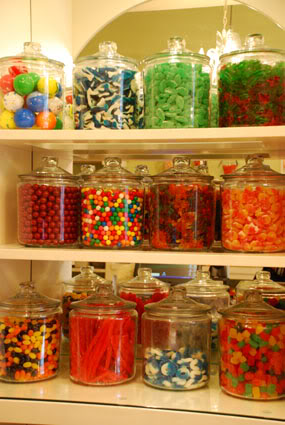

It was taken by my friend Cath, and I’d actually put it up in the post before it even occurred to me that it partly represented my reading. I just wanted an excuse to post a pretty picture… but you guys have had such amazing thoughts, and great explanations! Although all the links I’ve found/been sent are here, I thought – since this is a visual challenge – I’d collect up everyone’s wonderful images. The link above the picture is to the blogger in question. Not too late to get a response in, if you like… (I’m afraid it was too daunting to try and get permission from everyone – let me know if you’d rather your picture wasn’t here, and I’ll remove it. Oh, and if you put up more than one image, I’ve just picked one to represent your response. Hope that’s ok!)
Without further ado…
Agnieszkas Shoes

At Pemberley

Bibliophiliac

The Blue Cabin

Book Bath

Book Snob

A Bookish Space

Books Before Breakfast

A Book Worm’s Haven

A Borrower Be

The Captive Reader

Cardigan Girl Verity

Chasing Bawa

Cornflower

David Nolan

Desperate Reader

Farm Lane Books

A Few of My Favourite Books

Find Your Next Book Here

Gaskella

Hannah Stoneham

Harriet Devine

Kiss A Cloud

Light, Bright, and Sparkling

Lizzy Siddal

Mental Foodie

Morgana’s Cat

My Porch

Off at a Tangent

The Oliva Reader
 One Swede Read

Overdue

Paperback Reader

Pattinase
 Random Jottings

Random Ramblings

A Rat in the Book Pile

Ready When You Are, C.B.

Roses Over a Cottage Door

Savidge Reads

Shelf Love

Stuck-in-a-Book

Tampa Bookworm

Tartan Wallpaper

Tea Time With Marce

The Treacle Well

We Be Reading

Winston’s Dad

At Pemberley

Bibliophiliac

The Blue Cabin

Book Bath

Book Snob

A Bookish Space

Books Before Breakfast

A Book Worm’s Haven

A Borrower Be

The Captive Reader

Cardigan Girl Verity

Chasing Bawa

Cornflower

David Nolan

Desperate Reader

Farm Lane Books

A Few of My Favourite Books

Find Your Next Book Here

Gaskella

Hannah Stoneham

Harriet Devine

Kiss A Cloud

Light, Bright, and Sparkling

Lizzy Siddal

Mental Foodie

Morgana’s Cat

My Porch

Off at a Tangent

The Oliva Reader
 One Swede Read
Overdue

Paperback Reader

Pattinase
 Random Jottings
Random Ramblings

A Rat in the Book Pile

Ready When You Are, C.B.

Roses Over a Cottage Door

Savidge Reads

Shelf Love

Stuck-in-a-Book

Tampa Bookworm

Tartan Wallpaper

Tea Time With Marce

The Treacle Well

We Be Reading

Winston’s Dad

Watch out for The Sea, The Sea…
 Ages ago I piled up a set of books to read on a week-off from studying, and (predictably enough) failed to finish all six. In fact, I’ve only recently finished the fourth of them, so let’s call it an ongoing project…
That book is The Sandcastle by Iris Murdoch, published in 1957 and Murdoch’s third novel. I’ve been meaning to read some Murdoch ever since I saw the phenomenal film Iris back in 2001 or 2002, and have accumulated a few different novels on my shelves – this one coming from the brilliant Amnesty bookshop in Bristol, always worth a trip. Why this one came off the shelf, I’m not quite sure, although my dear friend Lorna has it as one of her favourites on Facebook so perhaps that had stayed in my memory somehow.
For years I used to confuse Iris Murdoch and Ivy Compton-Burnett. Before I’d read either of them, that is – somehow, in my mind, they were similar authors. It was only later, after having read and adored ICB, that I realised the general view was that ICB was difficult to enjoy, and Iris Murdoch was very good but much more accessible. Well, ladies and gentlemen of the jury, I wish to disagree. This reader found Iris Murdoch much less accessible than ICB, and – although I could see that The Sandcastle was a good novel, and found certain sections gripping and brilliantly observed, overall I must confess it was… a bit of a slog.
Before I go any further, I must concede practicalities – the font in my copy was tiny, and I did get a headache when reading the novel. Such things ought not fetter learned critics, naturally, but… I am not a learned critic, and I was fettered. Recently I read Images in a Mirror by Sigrid Undset (which I’ll hopefully write about at some point) which had such a large font that I found myself reading the novel far too quickly and not taking in the details – prosaic issues such as font can really affect a reading experience, don’t you think? Is that just me?
But back to the novel in question. The Sandcastle takes place in a boarding school. Mor has taught there for years, and lives on site with his wife Nan and their two children. Murdoch is masterful at the brief incidents or asides which sum up a relationship. Everything you need to know about Mor and Nan’s marriage is presented here: Liffy had been their dog, a golden retriever, who was killed two years ago on the main road. This animal had formed the bond between Mor and Nan which their children had been unable to form. Half unconsciously, whenever Mor wanted to placate his wife he said something about Liffey. To make matters worse, along comes a painter called Rain. Her task is to paint the retiring headmaster Demoyte – ‘As for morality, and such things, Demoyte took the view that if a boy could look after his Latin prose his character would look after itself.’ That sort of man. I love it when authors write about artists – so often they use this to explore the idea of artistic creation… and I find talented painters, especially portraitists, fascinating.
“When you go,” said Demoyte, “you will leave behind a picture of me, whereas what I shall be wanting is a picture of you.”
“Every portrait is a self-portrait,” said Rain. “In portraying you I portray myself.”
“Spiritual nonsense,” said Demoyte. “I want to see your flesh, not your soul.”But Rain’s role is not just as resident painter. As the cracks in Mor and Nan’s marriage become more evident, Mor falls in love with Rain…
And so The Sandcastle unfolds, with this evolving love affair and the various reactions to it. In fact, the novel’s not as sensational as that sounds – a lot of pages meander through emotions and everyday events, rather than drop-a-vase-on-the-floor shocks and surprises.
 Something Murdoch does very well, on the strength of this novel anyway, is the big set pieces. The scenes which really stay in the memory. I can think of quite a few sections which are excellently structured, with appropriate climaxes and nuances; pathos and bathos, so on and so forth. A car is edging towards a river and falls in; a boy must be rescued from the tower; Nan finds out about her husband’s affair and can’t stop hiccoughing. These are all brilliant scenes, incredibly well written not simply sentence by sentence, but on a wider, structural level. But – oh yes, but – between the big set pieces, this novel rambles interminably. Perhaps, as I said above, it’s simply the fault of the font… but I found so much of The Sandcastle difficult to wade through. Not that it was badly written as such, indeed she writes conversations about love well (and that is difficult, judging by some books I’ve read) but there are so many pages which felt like a chore. Not much happening, on the level of plot or character. I don’t mind plotless sections – I welcome it – but only if there is something to captivate my attention.
I don’t know about you, but my opinions when reading (and consequently my reviews) are probably more generous to authors of whom I’ve heard nothing. So you might see quite enthusiastic reviews for writers I know won’t enter any sort of canon – doesn’t stop them being good reads, of course, but I lay no claim to them having lasting notoriety. Whereas with Iris Murdoch… I know before picking up the book that she has a great reputation, so I’m expecting more. If she was a complete unknown, I daresay I’d be bowled over by her prose at times, and definitely enthusiastic about those occasional scenes of brilliance. But, without doing down these attributes, I must confess I’d hoped for much more. I’d hoped I’d love Murdoch and rush out to read more – as it is, I’m not sure when I’ll return to Iris.
Do her later novels fulfil the promise which is undoubtedly here? Or does Murdoch always have great scenes with a lot of filler? Fulfil or full of filler – that’s what I need to know before I venture further…
Books to get Stuck into:
The Honours Board – Pamela Hansford Johnson : I haven’t blogged about this novel, but it’s good. Also set in a school, there is a cleverly drawn cast of teachers, assistants, and pupils in a boarding school keen to gain prestige.
Pastors and Masters – Ivy Compton-Burnett : another school setting, and ICB-lite, this novella is a great litmus test to see whether or not you’ll get on with Dame Ivy – as well as an adroit depiction of schoolmaster rivalries.
(P.S. Apologies for the big gap in the middle of this – are any other Blogger users having trouble with puttings pictures in the bottom half of posts?)
A Taste of Saki
I was chatting to Elaine from Random Jottings the other day (in person, no less!) about short stories and suchlike, and I discovered that she hadn’t read any Saki. I’d recently been reminded of him via Kirsty‘s Facebook page (thanks, Kirsty!) Quick as a quite-contemplatively-slow flash, I emailed Elaine a link to a Saki short story. Any would do, but I went with ‘The Schartz-Metterklume Method’. Saki’s stories are very short, very funny, and rather biting – but always on the right side of malicious. Very spikey, though, and exactly my sort of thing. I’m sure he’ll work for some of you too (and doubtless not for others, but such is life) – and since he’s long out of copyright, I feel no qualms in reproducing ‘The Schartz-Metterklume Method’ for your delectation and delight. If you like it (and, indeed, if you don’t) it’s from a collection called Beasts and Super-Beasts, which is well worth getting.

The Schartz-Metterklume Method
Lady Carlotta stepped out on to the platform of the small wayside station and took a turn or two up and down its uninteresting length, to kill time till the train should be pleased to proceed on its way. Then, in the roadway beyond, she saw a horse struggling with a more than ample load, and a carter of the sort that seems to bear a sullen hatred against the animal that helps him to earn a living. Lady Carlotta promptly betook her to the roadway, and put rather a different complexion on the struggle. Certain of her acquaintances were wont to give her plentiful admonition as to the undesirability of interfering on behalf of a distressed animal, such interference being “none of her business.” Only once had she put the doctrine of non-interference into practice, when one of its most eloquent exponents had been besieged for nearly three hours in a small and extremely uncomfortable may-tree by an angry boar-pig, while Lady Carlotta, on the other side of the fence, had proceeded with the water-colour sketch she was engaged on, and refused to interfere between the boar and his prisoner. It is to be feared that she lost the friendship of the ultimately rescued lady. On this occasion she merely lost the train, which gave way to the first sign of impatience it had shown throughout the journey, and steamed off without her. She bore the desertion with philosophical indifference; her friends and relations were thoroughly well used to the fact of her luggage arriving without her. She wired a vague non-committal message to her destination to say that she was coming on “by another train.” Before she had time to think what her next move might be she was confronted by an imposingly attired lady, who seemed to be taking a prolonged mental inventory of her clothes and looks.
“You must be Miss Hope, the governess I’ve come to meet,” said the apparition, in a tone that admitted of very little argument.
“Very well, if I must I must,” said Lady Carlotta to herself with dangerous meekness.
“I am Mrs. Quabarl,” continued the lady; “and where, pray, is your luggage?”
“It’s gone astray,” said the alleged governess, falling in with the excellent rule of life that the absent are always to blame; the luggage had, in point of fact, behaved with perfect correctitude. “I’ve just telegraphed about it,” she added, with a nearer approach to truth.
“How provoking,” said Mrs. Quabarl; “these railway companies are so careless. However, my maid can lend you things for the night,” and she led the way to her car.
During the drive to the Quabarl mansion Lady Carlotta was impressively introduced to the nature of the charge that had been thrust upon her; she learned that Claude and Wilfrid were delicate, sensitive young people, that Irene had the artistic temperament highly developed, and that Viola was something or other else of a mould equally commonplace among children of that class and type in the twentieth century.
“I wish them not only to be TAUGHT,” said Mrs. Quabarl, “but INTERESTED in what they learn. In their history lessons, for instance, you must try to make them feel that they are being introduced to the life-stories of men and women who really lived, not merely committing a mass of names and dates to memory. French, of course, I shall expect you to talk at meal-times several days in the week.”
“I shall talk French four days of the week and Russian in the remaining three.”
“Russian? My dear Miss Hope, no one in the house speaks or understands Russian.”
“That will not embarrass me in the least,” said Lady Carlotta coldly.
Mrs. Quabarl, to use a colloquial expression, was knocked off her perch. She was one of those imperfectly self-assured individuals who are magnificent and autocratic as long as they are not seriously opposed. The least show of unexpected resistance goes a long way towards rendering them cowed and apologetic. When the new governess failed to express wondering admiration of the large newly-purchased and expensive car, and lightly alluded to the superior advantages of one or two makes which had just been put on the market, the discomfiture of her patroness became almost abject. Her feelings were those which might have animated a general of ancient warfaring days, on beholding his heaviest battle-elephant ignominiously driven off the field by slingers and javelin throwers.
At dinner that evening, although reinforced by her husband, who usually duplicated her opinions and lent her moral support generally, Mrs. Quabarl regained none of her lost ground. The governess not only helped herself well and truly to wine, but held forth with considerable show of critical knowledge on various vintage matters, concerning which the Quabarls were in no wise able to pose as authorities. Previous governesses had limited their conversation on the wine topic to a respectful and doubtless sincere expression of a preference for water. When this one went as far as to recommend a wine firm in whose hands you could not go very far wrong Mrs. Quabarl thought it time to turn the conversation into more usual channels.
“We got very satisfactory references about you from Canon Teep,” she observed; “a very estimable man, I should think.”
“Drinks like a fish and beats his wife, otherwise a very lovable character,” said the governess imperturbably.
“MY DEAR Miss Hope! I trust you are exaggerating,” exclaimed the Quabarls in unison.
“One must in justice admit that there is some provocation,” continued the romancer. “Mrs. Teep is quite the most irritating bridge-player that I have ever sat down with; her leads and declarations would condone a certain amount of brutality in her partner, but to souse her with the contents of the only soda-water syphon in the house on a Sunday afternoon, when one couldn’t get another, argues an indifference to the comfort of others which I cannot altogether overlook. You may think me hasty in my judgments, but it was practically on account of the syphon incident that I left.”
“We will talk of this some other time,” said Mrs. Quabarl hastily.
“I shall never allude to it again,” said the governess with decision.
Mr. Quabarl made a welcome diversion by asking what studies the new instructress proposed to inaugurate on the morrow.
“History to begin with,” she informed him.
“Ah, history,” he observed sagely; “now in teaching them history you must take care to interest them in what they learn. You must make them feel that they are being introduced to the life-stories of men and women who really lived – “
“I’ve told her all that,” interposed Mrs. Quabarl.
“I teach history on the Schartz-Metterklume method,” said the governess loftily.
“Ah, yes,” said her listeners, thinking it expedient to assume an acquaintance at least with the name.
* * * *
“What are you children doing out here?” demanded Mrs. Quabarl the next morning, on finding Irene sitting rather glumly at the head of the stairs, while her sister was perched in an attitude of depressed discomfort on the window-seat behind her, with a wolf-skin rug almost covering her.
“We are having a history lesson,” came the unexpected reply. “I am supposed to be Rome, and Viola up there is the she-wolf; not a real wolf, but the figure of one that the Romans used to set store by – I forget why. Claude and Wilfrid have gone to fetch the shabby women.”
“The shabby women?”
“Yes, they’ve got to carry them off. They didn’t want to, but Miss Hope got one of father’s fives-bats and said she’d give them a number nine spanking if they didn’t, so they’ve gone to do it.”
A loud, angry screaming from the direction of the lawn drew Mrs. Quabarl thither in hot haste, fearful lest the threatened castigation might even now be in process of infliction. The outcry, however, came principally from the two small daughters of the lodge-keeper, who were being hauled and pushed towards the house by the panting and dishevelled Claude and Wilfrid, whose task was rendered even more arduous by the incessant, if not very effectual, attacks of the captured maidens’ small brother. The governess, fives-bat in hand, sat negligently on the stone balustrade, presiding over the scene with the cold impartiality of a Goddess of Battles. A furious and repeated chorus of “I’ll tell muvver” rose from the lodge-children, but the lodge-mother, who was hard of hearing, was for the moment immersed in the preoccupation of her washtub.
After an apprehensive glance in the direction of the lodge (the good woman was gifted with the highly militant temper which is sometimes the privilege of deafness) Mrs. Quabarl flew indignantly to the rescue of the struggling captives.
“Wilfrid! Claude! Let those children go at once. Miss Hope, what on earth is the meaning of this scene?”
“Early Roman history; the Sabine Women, don’t you know? It’s the Schartz-Metterklume method to make children understand history by acting it themselves; fixes it in their memory, you know. Of course, if, thanks to your interference, your boys go through life thinking that the Sabine women ultimately escaped, I really cannot be held responsible.”
“You may be very clever and modern, Miss Hope,” said Mrs. Quabarl firmly, “but I should like you to leave here by the next train. Your luggage will be sent after you as soon as it arrives.”
“I’m not certain exactly where I shall be for the next few days,” said the dismissed instructress of youth; “you might keep my luggage till I wire my address. There are only a couple of trunks and some golf-clubs and a leopard cub.”
“A leopard cub!” gasped Mrs. Quabarl. Even in her departure this extraordinary person seemed destined to leave a trail of embarrassment behind her.
“Well, it’s rather left off being a cub; it’s more than half-grown, you know. A fowl every day and a rabbit on Sundays is what it usually gets. Raw beef makes it too excitable. Don’t trouble about getting the car for me, I’m rather inclined for a walk.”
And Lady Carlotta strode out of the Quabarl horizon.
The advent of the genuine Miss Hope, who had made a mistake as to the day on which she was due to arrive, caused a turmoil which that good lady was quite unused to inspiring. Obviously the Quabarl family had been woefully befooled, but a certain amount of relief came with the knowledge.
“How tiresome for you, dear Carlotta,” said her hostess, when the overdue guest ultimately arrived; “how very tiresome losing your train and having to stop overnight in a strange place.”
“Oh dear, no,” said Lady Carlotta; “not at all tiresome – for me.”
Musical Musing
Karen at Cornflower has set people a music challenge – list/upload their five favourite songs beginning with a letter which she pulls out of a Scrabble bag. Sounds like fun, does it not, and my letter was… P.
Now, there’s very little guarantee that shared book tastes lead to shared music tastes, especially since I hardly ever listen to classical music, and never opera, and am probably rather alone in that in terms of bloggers. But I thought I’d give it a go nonetheless. Some of my favourites don’t appear to be on YouTube (like Papercut Words by Elin Sigvardsson and Peace by Jennifer Knapp) so I limited to those for which I could find videos… some of these aren’t official videos but fan-made ones, so apologies if they’re a bit weird. Anyway, it was tricky but… here we go! If you want to have a go yourself, go to Karen’s post here.
1.) The Part Where You Let Go – Hem
(I thought I’d apply the articles-don’t-count rule beloved by libraries everywhere)
2.) Protection – Massive Attack ft. Tracey Thorn
3.) Pretty Good Year – Tori Amos
4.) Paper Cup – Heather Nova
5.) Praise, My Soul, The King of Heaven
Stuck-in-a-Book’s Weekend Miscellany
My best laid plans to type out a week’s worth of reviews this evening have rather crumbled and fallen. Instead, I did my ironing, baked a cake, and watched soap operas online. I feel a little like a 1950s housewife… but I’ve read/seen The Hours and I know how that ends.
Off to a wedding tomorrow, should be fun – and will hopefully avoid dancing. As Mary Bennett once said before me, “I should infinitely prefer a book.” And, had she found her way to Stuck-in-a-Book, she’d get even more than that: a book, a blog post, and a link. Don’t say I don’t spoil you.
 1.) The book – I was wondering to myself what else Nicola Humble might have written, except the very Simon-friendly The Feminine Middlebrow Novel 1920s to 1950s (see more here) and came across this rather winning title: Cake: A Global History. It’s advertised on Amazon as Cake: A Global History (Edible) which I thought was an exceptionally clever gimmick, but turns out Edible is the name of the publishing company. Basically it looks like it does what it says on the tin – a history of cake! What’s not to like?
2.) The link – is to an Oxfam Bookfest. Includes a day-long readathon… Click the link to find out more.
3.) The blog post – I’m a sucker for so-I-went-bookshopping sorts of posts (especially since I’ve been on rations myself) so hive on over to Thomas at My Porch and his latest spree…
Did you know it’s Independent Booksellers Week?

I really value independent bookshops, so have copied a press release I was sent… (see this link for more)
Independent Booksellers Week June 14th – 21st 2010
Bookshops all over the country are hosting hundreds of promotional events this week during Independent Booksellers Week (June 14th to 21st), a major marketing drive championing the energy and fun to be found amongst the long-established and new-generation booksellers operating on Britain’s high streets.
Customer-focused, commercially-savvy and digitally-aware, booksellers are carving an invaluable niche for themselves in their local communities, despite difficult trading conditions. Consumer spending on books is down by 5% in value year on year to £2208m and by 1% in volume in 2008/9. The independent sector, however, held up with an increase of 1% in volume over the same period.*1
There are around 1,200 independent bookshops in the UK , with over 100 opening their doors for the first time in the last two years.
Taking their place alongside some very savvy and incredibly creative existing booksellers, this new breed of book entrepreneurs have several things in common: well-honed business skills, often from previous careers; highly-creative marketing campaigns and excellent relationships with customers.
This week 250 shops are taking part in Independent Booksellers Week (IBW), and hosting visits from dozens of authors such as Katie Fforde, Lynda La Plante, Robert Muchamore, Justin Lee Collins and Vogue editor Alexandra Shulman. Community-based events range from Where’s Wally fancy dress competitions at several locations to guided meditation led by a Buddhist monk (Jaffe & Neale, Chipping Norton).
Regular customer events, with activities for schools, community groups and local residents are commonplace for many indies. The Chepstow Bookshop is one that runs frequent author events – more than 80 last year – attracting high profile names such as Clarissa Dickson-Wright, Andy McNab, Simon King and Sir David Attenborough.
Some, like Jaffe & Neale of Chipping Norton, Oxon, are the base for regular book clubs. This award-winning indie also hosts a creative writing course with publisher Faber and Faber, authors’ evenings and non-book events including an environmental movement and art exhibitions.
Others take part in local festivals. The Book Hive, Norwich is linking up with the Norfolk Food Festival this summer, inviting customers to enjoy some sake while the chef from a nearby Japanese restaurant prepares sushi.
Food and drink have become an important part of the booksellers’ offering, with in-store cafes now commonplace. Some indies have gone one step further: SilverDell Books, in Kirkham Lancs, has an ice cream parlour and creates recipes in honour of visiting authors. Cox’s Special (named for Josephine Cox) and Tasty Terry (for Terry Wogan) are just two popular varieties dreamt up by proprietor Elaine Silverwood.
Independents, being close to their customers and at the heart of their communities, offer a bookstock tailored to their market and customer base. They also understand the need to be ‘multi-channel’ booksellers; many sell online as well as on the high street, find books for customers online and even order through Amazon to track down books or for people who don’t want to do it themselves. Booksellers increasingly go where the customers are, and, in common with many other independent retailers, no longer run their business from behind the till, but from the midst of the community they serve.
Increasingly the indies are digitally-savvy, using e-marketing to reach their market. Nic Bottomley from Mr B’s Emporium of Reading Delights, Bath , is an expert internet user with a blog, and regularly both sources, and sells, books online. Retailers are now using e-newsletters, Facebook and Twitter on a regular basis to keep in touch with their customers.
The indies also design store layouts to cater for their customers’ interests and lifestyles, and to include space for complementary activities. The Kemptown Bookshop, a well-known south-coast independent, has an events space for lectures, art classes, film screenings and writing groups. The Book Hive ( Norwich ) features a trompe l’oeil bookshelf, complete with parents’ peep-hole, a striking design which adorns the wall and partitions a secure children’s area.
Many of the newer booksellers have changed career to open a bookshop, bringing with them business skills acquired in other industries. Nic Bottomley of Mr B’s Emporium of Reading Delights, Bath, was a lawyer, Sue Lake of White Rose Books, Thirsk, worked in advertising, while Henry Layte of The Book Hive, Norwich, was an olive oil importer – and all are now run thriving ‘indies’. Patrick Jaffe of Jaffe & Neale is one of many who worked elsewhere in the book industry – in his case 16 years at Waterstone’s.
Meryl Halls, from the industry trade body The Bookseller Association said:
“Successful independent booksellers like these are bucking the trends on the high street by offering their local communities the sort of service that sets these shops apart, and making their position in their local village, town, city or suburb integral to that community. Independents are close to their market, they know their customers, they know what is going on locally – they can make a real difference. We count some of the most creative, entrepreneurial retailers on the high street today amongst our members and Independent Booksellers Week is an excellent showcase for the great work they do”.
* Carol Ann Duffy reading from The Princess’ Blankets, Monday 14th June at The Steyning Bookshop in West Sussex.
* Michael Morpurgo, on the 18th June, Mainstreet Trading Company, Edinburgh
* Alexandra Shulman, editor of Vogue and a judge of this year’s Orange Prize for Fiction will give a talk about choosing the Orange shortlist and winner at the Woodstock Bookshop, Oxfordshire on 14th June.
* Evie Wyld, award-winning author and Booktrust’s online writer in residence, will be leading a creative writing event with London-based charity Kids Company at Review Bookshop in Peckham on 15th June.
* Bestselling romantic novelist Katie Fforde will be talking at an evening event at Brendon Books in Taunton , Somerset on 15th June.
* The county Hall in Preston will be hosting an evening with Lynda la Plante (bestselling author and writer of the TV Prime Suspect series) in association with Silverdell bookshop in Kirkham, Lancashire on 15th June.
* Douglas Hurd will be talking about his book Choose Your Weapons at Jaffé & Neale Bookshop and Café in Chipping Norton on 17th June.
* Comedian and TV host Justin Lee Collins will be signing copies of his book ‘Good Times’ at Torbay Bookshop, on 16th June.
* Patrick Gale event at One Tree Books, Petersfield, 17th June. As part of IBW celebrations re-read Rough Music and come along to discuss it with other like minded readers and Patrick Gale.
* The Book Hive in Norwich are holding a debate on 18th June to mark the 25th anniversary of Philip Larkin’s death. Guest readers and speakers include: Larkin specialist Dr. Mark Rowe and authors Anthony and Ann Thwaite.
* An introduction to Buddhist Meditation, guided by a Buddhist monk, at Jaffé & Neale Bookshop & Café, Chipping Norton, Oxfordshire on 15th June.
* GWR Week, with events and promotions all week to celebrate 175 years since the Great Western Railway was founded by Brunel, at Ian Allan Book Shop in Cardiff.
* An Evening of Antiques with Judith Miller & Mark Hill, 12th June at Palace Theatre, Torbay, organised by The Torbay Bookshop.
Decades

A nice bonus to going through all my reviews and labelling them by decade is finding out statistics for my reading tastes. (N.B. sorry, the links don’t work unless you’re me! If you want to see the relevant posts, you’ll have to use the drop-down menu in the left hand column… oops!)
1770s (1)1810s (1)1830s (1)1860s (2)1870s (4)1880s (3)1890s (4)1900s (1)1910s (3)1920s (22)1930s (31)1940s (16)1950s (17)1960s (9)1970s (9)1980s (17)1990s (18)2000s (96)2010s (5)
Obviously there is definite weighting towards the 2000s, not least because for the past three years these are the books I’ve been sent to review (although I’ve only managed to review five published this year, oops!) but I was surprised to see the 1950s and 1980s quite well represented, as I didn’t think I read much from these decades. Well, the 1950s-1980s really, so I wasn’t surprised to see the ’60s and ’70s neglected!
All good fun… I know most of you won’t have statistics like these to hand, but which decades do you think your reading usually falls into? Let me know!