Madame Verona Comes Down the Hill by Dimitri Verhulst

Earlier in the year, I experimented with different book recommendation websites – you can read my exploits here. My favourite was Which Book, and I had great fun playing with the different sliders to determine what sort of book would match my mood. The results aren’t the usual fare, and they include a lot of translated fiction. I definitely recommend having a go.

I don’t remember which sliders I used to get the result of Madame Verona Comes Down the Hill (2006) by Dimitri Verhulst, though I’m pretty sure ‘short’ was among them. This novella is only 145 pages and there’s with a big font. Definitely up my street! I think it might also be the first Dutch novel I’ve ever read – with thanks to the translator, David Comer. [A commenter has told me that it’s actually translated from Flemish – be more precise, publisher!]

Madame Verona lives in an isolated house on top of a hill, on the outskirts of a small village. ‘As far as anyone knew, it had always been inhabited by outsiders, people from elsewhere, who came here with a romantic view of isolation and paid for it later with large chunks of their mind.’ But there is no sense that Madame V has particularly suffered from her isolation, even though her husband has been dead for more than twenty years. She has the gift of dogs loving her, as the first chapter dwells upon. They have been a constant, and a dog is accompanying her as she comes down the hill.

In terms of plot in the ‘present day’ section of the novella, the title pretty much sums it up. Snow is thick on the ground, and Madame Verona has slowly made her way down the steep hill. And she knows that she won’t make it back to the top. She is too old and too tired. She has, in essence, come down the hill to die.

We flit to and from this present day, but the novella is really a mixture of memories and reflections – sometimes clearly Madame Verona’s thoughts, and sometimes a broader and more philosophical narrator’s voice. These aspects go together well. We see the specifics of the village and of Madame Verona’s marriage – and we hear more general considerations of time and community and particularly age. Here’s a rather lovely passage I noted down:

Silence is often more intense after its return. When a tree accepts its defeat, creaks and capsizes, all life flies up and off. There’s crowing and cawing, branches crack, it rains feathers and down, rabbits flee to their underground shelters. All things considered, the titan’s contact with the actual ground is quiet; people generally expect it to be louder. It’s mainly the rest of the forest that kicks up a fuss and makes a racket. And once the creatures have assessed the damage, silence comes back. Eyes and leaves turn to the light that has never shone so brightly here. A place has come free, the struggle can begin, because the space will be occupied, by something or someone. It’s like that for trees, it’s like that for people.

I might have appreciated a little more about Madame Verona in the present day, because it is a bit sparse there, but this is a very enjoyable little book. It has aspects of melancholy, but Verhulst’s thoughtful exploration of little facets of life mean it doesn’t feel bleak – helped by the beautiful descriptions of the landscape. There is a lovely tone to it that comes through the translation. That translation can be a little clunky (‘She wasn’t brave enough to go downstairs herself. And what if she did, and found herself eye to eye with a person of bad will, how would that lead to a better outcome?’) but that is the exception rather than the rule.

Thanks, Which Book, my first read based on your recommendations certainly went well!

Eve in Egypt by Stella Tennyson Jesse

A year ago, Michael Walmer sent me a review copy of Eve in Egypt (1929) by Stella Tennyson Jesse. And look, here I am, I finally read it! It turns out it needed another August before I could turn to so vibrant a cover.

This was Tennyson Jesse’s only book – and, as you may well have surmised, she was the sister of the more-famous F Tennyson Jesse. Her sister wrote novels like A Pin To See The Peepshow and The Lacquer Lady that weren’t connected to her own life. Stella, on the other hand, drew influence straight from her own experiences. I suspect she was not much like Eve, but she certainly went to Egypt. And, boy, you’ll know it by the end!

Here’s how we meet Eve:

The funny thing was that Eve woke up that morning rather depressed than otherwise. “ If,” as she said to herself afterwards, “ I had had that wonderful feeling that something beautiful was going to happen, I could
have understood it; but to think that everything lovely in life began that morning, and that I never guessed it !
I only woke up with that horrid feeling of there being something unpleasant in the background. That does
really seem odd.”

And, after all, the something unpleasant had not been so very bad. To be exact, it was two proposals ; and
though Eve, like all nice-minded young women, deprecated the idea of a proposal that she couldn’t accept,
nevertheless there remained in her mind, as in the mind of every woman similarly situated, a pleasant residue — a sort of nice sugary sediment, as it were. After all, every proposal is a tribute to one’s charms, there’s no
getting away from that.

She is quintessentially 1920s – or at least a certain sort of 1920s. She is quite flighty and superficial, though with a heart under it all. The reason she goes to Egypt is largely to get away from having to respond to those two unwelcome proposals. And so off she goes with her sister Serena (charmingly ignorant), Serena’s husband Hugh, and the knowledgeable Jeremy.

It’s entirely obvious to the reader from the outset that she will fall in love with Jeremy, and this plot chugs along nicely in the background as we take a tour of Egypt. And this is where STJ’s experience certainly comes into play.

I’m always a little reluctant to read The Brits Abroad novels. I would rather read a novel set in Egypt written by an Egyptian (any recommendations?). But I was drawn in by the insouciance of this one, and it does deliver. Tennyson Jesse does an admirable job of making the info-dumps feel like they’re part of the conversation, and even gives humour to them and uses them to develop character. But it’s hard to deny that there are sections that scream “here’s my research!” Yes, Jeremy is educating the party – but perhaps we didn’t need quite as much of an overt history lesson.

Having said that, I was very interested by some temples that were left to flood when a new dam was built. As Jeremy explains, the locals need water and sometimes artefacts have to suffer the consequences. I went to Wikipedia. Turns out the UNESCO came along and thought that maybe the temple shouldn’t suffer the consequences, and dismantled and moved it. If I could remember the name of the temple, I’d put a link…

The experience is enhanced by some photos spread throughout the book, which I’m assuming were taken by Tennyson Jesse. As the back of this new edition says, it’s both ‘Literature – fiction’ and ‘travelogue’. I don’t tend to get on with the latter, but there was enough of the former to beguile me – and this was a fun, delightfully predictable story. And – again – what a stunning and happy cover!

Uncle Samson by Beverley Nichols

I was looking through my Beverley Nichols books, trying to decide which one to read next – and only one of them was eligible for Project Names. And so that’s the one I chose! Step forward Uncle Samson (1950), which I hadn’t even heard of until I found it in an extremely disorganised bookshop in Cheltenham earlier in the year.

Apparently it is a sequel of sorts to the excellently-titled The Star-spangled Manner and, like that former book (which I have not read), it is Nichols’ impression of America. And those impressions are certainly varied and interesting!

America is, of course, an enormous country. Nichols can’t hope to encapsulate everything there is to say about it, or even a hundredth – but the selection of chapters he writes are certainly fascinating. It’s worth starting by saying that this is not primarily a funny book. Nichols is a delightful humorist, but in Uncle Samson he is much more in journalistic mode. Which isn’t to say that there isn’t the odd moment of levity in his phrasing. I particularly enjoyed this, from when he goes to visit a funeral home of the sort that Evelyn Waugh pastiches in The Loved One:

It would obviously be impossible to encompass all these attractions without exhaustion, so I contented myself with a brief visit to Lullaby Land, and then went on to the “Mysteries of Life” garden, containing a large statue by Ernest Gazzeri, which suggested that though the sculptor might have known a lot about the mysteries of life he knew little about the mysteries of anatomy.

A glance at the American death industry comes after sections on religious cults, including a notable one led by Father Divine (I had to Wikipedia it, but it’s definitely interesting!) and on the horrors of socialism.

The most animated Nichols gets is the section on race. While many of Nichols’ views were not particularly progressive for 1940s/1950s England (particularly as regards class), he was certainly ahead of the curve on racism compared to the lawmakers of 1940s/1950s America.

Every year 30,000 light-skinned [African-Americans] “crossed the colour-line” and began a new life as whites. If we were told that every year 30,000 Americans broke the barbed wire of concentration camps and regained their freedom we might sit up and take notice, for America is a great democracy and does not incarcerate her citizens unless they have committed a crime. Yet America runs the greatest concentration camp the world has ever seen, and the only offence of its occupants is the crime of having been born.

I think he writes more about race than anything else, and he is baffled and angry about it – recounting his own embarrassment that he hadn’t considered the obstacles that would be in the way when he tries to meet up with a black friend. America still has a terrible problem with racism, and a President who is openly racist without seeming to suffer from his voting base – but Uncle Samson does remind us that at least some progress has been made. And I’d have written a rather more hopeful sentence there under the previous President, as opposed to the one who thinks black American women should “go home”.

Let’s move onto cheerier things. He meets Walt Disney! That is rather an enchanting chapter. I don’t know how accurate it is as an overall portrait of Disney, but Nichols certainly seemed won over by him – particularly his childlike enthusiasm for Fantasia – and tells of employees who are similarly devoted. I hadn’t expected an interview with Disney when I started reading Nichols’ work, but why not?

Another surprise, and a fascinating section, is Nichols visiting Alcoholics Anonymous – as an observer rather than a participant. He writes glowingly about what a wonderful initiative it is, and wishes that something similar existed in the UK.

What a curious and beguiling set of topics Nichols addresses! It’s interesting to compare this with modern-day America, and the topics that Nichols would write about now. Race and the movies would both still be there. Funeral homes probably wouldn’t (while guns and the lack of a national health system certainly would). Some things have changed a lot and some things don’t seem to have changed at all.

I was a little disappointed when I started and it wasn’t a comic work, but I was quickly won over. It doesn’t rank up there with Merry Hall, but it’s very good in a different mood. Nichols is a great journalist/essayist – nothing here pretends to be objective, and it’s all the better for it. For a very singular trip to mid-century America, track down a copy now.

Reeds in the Wind by Grazia Deledda

Women in translation month! I usually intend to join in and then don’t manage it, but have managed a bit better this year – in that I’d finished one and I’m halfway through another. First up, Reeds in the Wind (1913), translated by Martha King from Italian – though I think perhaps Italian with Sardinian dialect thrown in there?

My friend Phoebe lent this to me a few years ago, and I’ve been meaning to pick it up ever since, so WIT month was a great excuse. I think she’s been to the area where it’s set, which I absolutely haven’t done. I wonder how much of rural Sardinia looks the same a century later? Deledda was quite a noted author, and certainly an extremely prolific one. Even a glance at her Wikipedia page is quite exhausting. But Reeds in the Wind is one of her most famous, apparently.

The protagonist is Efix – a man who has served the Pintor family for many years. He is a loyal servant, placing the dignity and happiness of the family above his own – and, indeed, above almost anything. And the family is no longer the dominant force in the area that they once were. Three unmarried sisters make up the current crop – Ester, Noemi, and Ruth. There was a fourth sister – but she disgraced the family by running away with a man and having a baby. And then dying.

It’s years later, and that man has grown up. News reaches the sisters (and Efix) that Giacinto intends to come and meet his aunts – and perhaps stay with them. He brings with him a youthful recklessness that threatens the life that the Pintor sisters have made for themselves. And Efix is determined not to let him do that.

I really enjoyed reading this novel. The supporting characters all rather blurred, and even the three sisters didn’t have the most distinct personalities, but the chaos caused by a cuckoo in the nest is handled so well. As life becomes upturned, we see family secrets coming to life, and the community around them being outraged and enjoying the outrage. There’s a section where Efix is forced to live away from the community that is perhaps less strong, and feels rather out of Deledda’s range of experience and observation – but anything in the small Sardinian landscape is captivating.

I’m not usually one for landscape descriptions, and I don’t remember any specifics, but Deledda certainly conveys the atmosphere of the environment really well. And you can feel how essential the land and its produce were to the self-sufficient community. There is a benevolent claustrophobia to it all, that can lose its benevolence as soon as something shifts in the ecosystem, or your standing slips in the social rankings. It’s vivid, and Martha King manages to keep that vividness in the translation – that has the added difficulty of being translated more than eighty years after the original was written. It never feels jarring in period or tone.

Equally interestingly laced through the narrative is the folklore and faith of the community – the superstitions that guided their understanding of the world, thrown lightly into sentences. There is no complex theology here, or even a faith that would be recognised by outsiders, but the sort of daily fears and hopes that have been passed down through generations, unimpeded by outside influences – and that would disappear in the next few decades. I think Deledda is better at communities than individuals, but perhaps that was more important in this novel. It’s a fascinating snapshot.

Tea or Books? #76: Illustrations (yes or not), and Miss Hargreaves vs Miss Boston and Miss Hargreaves

Miss Hargreaves! Finally! But also illustrations and a novel by Rachel Malik.

In the first half of this episode, we discuss whether or not we want illustrations in our books – taking a little venture to graphic novels on the way. In the second half – only four years after the podcast started – we finally read my favourite novel, Miss Hargreaves by Frank Baker. We compare it to the similarly-named Miss Boston and Miss Hargreaves by Rachel Malik, and discover that that’s about all it has in common.

Fun! Please get in touch if you have any topics – or any questions to ask or advice you’d like us to give! We’re at teaorbooks@gmail.com. And you can support the podcast at Patreon or find us on iTunes. We appreciate all your reviews and ratings so much.

The books and authors we mention in this episode are:

Crossing to Safety by Wallace Stegner
A Shooting Star by Wallace Stegner
Fair Stood the Wind For France by H.E. Bates
Dark Hester by Anne Douglas Sedgwick
The Old Countess by Anne Douglas Sedgwick
A Terrible Country by Keith Gessen
Sylvia Plath
To The Lighthouse by Virginia Woolf
A Room of One’s Own by Virginia Woolf
Edith Olivier
Tove Jansson: Work and Love by Tuula Karjalainen
Tove Jansson: Life, Art, Words by Boel Westin
Enid Blyton
The Making Of by Brecht Evens
Panther by Brecht Evens
The Wrong Place by Brecht Evens
Ethel and Ernest by Raymond Briggs
Persepolis by Marjane Satrapi
The Mind’s Eye by Oliver Sacks
Emma by Jane Austen
Pride and Prejudice by Jane Austen
Charles Dickens
Alice’s Adventures in Wonderland by Lewis Carroll
Winnie the Pooh by A.A. Milne
Harry Potter series by J.K. Rowling
Little by Edward Carey
Alva and Irva by Edward Carey
Country Matters by Clare Leighton
The Heir by Vita Sackville-West
Miss Pettigrew Lives For a Day by Winifred Watson
Mr Norris Changes Trains by Christopher Isherwood
Excellent Women by Barbara Pym
Jane and Prudence by Barbara Pym
Agatha Christie
Curtain by Agatha Christie
Sleeping Murder by Agatha Christie
Elephants Can Remember by Agatha Christie
The Love-Child by Edith Olivier
Lolly Willowes by Sylvia Townsend Warner
Before I Go Hence by Frank Baker
I Follow But Myself by Frank Baker (autobiography)
Mr Allenby Loses The Way by Frank Baker
The Shooting Party by Isobel Colegate
Beneath the Visiting Moon by Romilly Cavan
Wine of Honour by Barbara Beauchamp

Miss Carter and the Ifrit by Susan Alice Kerby

When I was offered some review copies of the new Furrowed Middlebrow titles from Dean Street Press, top of my list was Miss Carter and the Ifrit (1945) by Susan Alice Kerby – and not just because it qualifies for #ProjectNames. It’s just the sort of premise I absolutely love – and, as it turned out, also a novel that I loved.

Possibly my favourite genre of books is the fantastic – books set in this world, but with an element of fantasy of them. It’s the sort of book I did my DPhil on, but I hadn’t heard of Kerby or her novel – thankfully it was published a bit too late to match the focus of my thesis, or otherwise I’d have been anxious about leaving it out.

To look at Miss Georgina Carter you would never have suspected that a women of her age and character would have allowed herself to be so wholeheartedly mixed up with an Ifrit. For Georgina Carter was nearing fifty (she was forty-seven to be exact) and there was something about her long, plain face, her long upper lip, her long, thin hands and feet that marked her very nearly irrevocably as a spinster. That she wore her undistinguished clothes well, had a warm, human smile, was fond of the theatre and had never occasioned anyone a moment’s trouble or sorrow, were minor virtues which had never got her very far.

That’s the opening paragraph, and that’s the Miss Carter who is the mainstay of the narrative. She has lived a quiet, unassuming life. As it’s wartime, she is working for the government’s censorship department – blacking out bits of letters – but, otherwise, she has spent years in middle-class isolation. She has one good friend, and that’s about it. The rest is propriety, boredom, and a little loneliness.

Into this life comes the Ifrit – whom she names Joe. He emerges from wood that she is burning on her fire, freed from a curse of centuries. And he is to obey her every whim. (I had heard the word ‘ifrit’ somewhere before, but didn’t know exactly what it was – the OED says it’s an alternative spelling of ‘afrit’ – essentially a genie.)

What I loved about Kerby’s novel was how she takes this fantastically unlikely scenario and makes every subsequent step believable. Joe is enthusiastic and bombastic, and is gradually taught to behave in a way more befitting the 1940s. The extent of his fantastic abilities is rather elastic and not always coherent – he can shape-shift and conjure up any foods required, but he has to dart around the world at lightning speed to gather clothing.  But it doesn’t really matter – if anything, it makes the reader feel as enjoyably dizzied as Miss Carter.

And Miss Carter is a wonderful character. Kerby starts with the isolated spinster trope, and gives us added dimensions – of ‘might have beens’ and ‘maybe still could bes’. She is sharp but uncertain – independent but unsure of this strange new thing happening to her.

It’s such a fun book, and Kerby handles the absurdities and humour well alongside a genuine pathos. I heartily recommend it, and if the other new Furrowed Middlebrow books are this unusual and winning, then we’re all in for a treat.

My Life in Books: thank you!

What fun that week was! Thanks to all the bloggers who participated in this series of My Life in Books, and for all the readers and commenters. It always seems like an unmanageable amount of coordinating and organising, and somehow it all slots into place and is enormously fun and interesting.

I thought I’d answer a few questions about My Life in Books that I’ve seen here or on social media – just to have them all in one place.

How many people have done My Life in Books?
Astonishingly, 82 people now! That’s bloggers and blog readers and members of my family. Some of those people haven’t had blogs for years, some are going strong, and some have moved onto others types of blogs entirely. It has been nine years since it started, after all!

How are the people chosen?
Essentially I ask people if I like their blogs – though there are plenty of people on my waiting list whose blogs I also like! There are a handful of people I can’t believe haven’t done it yet, just because I didn’t happen to think of them when I was emailing people. And I think four people have turned down participating, over the years – all with good reasons, of course. Well, three out of the four had good reasons, but that’s another story (and a long time ago!)

How do I pair people up?
This is the fun bit! I love choosing pairings – and I always choose the pairs before I get any of the book choices back. So when there are neat coincidences – like both partners choosing Pride and Prejudice this time – it’s just that: a coincidence. Except that I pair people that I think will work together, based on what I know of their blogs. That doesn’t necessarily mean I think they have similar tastes (though sometimes it is that) – more that I think their reading lives will read interestingly alongside each other.

How does the last question work?
The last question is asking what a participant thought of their partner’s choices – and this year, for the first time, also what book they’d recommend. I only ever send a list of five books, without any of the context. My hope is that brings the reading to the fore – and makes it a bit harder to make the educated guess about what their reader is like!

Will My Life in Books be back?
I certainly hope so! I intended to take a year off, and that somehow became five years. But it was so fun that I’m keen to make it an annual event again. Watch this space for My Life in Books 2020!

My Life in Books: Sheree and Rebecca

This is My Life in Books, Series Six, Day Six! It’s the final day of My Life in Books for this series – I hope you’ve enjoyed it as much as I have. Rounding out the week are:

Sheree, who blogs at Keeping Up With the Penguins

Rebecca, who blogs at Bookish Beck

Qu. 1.) Did you grow up in a book-loving household, and did your parents read to you? Pick a favourite book from your childhood, and tell me about it. 

Image result for first term at malory towersSheree: I think I grew up in a house that loved books in theory – my parents worked extremely hard, which left little time for recreational reading, but my father always had a book of some kind on the go. As a very young girl, my Nana read to me a lot, and I suspect that’s how I came to associate reading with comfort and fun.

I was a voracious reader, as soon as I could make out the words for myself, and I tore through every Enid Blyton book I could get my hands on. I can recall her Malory Towers series, starting with First Term At Malory Towers, being a particular favourite (and good insight into my future, it turns out, when I went to boarding school as a teenager).

Image result for silver chair narniaRebecca: My mum was a primary school teaching assistant and has always shared my love of books and reading. She read picture books to me and took me to the public library frequently. Once I started reading for myself, I was unstoppable, filling every spare moment with the written word, even if the only thing that was available to me was a cereal box over breakfast. The Chronicles of Narnia were a birthday gift from my father and the first books I read on my own, starting on that very day I turned five. The Silver Chair was always my favourite, but I’m sure I must have read the first few books 10 or 20 times each. In those years I couldn’t get enough of series fiction and reread books compulsively, whereas nowadays I shy away from series or sequels and rarely reread a book.

Qu. 2.) What was one of the first ‘grown-up’ books that you really enjoyed? What was going on in your life at this point?

Image result for watership down coverSheree: When I became a precocious, opinionated teenager, my father thrust a copy of George Orwell’s Nineteen Eighty-Four into my hands. It was the first book to reveal to me that my mind and experiences could be shaped by power structures beyond my imagining, and not always benevolent ones. It definitely prompted my ongoing interest in politics and identity. It’s still one of my favourite books, and I’ve re-read it dozens of times.

Rebecca: Discounting the V.C. Andrews book I snuck from my older sister’s room (that’s a rather different sort of ‘adult book’; my poor mother had to explain incest to me!), the first book I ever borrowed from the Adult Fiction section of the public library was Watership Down, at age nine. I remember crossing a big open space from the children’s area and entering the imposing adult stacks, as if I was undertaking some rite of passage. Later that year we moved away to another town, and I can see that, more so than ever, reading was my way of fortifying myself against life’s changes. Looking back, I note that, even though I grew up in the States, I developed my love of British literature early on, and my interest in animal books has remained: my 20 Books of Summer are all on an animal theme this year.

Qu. 3.) Pick a favourite book that you read in your 20s or early 30s – especially if it’s one which helped set you off in a certain direction in life.  

Image result for moby dickSheree: Well, I’ve not yet reached my early 30s :) so this answer might be premature, but looking back over my 20s, I think the most impactful book I read was Herman Melville’s Moby Dick. Funnily enough, it’s not even a book I liked or enjoyed that much. I certainly wouldn’t recommend it to every reader; it’s one heck of a slog! But reading that book, finishing it, unlocked something inside of me. It changed my approach to reading, and from there my approach to writing about books, and from there my approach to life. I’m not sure where I’d be had I never read it.

Rebecca: In my early twenties, newly married and in my first ‘proper job’ at a university library in London, I read Heaven’s Coast, an exquisite memoir about the death of Mark Doty’s partner, Wally, from AIDS. I don’t remember how I’d found out about it, but it was a revelation to me in many ways. Though memoirs now make up a significant proportion of my nonfiction reading (which is 40% of my total reading), I had only begun reading them the previous year.

In particular, the Doty marked the start of my interest in medical and bereavement themes. I reckon I consume many more books about illness and death than your average reader, and have run a shadow panel for the health-related Wellcome Book Prize the last three years. It was through following up with Doty’s poems that I first got into contemporary poetry. Lastly, I’ve chosen this because it helped me become more open-minded about LGBTQ issues.

Qu. 4.) What’s one of your favourite books that you’ve found in the last year or two? How did you come to blogging and how has blogging changed your reading habits?  

Image result for we are all completely beside ourselvesSheree: I started blogging about books almost by accident. I realised I’d been in a rut of re-reading my old favourites over and over again for years, and I hadn’t read any of the books that it seemed everyone else had: Wuthering Heights, To Kill A Mockingbird, and so on. So, I sat down and made a list of books I thought I “should” have read already, and committed to reading them all. I started taking notes on them as I went, and those notes became reviews, and those reviews became my blog.

It has made me an infinitely better reader, a more critical thinker, and it has completely changed my life. One particular benefit is that it’s made me far more adventurous in my reading life: I’ll pick up almost anything, even if I think it’ll be “too smart for me” or “too fluffy for me” or whatever other preconceived idea I have that might have once put me off. I was skeptical when I picked up one of my now-favourites, We Are All Completely Beside Ourselves by Karen Joy Fowler, because the blurbs were so vague and I figured that meant it must be a book about nothing much… it turned out to be one of the best books I’ve ever read. I’ll be recommending it to other readers with my dying breath. And I never would have read it if not for this book blogging project.

Image result for priestdaddy bookRebecca: My favourite book I’ve read in the last year and a half is Priestdaddy. In that it’s a memoir of growing up in a conservative religious setting in suburban America, it could have been my story – but Patricia Lockwood’s family was anything but conventional. She glories in her father’s quirks but never reduces him to a caricature, and highlights the absurdities of fundamentalism while remembering it fondly as her home and source. I admire her lack of bitterness, and it helps that she writes with a poet’s verve – and she’s hilarious. There’s not one dull sentence here. This is among a handful of books I wish I had written.

I’ve been writing about books since 2011, posting reviews on Goodreads or at Bookkaholic web magazine (2013‒15) before setting up my own blog in March 2015. I’m in a slightly unusual position because I’ve also reviewed books for pay since 2013. In my current stable of publications are BookBrowse, Bookmarks magazine (where I am an associate editor), Foreword Reviews, Kirkus, the Times Literary Supplement and Wasafiri literary magazine. So, for me, blogging is a break: a chance to write about my varied leisure reading in a free-form, unpressured way. I love the bookish community I’ve found online. Although I’m often drawn to shiny new books, participating in blog challenges like Reading Ireland Month and Women in Translation Month encourages me to read backlist books from my shelves.

Qu. 5.) Finally – a favourite that might surprise people!  

Image result for caribou island bookSheree: Oooh, Crime And Punishment by Fyodor Dostoyevsky! If you’d asked me a couple of years ago, I’d have said there was no way I would have read that book, let alone be recommending it to others, but here we are. I read the McDuff translation, and I was amazed at how engaging it was, how accessible, how funny, how relatable! I know those are strange adjectives to use for a story about a literal axe murderer, but I stand by it. Raskolnikov is one of my favourite characters in literature.

Rebecca: It might not be fully evident from my other selections that I like reading really depressing books. Thomas Hardy, Cormac McCarthy, you name it. Caribou Island, a tragedy after the classical model, blew me away when I read it in 2011. The characters’ grand dreams cruelly mock the mundaneness of their real lives. Gary’s imagined world is an amalgamation of Icelandic and early English sagas, and in building a cabin on Alaska’s Caribou Island he pictures himself as a Viking colonizing a new world, but in reality he’s a loner and a failure, trying to escape a life and marriage that never lived up to his expectations. I fully agree with the bibliotherapy notion that reading sad books leads to catharsis, and that’s just what I felt after the horror and irony of the last chapter. Vann’s language is simple but so powerful.

What sort of reader do you think would choose these books? And which book would you recommend they read?

Sheree on Rebecca’s choices: The choice of a Narnia book as a childhood read says a lot: I would assume that they were a dreamy child that loved getting lost in fantasy worlds, and chose books that would let them learn and grow through adventure. But it also has quite dark themes (if I recall correctly) about family bonds and loss, and you can see that echoed in later choices like Heaven’s Coast and Priestdaddy. Their taste for adventure hasn’t quite left them though, because Caribou Island and Watership Down would definitely have taken them on a few! On the whole, I would say this reader loves to learn about the depth and breadth of human emotion and capacity (good and bad), and that would likely translate into their real life relationships as well – a curious, empathetic person, with a dark sense of humour that would definitely match my own! ;)

I’d recommend Too Much Lip by Melissa Lucashenko. It’s a comic novel about intergenerational trauma, with some fantastical elements, and it just won the Miles Franklin award here

Rebecca on Sheree’s choices: The only guess I would confidently hazard about my paired blogger is that they are British: Enid Blyton isn’t widely known outside of Britain, and certainly wasn’t a part of my childhood. (I will probably be wildly off-base, but my first instinct is that this is a woman in her 40s.) In any case, I can tell that this person is undaunted by BIG books that tackle big issues and ideas. Perhaps they are an animal lover, based on the Fowler and Melville – though Moby-Dick isn’t really about the whale, is it? They choose books that will challenge and surprise them. Perhaps they studied literature at university, like I did. For this person I recommend As a God Might Be by Neil Griffiths and The Overstory by Richard Powers, two hefty novels that ask serious questions about hope, purpose and responsibility.
My Life in Books: Karen and Bibi

This is My Life in Books, Series Six, Day Five! Today’s bloggers are:

Karen, who blogs at Books and Chocolate

Bibi, who blogs at Madame Bibi Lophile Recommends

Qu. 1.) Did you grow up in a book-loving household, and did your parents read to you? Pick a favourite book from your childhood, and tell me about it. 

Image result for from the mixed-up files of mrs. basil e. frankweilerKarenGrowing up, most of the books in my house were kid’s books. I don’t remember my parents reading to me, but I know we had a lot of children’s books around so there was always something to read. And my parents paid extra for us to belong to the town library, which was better than the county library we were entitled to use. I remember my parents bringing large boxes to the library to carry all the books home.

One of my childhood favorites was From the Mixed-Up Files of Mrs. Basil E. Frankweiler. I desperately wanted to be like Claudia and run away from home and live in the Metropolitan Museum — in fact, many of my childhood favorites were set in New York, so it’s no wonder I always dreamed of living in a big city. 

Image result for the secret garden coverBibi: My parents didn’t read to me and the minute I learnt to read I was off on my own with books and didn’t want them read to me. My mother would make up brilliant bedtime stories off the top of her head (usually suspiciously related in circumstance to my own life with some sort of lesson involved – not as terrible as it sounds!) The house had a lot of books, but mainly my Dad’s non-fiction hardbacks, which I didn’t read much. He would take me to the library every Saturday and I’d get my books there. My mother adored books and poetry and I did read her beloved Virginia Woolf novels, but one of the great ironies of our family life is that it was giving birth to her bibliophile daughter that stopped her reading due to lack of time. Possibly why I’ve never had children, although friends assure me it is possible to combine the two!

My favourite book from childhood was The Secret Garden and it had a massive effect on me. As a child I liked the fact that the heroine was quite badly behaved and I loved the magic of the walled garden. As an adult I’m absolutely sure that this story influenced my choice of career as an occupational therapist. The tale of a young boy with a non-specific Edwardian illness recovering through activity in the garden is absolutely a story about a rehab programme!
Qu. 2.) What was one of the first ‘grown-up’ books that you really enjoyed? What was going on in your life at this point?

Image result for gone with the wind bookKaren: The first grown-up book I remember reading was Gone With the Wind, in the sixth grade. I’m a fast reader and it didn’t take me very long, but it’s not a difficult novel, though I’m sure parts of it went over my head. I’d seen the movie on TV so I knew the basic plot, which helped. I don’t remember much about myself at that age other than I was really bookish, and there wasn’t much to do where I grew up. I was a library aide in middle school and I was always reading.

Bibi: I read Wuthering Heights when I was 12 and thought it was absolutely awful *ducks for cover* but a couple of years later I decided to broach the Brontes again and I tried Jane Eyre. So I think I was about 13-14 years old and definitely in the market for overwrought romance. Although I’ll never be a huge Bronte fan, Jane Eyre opened up the classics for me. It showed me they were something that could be read and enjoyed. You didn’t have to be super-clever to understand the language and they were great stories. So from there I went on to read a lot of the classics felt that part of literature open up to me. 

Qu. 3.) Pick a favourite book that you read in your 20s or early 30s – especially if it’s one which helped set you off in a certain direction in life.  

Karen: I didn’t do too much pleasure reading in my 20s and early 30s, and what I remember reading was mostly mysteries and thrillers. I was working as a pastry cook so most of what I read was food related. One of my all-time favorite food writers is Laurie Colwin, and her book Home Cooking food essays (with recipes) is one of my favorites — my kids love it also and I had to buy my youngest daughter her own copy. Colwin was also a wonderful fiction writer, and I’ve read all her novels and short stories as well. 

Image result for alchemist jonsonBibi: This is the only question I’ve had to really ponder and its made me realise how much of my formative reading was in my younger years! Reading Jeanette Winterson as a teenager set me off down an experimental fiction path, reading Isabel Allende around the same time was what got me into translated fiction, these alongside Margaret Atwood when I was in sixth-form were strong feminist voices and saw the start of my collecting Virago Modern Classics – picking something from the years after that has proved much more tricky! 
I think I’ll have to pick a play, if that’s not cheating, because a large part of my 30s was spent studying at undergrad and postgrad level where I specialised in early modern theatre. I’d loved Shakespeare since I was a teenager, but it was in my 30s that went back to that period and ended up researching early modern theatre craft. So I’ll choose The Alchemist by Ben Jonson or Dr Faustus by Christopher Marlowe, because they showed me there was a whole raft of completely bonkers sixteenth & seventeenth century plays out there just waiting to be explored.
Qu. 4.) What’s one of your favourite books that you’ve found in the last year or two? How did you come to blogging and how has blogging changed your reading habits? 

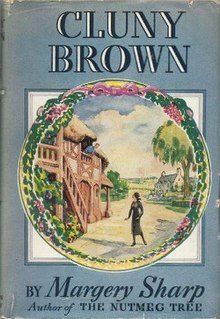
Image result for cluny brown bookKarenI’ve really been enjoying the novels of Margery Sharp (which I found through your blog, Simon!) I started with Cluny Brown and have since read four more of her novels I’ve enjoyed all of them but I think Cluny Brown is my favorite so far, though I also loved The Flowering Thorn. And I’ve discovered you can read many of them online for free via Archive.org.

I started blogging nearly ten years ago. A friend from a book group had her own blog and I was an unemployed librarian with a lot to say about books, so I decided it would be a good outlet. My reading habits have changed mostly because of the books I’ve discovered through other bloggers I follow — it’s how I discovered Persephone Books, Viragos, and Furrowed Middlebrow. I really love mid-century women’s fiction and I don’t know if I would have discovered so many of these books because most of them are out of print and not always available in bookstores and many libraries — in fact, I hardly ever buy new books any more, nearly everything I want to read is used and out of print. But I still have far too many unread books on my shelves! 

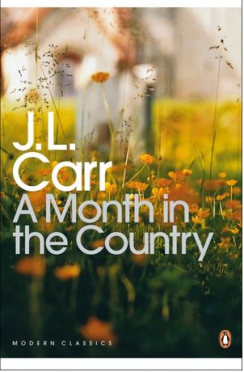
Image result for month in the country carrBibi: This year I read A Month in the Country and I thought it was just beautiful. My edition comes in at slightly over 80 pages and the fact that JL Carr can write about such immense themes with so much humanity and concision is just astonishing. 

I came to blogging in quite a strange way. I had decided to indulge my love for reading full-time and I had gone back to university as a mature student. In my final year I became unwell and had to postpone my studies for a year. I was determined to get back and finish my degree and I didn’t want to not think or talk about books for a year while that happened. So I started a blog with absolutely no idea of what I was doing – I’m still not really sure! It was only supposed to be for a year until I went back to university. That was in 2012…
I don’t think blogging has changed my reading habits in a major way but it has enriched them so much. None of my friends or family are big readers now, so finding an online community of lovely bloggers who share their reading experiences and recommendations means I can have those conversations, and hear all the time about different authors and publishers to explore. I’m having a bit of slump at the moment in terms of writing my blog, but there’s no slump in terms of reading others’ blogs – I wouldn’t be without it. 

Qu. 5.) Finally – a favourite that might surprise people!  

Karen: Anansi Boys by Neil Gaiman – totally unlike my usual reads. I don’t really read a lot of fantasy, but I do sometimes enjoy low fantasy because I don’t have the patience for all the world-building in high fantasy. I prefer when weird and fantastic things happen to normal people. Anansi Boys is just brilliant, and the audio version by Lenny Henry is even better than reading the print copy. 

Bibi: I don’t know if this will surprise people as it fits with my love of concise writing (in fact, maybe my love of Middlemarch is more surprising!) but I always surprise myself with how much I love Ernest Hemingway. Although I’m not someone who has to like the artist to enjoy the art, I still find myself wishing I didn’t like Hemingway’s work. He was horrible to women, he really liked blood sports, these are not endearing qualities to me. But his writing blows me away. The Old Man and the Sea is one of the most perfect things I’ve ever read. And that description of Scott Fitzgerald in A Moveable Feast where he compares his talent to dust on a butterfly’s wing makes me cry every time.

What sort of reader do you think would choose these books? And which book would you recommend they read?

Karen on Bibi’s choices: Well, the first two books make me think this reader enjoys Victorian novels; from The Alchemist (which I’d never heard of) I’m guessing they enjoy satire. A Month in the Country is just beautifully written — perhaps they enjoy novels set between the wars? And Hemingway isn’t my favorite (more of a Steinbeck fan), but sometimes you just want writing that’s not flowery, straight and to the point.

Clearly, this person enjoys classics, both 19th and 20th century. For this reader, I would probably recommend Barchester Towers by Anthony Trollope (because they seem to enjoy classics and humorous reads); and also Cold Comfort Farm by Stella Gibbon, which is absolutely delightful. Sorry, I couldn’t limit myself to just one!
Bibi on Karen’s choices: I think this person and I could have a great bookish chat! Anyone who picks Cluny Brown clearly has superb taste, as its one of my absolute favourites. Also they’ve picked a food memoir which makes me think we could talk over cake, always a good thing. They could tell me whether to read Gone With the Wind or not, as I keep putting it off due to its huge size. It looks to me like they are a broadminded reader and don’t limit themselves to one particular genre, they just love books.
The book I would choose for them is I Capture the Castle by Dodie Smith. The reason I’ve picked it is because its one of my favourite novels; Cassandra Mortmain is an independent-minded heroine like Cluny; and like Neil Gaiman it is enjoyed by Young Adult readers and older. I hope they love it as much as I do.